While waiting for our shuttle to take us to Memento Park, we munched on meat-filled pastries (essentially slightly-nicer Hot Pockets) and iced coffee. Our shuttle ride to the park was so quick and relatively scenic that we hardly needed to use the books we’d brought along.
Arriving at Memento Park, our guide explained some of the memorials from the Soviet Era that lie in front of us including a replica of all that was left of the giant Stalin Statue (formerly located in Hero’s Square) – just two boots where the newly liberated people had chopped it down.


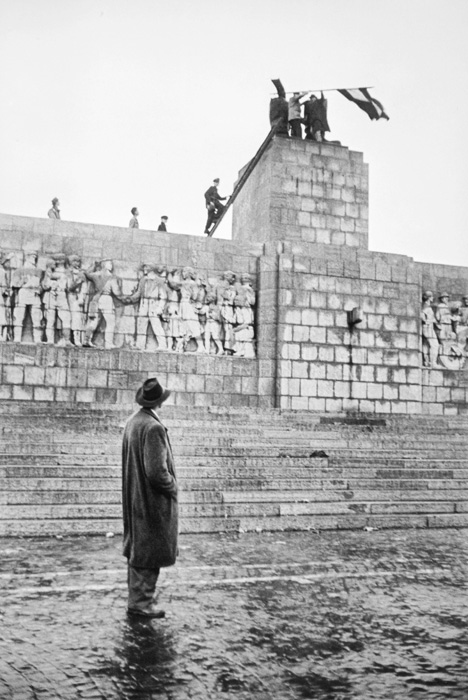
The park was fascinating. Not just for the monuments themselves, but also for the symbolism the park’s architect had worked into the place, including a grand entrance that, once inside, revealed it was only a flimsy facade.
The park, intentionally or not, took a somewhat humorous, mocking tone. Statues given nicknames like “Coatcheck Boy;” busts pointing to the revisionist history of the era (including this one meant to depict this man); and statues who, after they’d been defaced, caused rainwater to fall is such a way that it appeared as though the gallant soldier was continually wetting himself.

.jpg/200px-S%C3%A1gv%C3%A1ri_Endre_(1913-1944).jpg)
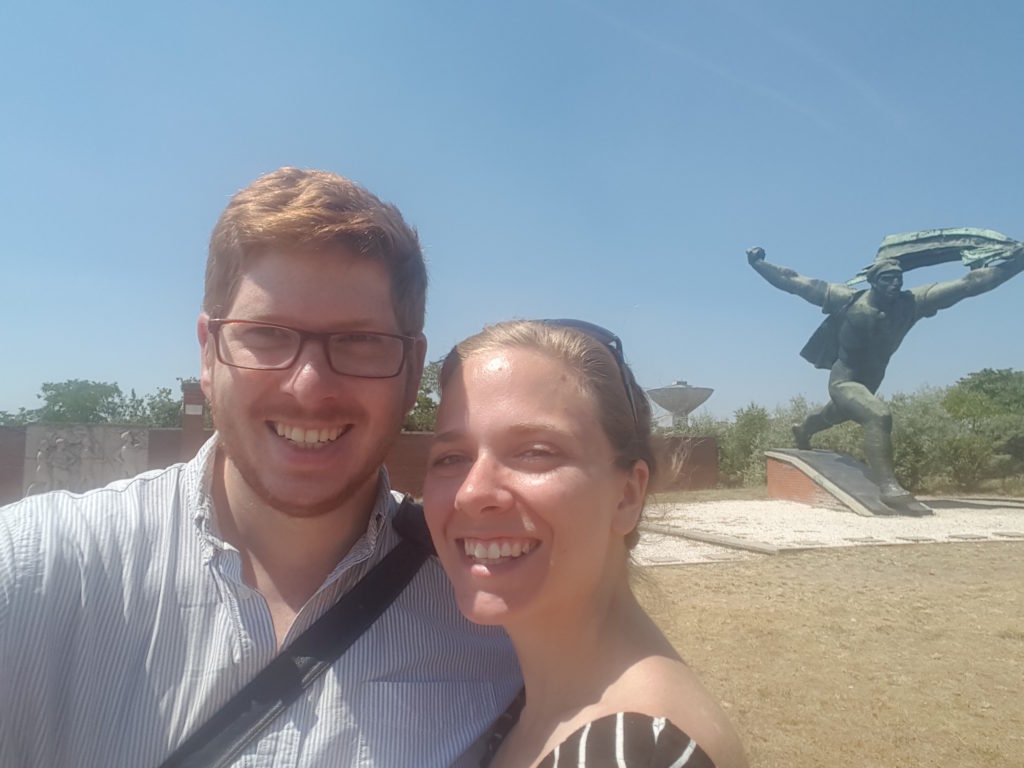
With “Coatcheck Boy”
The one that resonated the most for me, though, was a statue of a noble-looking Russian solider/liberator. His original place was at the base of the Liberty Statue that still stands atop Gellért Hill. She, by herself, is extremely awe-inspiring and seems to speak to the tenacity of the Hungarian people. However, knowing the original pairing of these two, the Liberty Statue takes on a much more sombre and authoritarian tone.


Ray making a reluctant friend
Arriving back in the heart of the city, we grabbed some Gelato to try and ward off some of the midday heat. Looking for a place to print our boarding passes, we stumbled upon a Cat Cafe and had to go in. A lemonade, radler, and a couple of aloof kitties later, we were back on the trail, finding our print shop in a rather hidden courtyard. These little allies are actually pretty common in the city but I’ve been wary of exploring too many, as most seem to just be peoples’ back yards! From here, we made our way to the House of Terror.
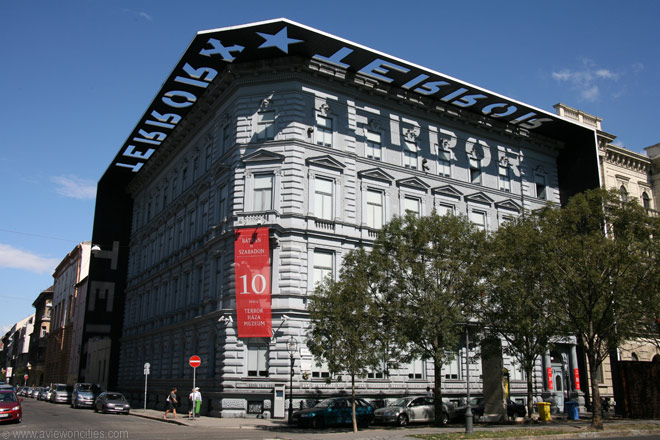
In 2002, community members decided to turn this innocuous looking building into a memorial to all of those who suffered and died at the hands of first the Nazis, then the Soviets. This building served as headquarters for both regimes. The basement was used as a prison and, when they ran out of room, was linked to basements of surrounding homes to make additional prisons, torture chambers, and space for executions.
The museum was sombre to say the least. Each section told the story of a different aspect of the oppression and abuse through not only text and video, but through the rooms themselves: vast spaces made to look like courtrooms plastered in endless reams of paperwork, and election hall which revealed a wire tapping office behind, a giant cross installed directly into the floorboards as if to reclaim the space for freedom of religion.
The cellar was the most difficult. I found myself nearly running through it just to have it over with. At the very end was a dimly lit room with the names of the victims, followed boldly by a brightly lit room with names and photos of the victimizers.
So often, these spaces serve (honorably so) only to memorialize those who suffered so needlessly, but I was so impressed with how this space called out those who carried out the atrocities. People with faces and names so similar to their victims. So similar to me, really. How this isn’t necessarily something that happens far away by other people, but that it can happen to us. It was chilling and raw.
With both Memento Park and the House of Terror (framed as it is, literally, as if to point out even to casual passers by “this happened here!”), I am so in awe of the Hungarian people’s ability and willingness to name this awful aspect of their (fairly recent) history. To publicly acknowledge something that would be so much easier to forget.
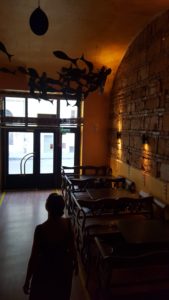
Looking around in a Ruin Pub
Slightly disoriented, we made our way to Instant, a ruin pub. These are bars that the young folks created in unclaimed ruins of homes, businesses, etc. We purposely went before evening to avoid the party crowd. It was interesting to peek around the different rooms to see how they’d been decorated!
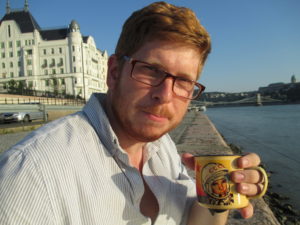
No picnic is complete without a cosmonaut cup full of wine.
As the sun began to set, we decided to bookend our stay with another picnic on the Danube, seeing now not only pretty buildings, but also shadows of red stars and monuments of soldiers, being able to direct passers-by to the Holocaust memorial we’d passed the night before, and reflecting on the power of people to stand up for humanity. It is a beautiful city, yes. But more than that, it is strong, tenacious, and proud.