Vietnam | Day 4 – Island Living

2018 Southeast Asia

We were woke this morning by roosters crowing. Arriving in the dark last night, we were unaware of our surroundings, so finding a brood of chickens and roosters outside our window was an entertaining surprise.
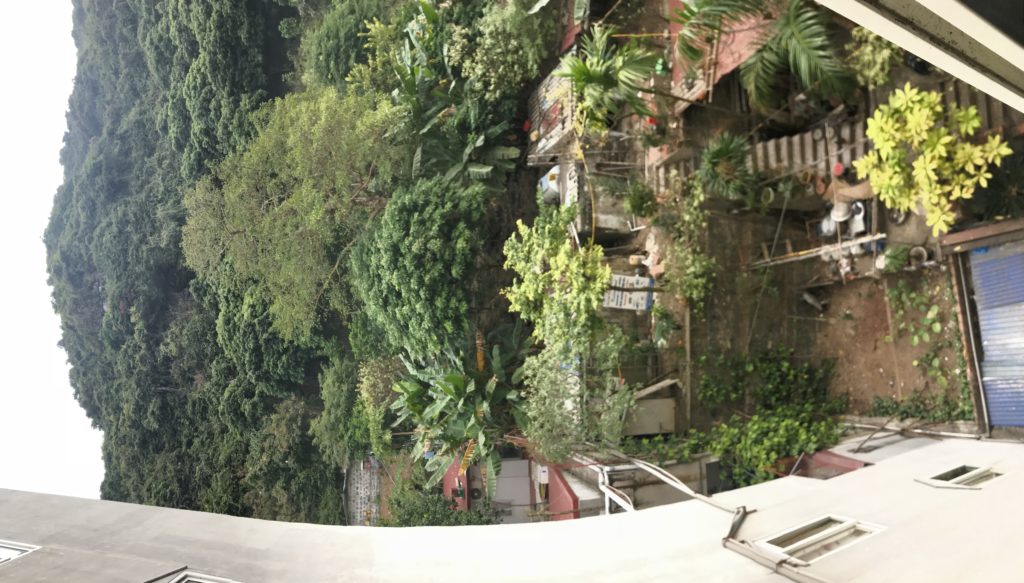
Mountain to chickens: the view from our window

Mountain to chickens: the view from our window

We had not really planned much of anything for our stay here. My only two must-do items were to 1) go to a beach and 2) go kayaking. On our way to our [massively underwhelming] free hotel breakfast, we saw that a tour company associated with our hotel had a very affordable tour tomorrow (my birthday!) that included kayaking and snorkeling, so we signed up for that and then went exploring.

We thought it might be neat to do a little exploring on kayak on our own today, but were told the more direct way to the rental place was under construction, so we took the longer way around which brought us out of the more tourist-y area of the island and onto streets where the line between home and business were blurred. Storefronts with signs advertising food were obscured by children playing, women washing clothes, people cutting or drying fish. It was actually quite lovely as the area were are primarily in is definitely not the “real” Vietnam. This felt closer.

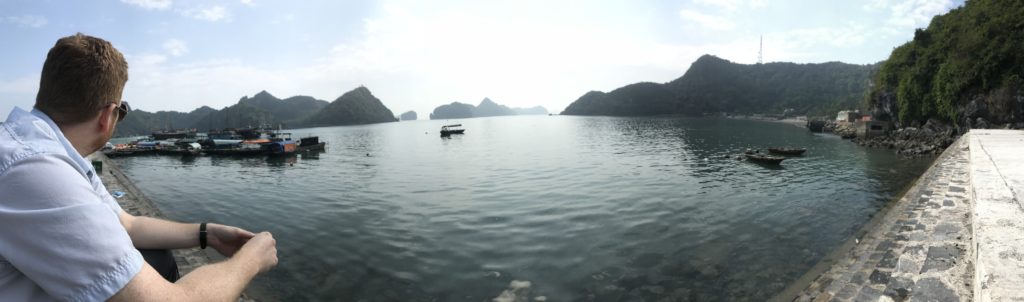
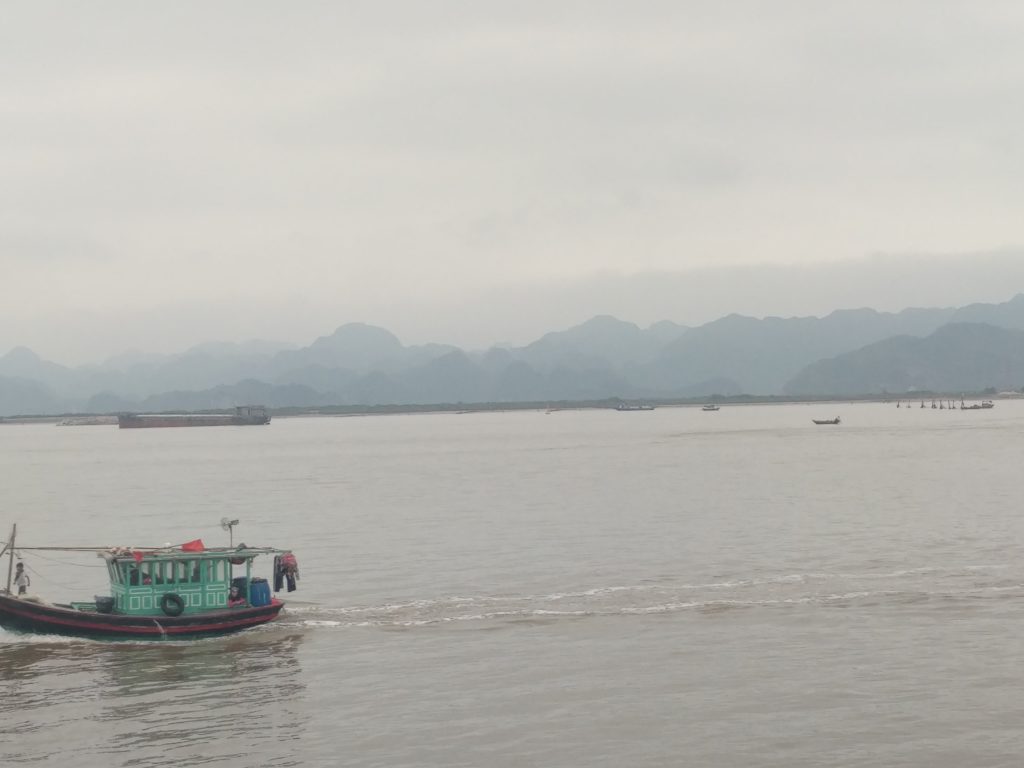
A couple turns in the road later and we arrived at the pier where we were immediately approached by many people offering us rides on their boats. We saw the kayaks, but decided instead to spend the day at a beach, knowing we would be kayaking tomorrow.
05395347-6647-4B77-B3B9-89CD15812087

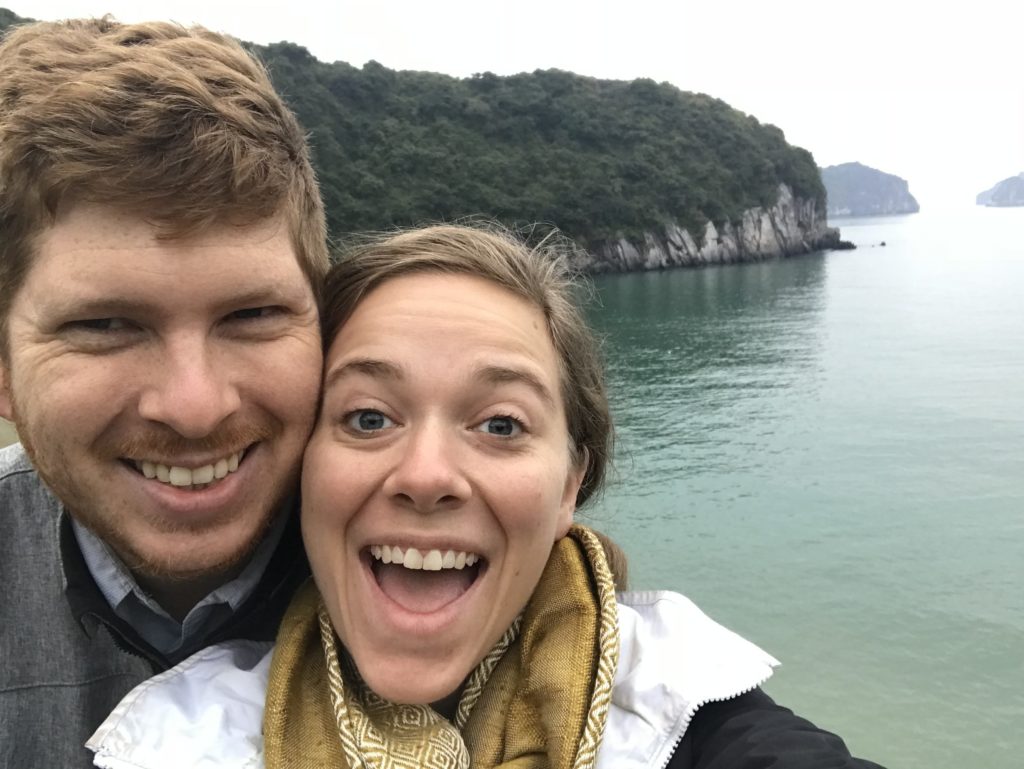
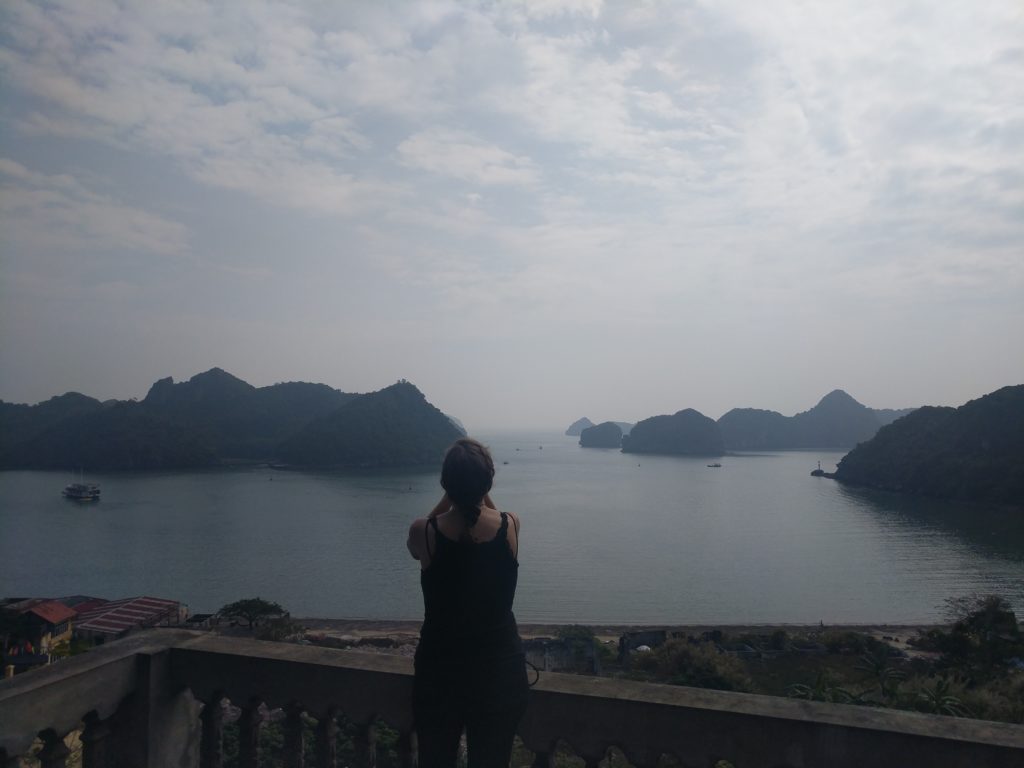
On our way back, we climbed a set of stairs set in the lush cliff-side. While beautiful, we realized it was a cemetery of sorts. Already slightly afraid of breaking any local social taboos, we made our way back down.
2018-01-17 11.08.30

We had every intention to go to “Beach 2” which I’d read was the most beautiful, but apparently it (or at least the road to it) was under construction and unreachable. We are, after all, on an island (one in which there are likely unexploded land mines in the less-trod areas) so finding an alternate route was out of the question. It was a bit disappointing to see the remarkable amount of development on the island. It seems they are putting up more and more hotels and other tourist-focused things at the expense of easily accessible, beautiful public spaces.

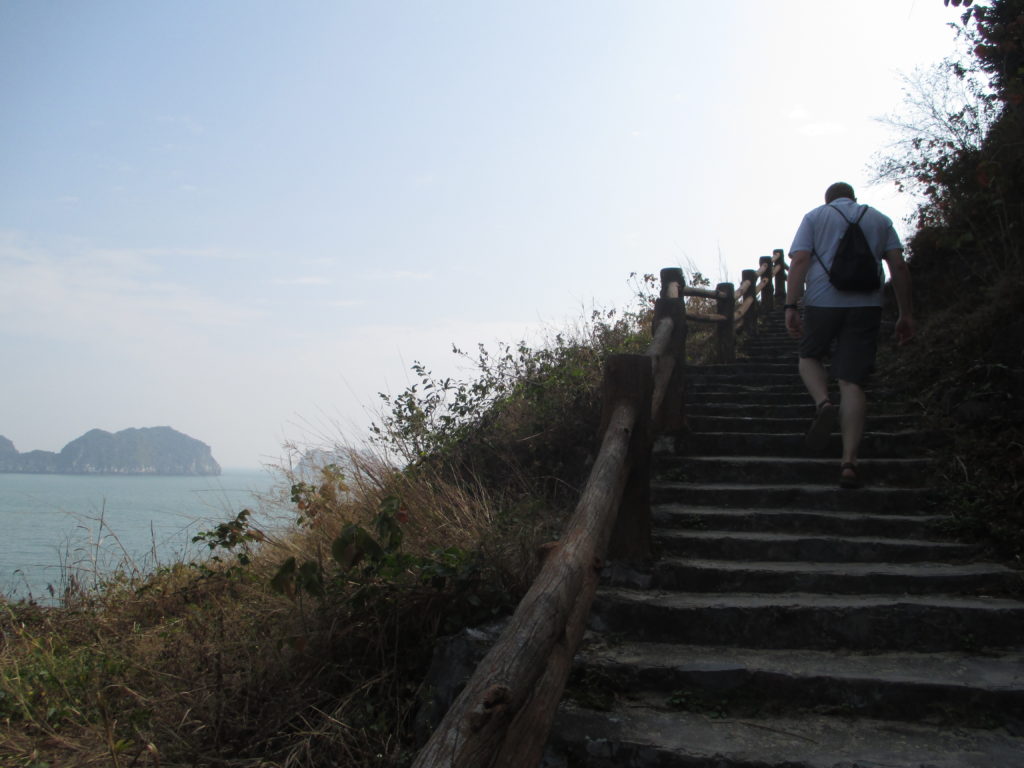
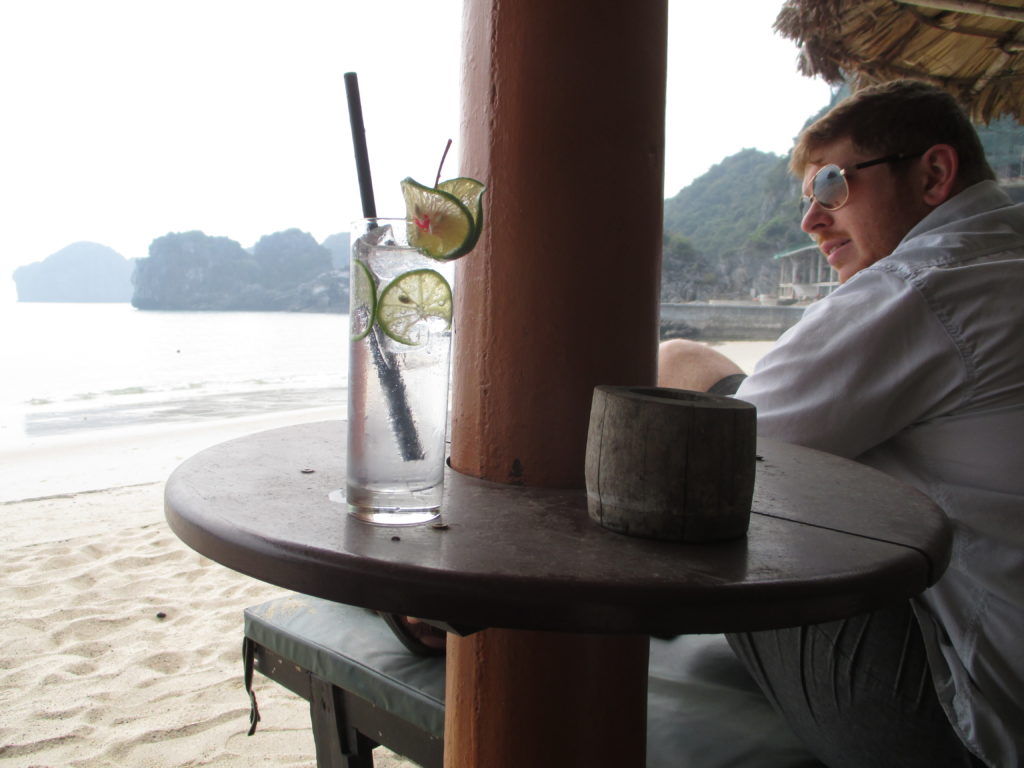
We made our way down a set of stairs to “Beach 1,” but noticing it was rather dirty and with no access to amenities, we decided to see where the man-made trail took us. Taking in breathtaking views the whole way, we finally arrived at “Beach 3” which was on the property of a resort. We rented some beach chairs and got a couple of cold beverages and settled in with our books and the sunshine. It was really lovely. Until the clouds overtook the sun and it became too chilly to stay much longer.
IMG_0663 IMG_0670


3532AA80-A525-405D-9971-7982959AECAE

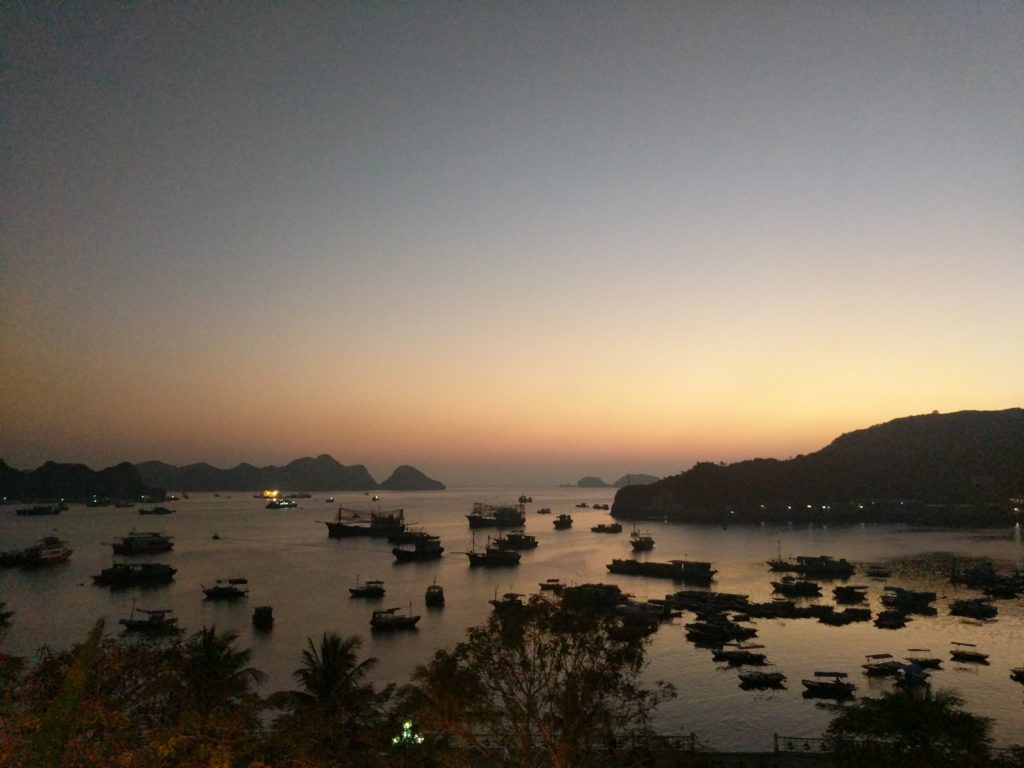
Back in town, we went to get dinner at a restaurant that Trip Advisor had rated highly, but they weren’t open yet. We took a leisurely stroll around the river, got a yummy bahn mi sandwich at a street cart, astounded at our luck in being here when there are relatively few people, and beautiful but not hot weather. We noticed a hotel with a rooftop restaurant at the top and decided to get a drink there as the sun set.
2018-01-17 17.55.35

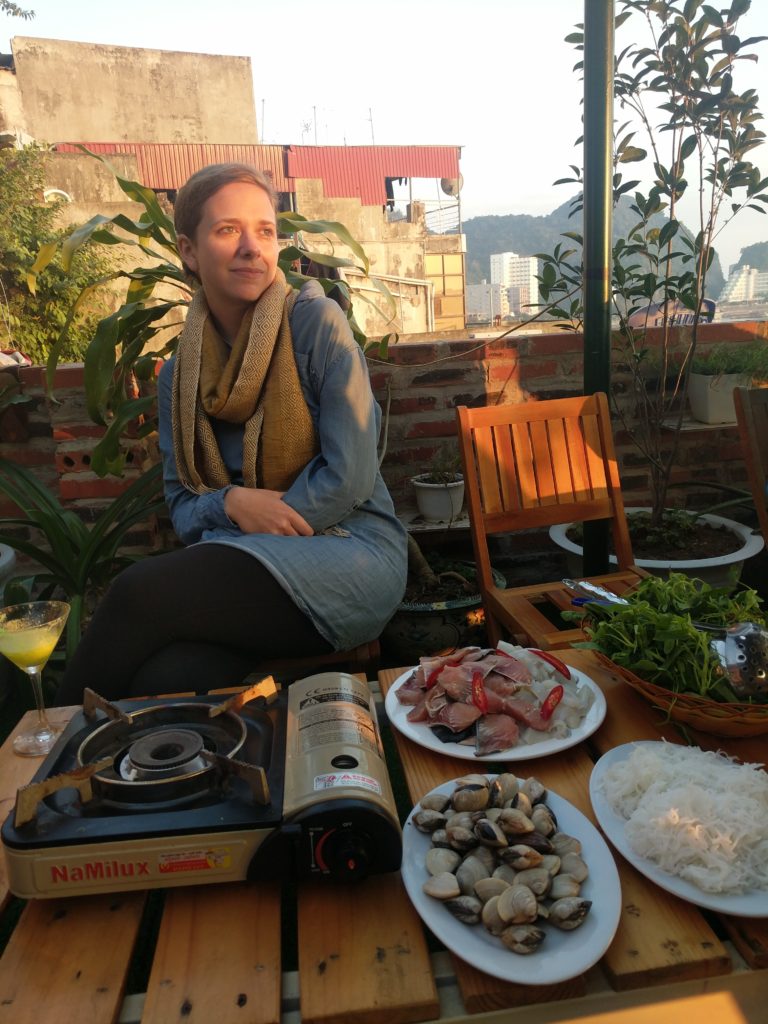
Mona’s was definitely built with Westerners in mind – everyone on the roof was white and they were playing a mix of slow French lounge jazz and Johnny Cash. We ordered our drinks, but then decided to get dinner too. We ordered a “Hot Pot” which we’d seen around. It was delivered to our table in three trips: a pile (literally a pile) of fish and squid, a plate of clams, a stack of greens, a plate of noodles, a tabletop gas stove, and a giant pot of broth and vegetables. Our server sat with us and explained how to do it – putting each item in the boiling broth for a certain amount of time and then ladling the meat, noodles, and veggies into smaller bowls to eat like a soup. On the menu, it said it fed two people. There was easily enough food for four. Multiple times different servers came over and asked if we needed help. I’m not sure if that was because we were doing something wrong, but it tasted good enough!
2018-01-17 17.07.23

As we finished our meal, we struck up a conversation with an older woman sitting by herself from northern England. We’ve noticed a number of older folks on this trip traveling solo and I’ve been very curious to hear their stories. While I’d thought perhaps it would be a story of losing a partner who disliked travel or reconnecting with roots or something, hers was a simple “I’ve got time off and wanted to explore.” Same as us!

Bellies beyond full, we made our way back to the hotel with plans to get up early tomorrow (perhaps with the first rooster cry) to watch the sunrise.
Vietnam | Day 3 – Rock the Cat Ba

2018 Southeast Asia

When we planned this trip, we were trying to get a good balance between seeing as many places as we could, as well as being able to settle in a little bit in each place. Hoi An and Phnom Penh were originally meant to serve as transit gateways for more specific locations.

For Vietnam, we had a number of destinations we wanted to see: Hue, Ho Chi Minh City, the caves at Phong Nha-Ke Bang, but none more so than Cat Ba Island and Ha Long Bay. Instead of doing a day here and a day there, we decided to skip all but Hoi An (our visa approval letter marked this as our entry airport) and Cat Ba Island.

We started our day in Hoi An. We went in for our final inspection of our custom tailoring, arranged shipping, then returned to our hotel to meet our taxi driver Han for a ride to the airport. Han was happily listening to vietnamese music from his phone on the car, which was a welcome change from the American pop music that had been dominating the speakers of the area.

We made good time, and got to the airport with hours to spare. Check-in and security went faster than expected, and our flight was delayed, adding even more time to our wait at the airport. A pack of Spaniards (unintentionally or otherwise) decided to stand very close to us in a freshman seminar social psychology experiment to see how uncomfortable they could make us before we got up and moved to another seat.

Our flight was over almost as soon as it took off, landing us in Haiphong, in northern Vietnam. My heart skipped a beat when the airport door we entered after disembarking the plane mentioned passport control, as we had only a single entry visa, but it had been converted into a standard domestic gate, so we were all clear.

We took a quick cab from the airport to Ben Binh station, where the boats to Cat Ba usually take off from. After paying for the taxi, we were shouted at and waved away from the station, and pointed to another station a half-block away, where we bought slightly suspicious tickets from a very unofficial looking woman standing in front of the ticket counter, not behind it. She said “bus, boat bus”, which was a deviation from our expected boat route.

At this point, it seemed that this was our only option. No other ticket counters were open, so we paid for the ticket. Before long, we were ushered to a bus that took us on a winding route across town, over a bridge, and to another port, where we got on a small boat.

The boat ride that I was looking forward to was about five minutes long— much shorter than the expected one hour. By this point, Jessie and I were both starting to relax a little bit, less worried about being taken somewhere malicious. We were more and more eased by the name of the bus matching the name of the boat service we were expecting, as well as my GPS showing us going in an acceptable direction.

2018-01-16 16.50.45

The boat led us to a port with two buses. This presented a sort of logic puzzle that we were happy to gamble on. We must have gotten it right, because after another half-hour of twisty-turny mountain roads, we finally arrived at the port on Cat Ba Island.

We checked in to our hotel, the Full Moon Party Hotel, which HostelWorld reviews assure us is not a Party Hotel. We chose it as a centrally located hotel with inexpensive ($10 a night) private rooms. The room itself was (ironically) nothing to write home about: a large space with two double beds, cold polished tile floors with an impersonally open space. The internet connection was very fidgety. Despite a password being printed out and taped to every visible wall on the main floor, no network actually asked for a password, and very few had any signal strength on our sixth floor room.

We grabbed some dinner at the neighboring Green Mango restaurant. Jessie got an assortment of grilled seafoods, and I got a green curry seabass… with a superfluous spaghetti on the side, and good cheap strong drinks: Passion-fruit Caipirinhas and a white wine / black currant drink. After dinner, we had a walk by the bay, and went back to our hotel to crash.

Vietnam | Day 2 – Adventures in Tailoring

2018 Southeast Asia

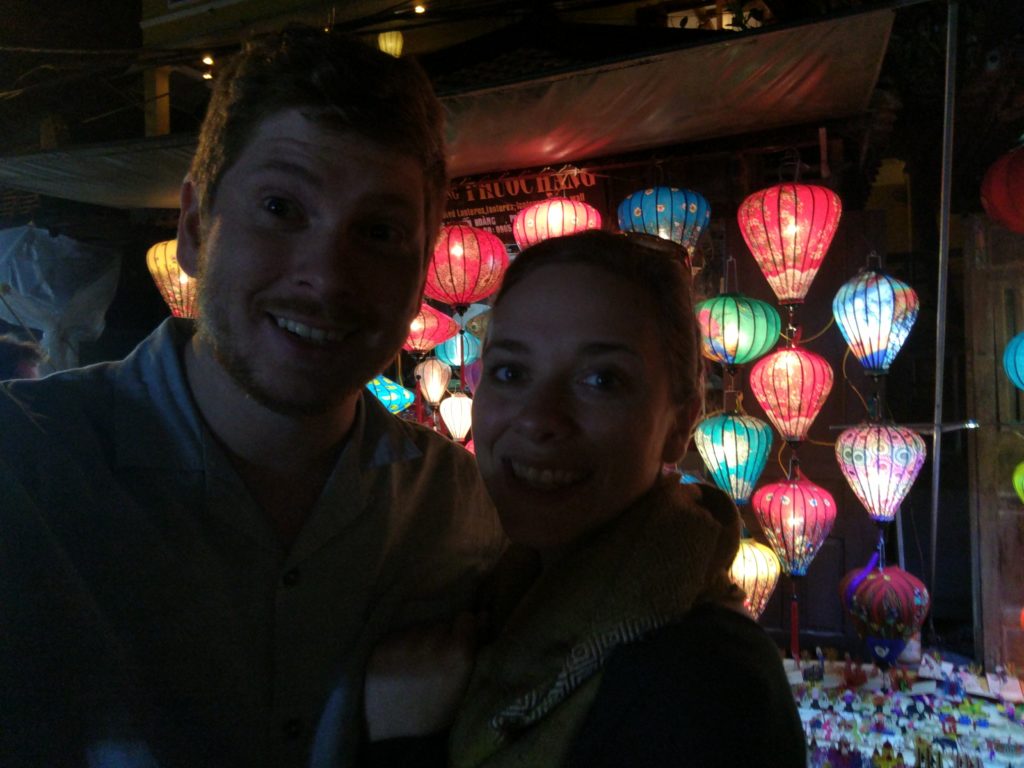
After breakfast in our hotel lobby (a mix of breakfast favorites to suit worldwide palates – cereal, tomatoes, noodles), we made our way to attempt to meet a guide to show us around town. Because I’d made the reservation so late (midnight), I wasn’t confident our guide would be there, and I was right. So we went with Plan B, which was to just meander around the Old Town. I was very relieved to find the crowds much smaller today than yesterday!

At Tan Ky house, learning that Ray’s zodiac is “Dragon” (strong) and mine is “Rabbit” (small and cute) ... eh, close enough

At Tan Ky house, learning that Ray’s zodiac is “Dragon” (strong) and mine is “Rabbit” (small and cute) … eh, close enough

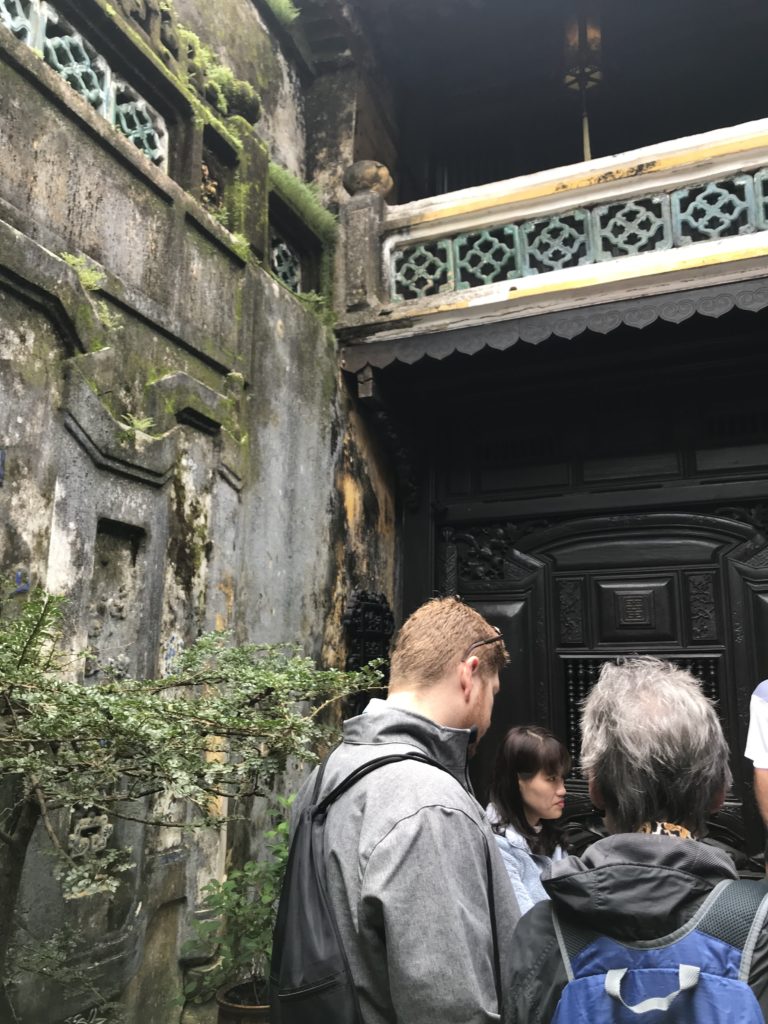
When you go into Old Town, they sell you a ticket which gets you in to multiple historic sites. We meandered through the winding, lantern-strung streets, through mossy alleyways, and among aged yellow shops before we found our first stop: Tan Ky Ancient House. This was the home and shop of a merchant in the 18th century; the 5th generation still lives upstairs. As a merchant’s home, it is built with it’s back-end facing the river and the front end facing the street where folks could buy their wares. In the kitchen area they have markers of how high the flood waters have gotten over the years (yes, it floods in the house, but they have developed a system wherein the inner walls can be raised by pulley to keep them dry).

Ray’s head would have been underwater last year

Ray’s head would have been underwater last year

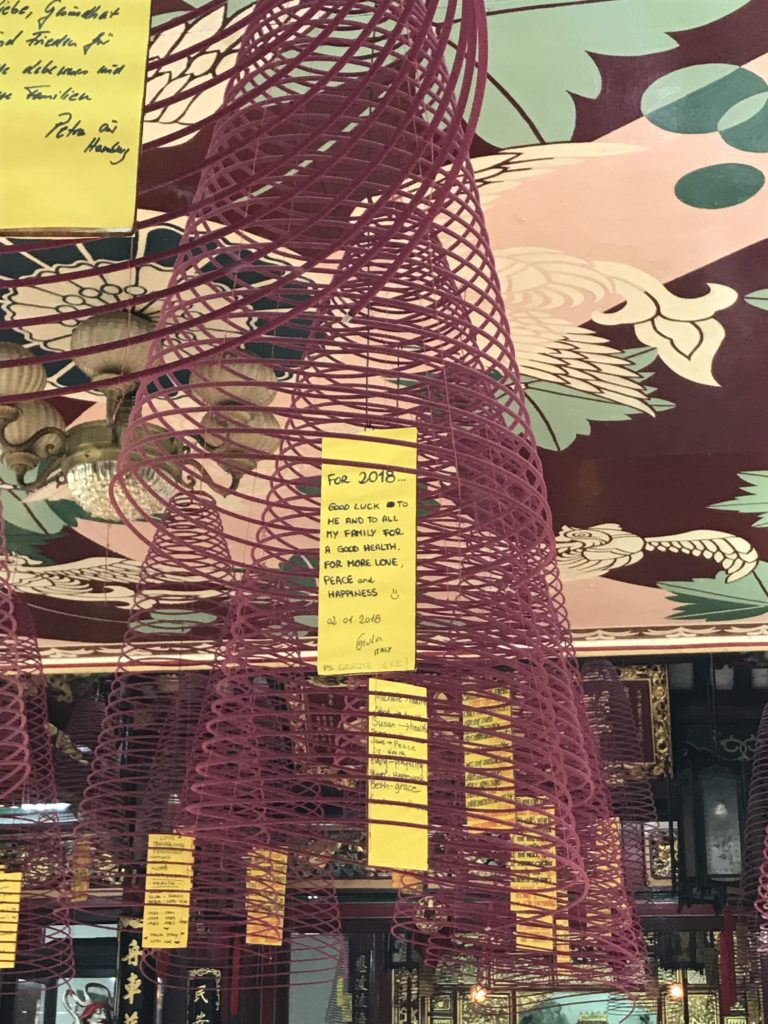
From there, we stopped at the Fukian Assembly Hall. The assembly halls were cultural hubs for the many Chinese and Japanese immigrants who made their home here. This one in particular was for the Chinese immigrants who came from the Fukian province and served as a temple, meeting place, and more in the multicultural city of Hoi An. Hanging in the middle of the hall were what at first glance appeared to be a bunch of Christmas trees but are, in actuality, incense. The idea is that people can write down their wish or prayer and the incense will burn for a month.

DA0D16AF-9CA5-4A50-BE08-31EADA862A5B

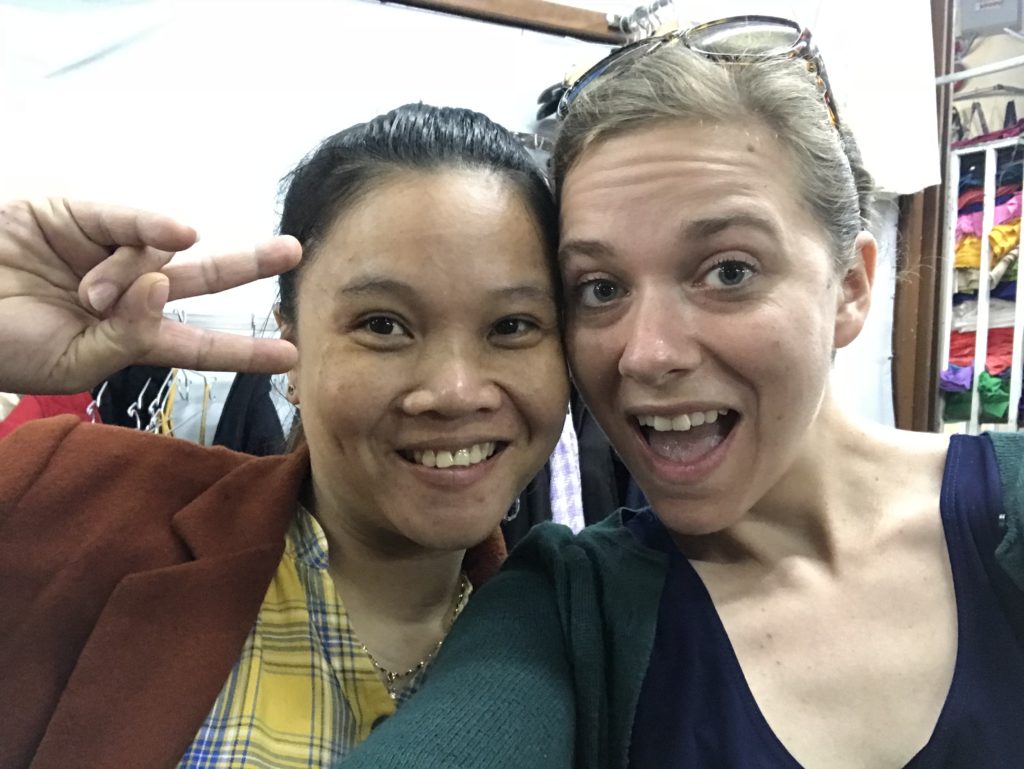
We continued to meander around town, stopping in at a performance of traditional music and craft shops. We were on our way to a museum in town when a woman talked us into coming to see her tailoring shop, run by her and a dozen or so family members. Now, Hoi An is known worldwide for its tailoring. While we weren’t expecting to get anything, neither of us could pass up this unique opportunity to have something (or things) specially made for us at a steep discount from what you’d pay in the states. We looked through catalogues of different styles of dresses, coats, and pants, chose pieces we liked, and then were able to chose the fabrics as well. They told us to come back in six hours for a fitting.

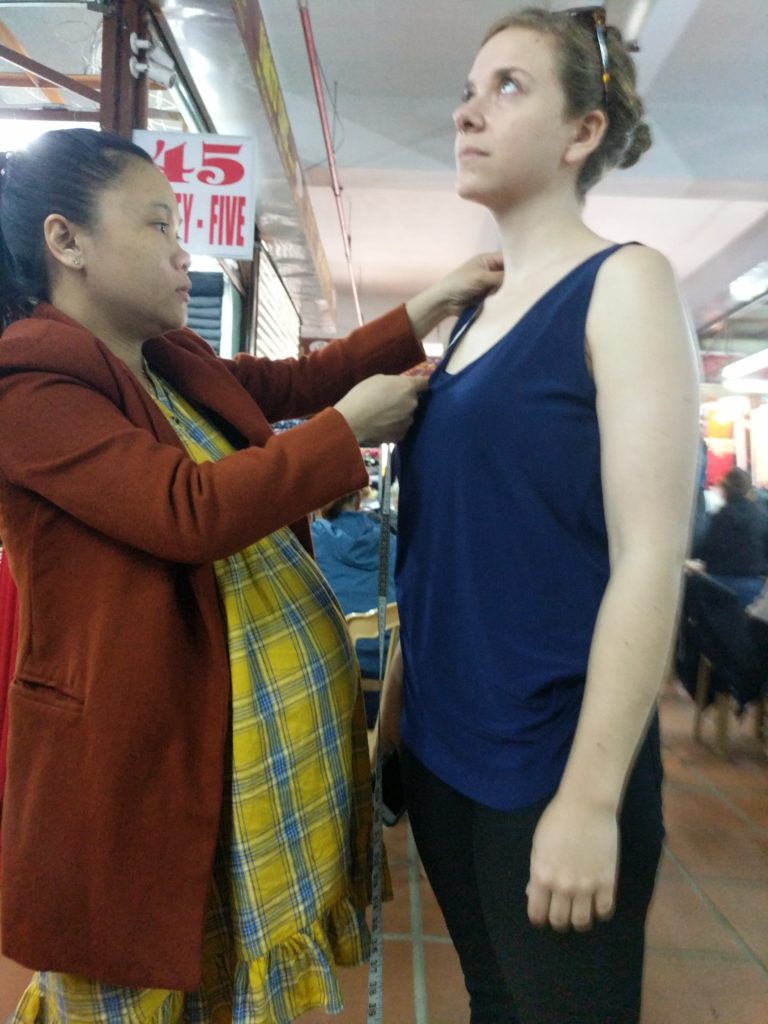
My VERY pregnant tailor sizing me up.

My VERY pregnant tailor sizing me up.

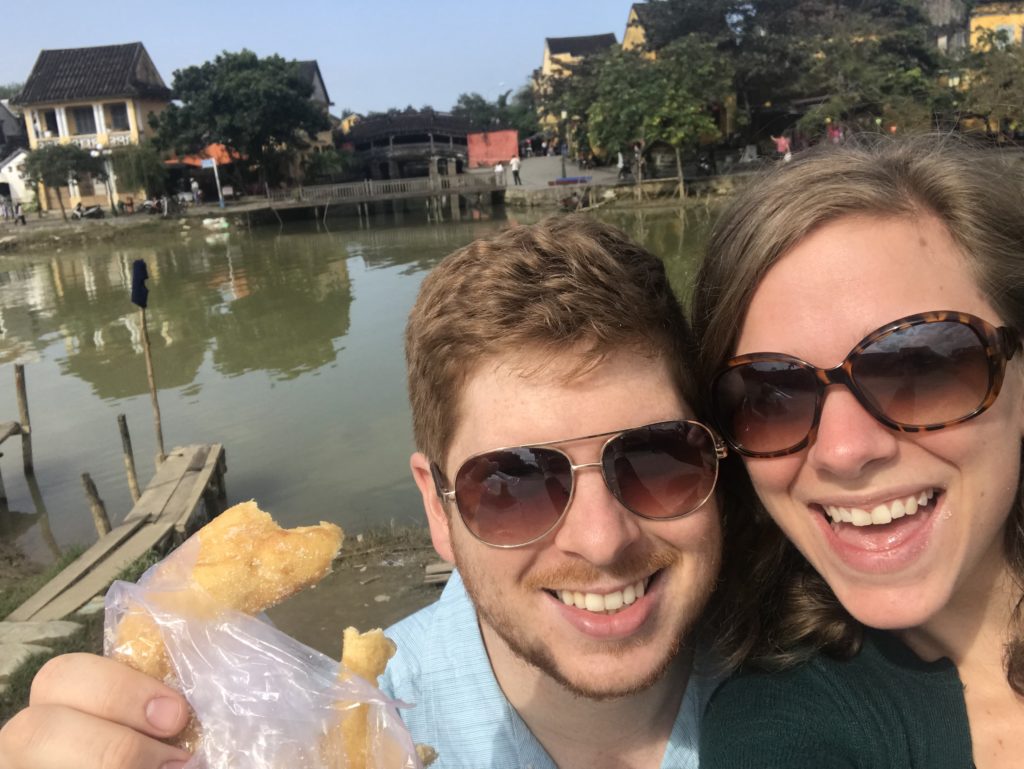
So, we continued meandering around the Old Town (they’ve got a pretty smooth operation here – bring ’em in for tailoring and occupy ’em with pretty streets and lots of shopping while they wait). We tried a Vietnamese Doughnut, visited the Japanese covered bridge (actually built by Chinese and Vietnamese folks), and had another Bahn Mi before stopping for a drink by the river.

Doughnut with the Japanese Covered Bridge across the river

Doughnut with the Japanese Covered Bridge across the river

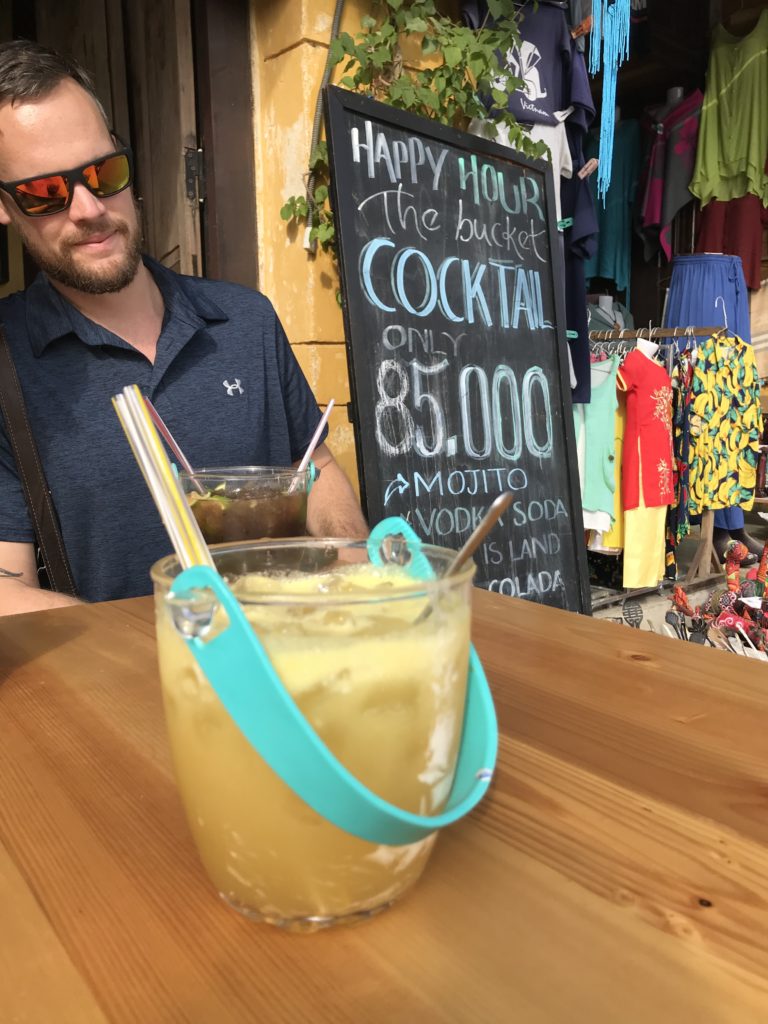
We happened to arrive at the same time as a couple from New Zealand and the server mistakenly sat us together but we were all okay with that and proceeded to chat with them for a good long while. They, too, are both getting married soon and she is between jobs like me. Unlike us, however, they have spent the last 6 months traveling around the world! A couple of “buckets” of alcohol later, we were all on our way for fittings.

Our New Zealand friend Jai and a bucket of Pina Colada

Our New Zealand friend Jai and a bucket of Pina Colada

With my tailor

With my tailor


E4F8CC33-2EB3-4666-90E1-C4448DBCCFC2

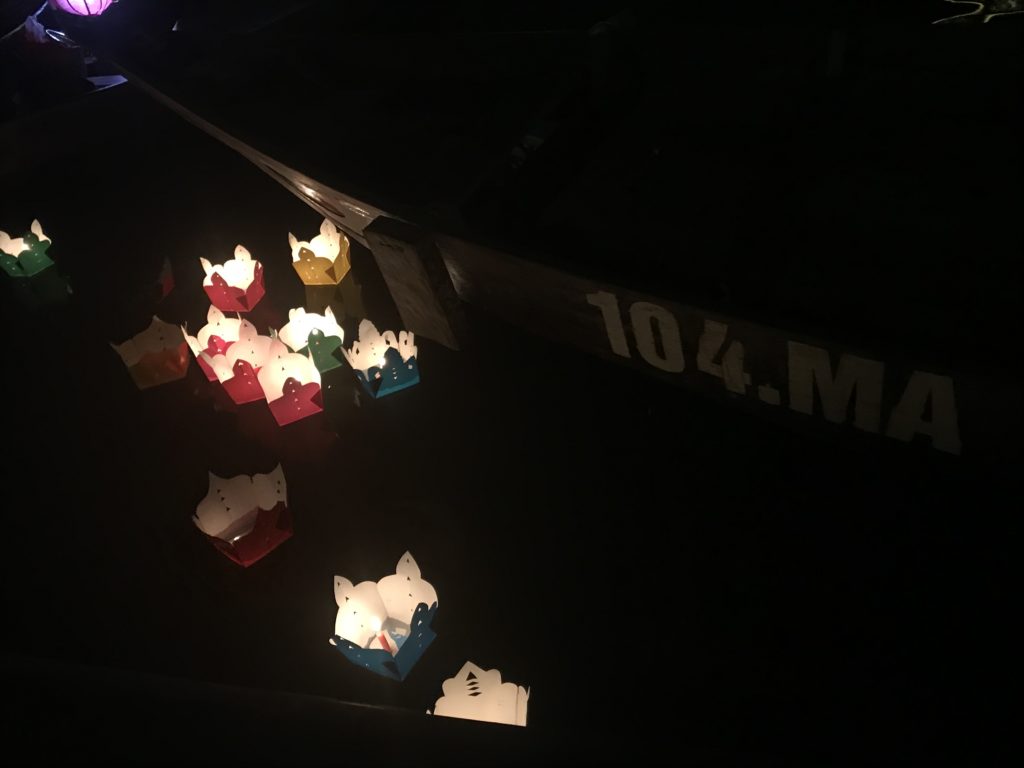
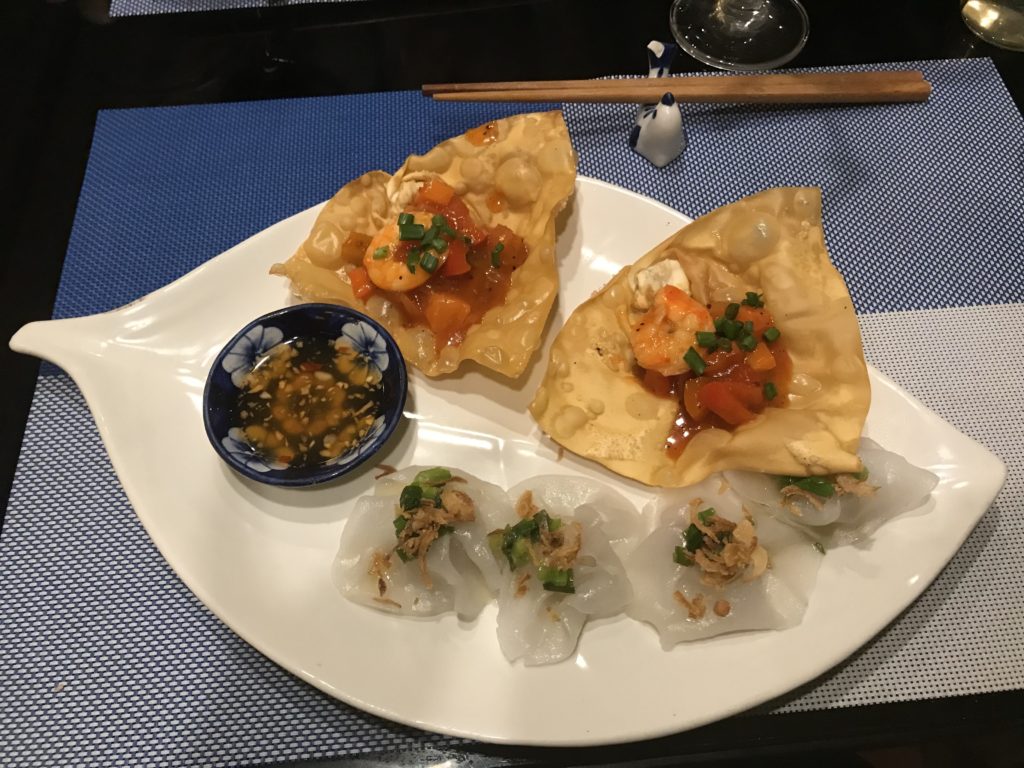
After our fitting, we sat by the river for a while, enjoying the juxtaposition of bustling crowds and beautiful lanterns in the sky and on the water, before making our way to dinner. We’d been wanting to try some of the local specialties – White Rose and Cau Lau (a dish only made in Hoi An, with noodles from a secret recipe) – and found a place in an alley that was uniquely empty and had both of those items on a tasting menu. In addition to White Rose and Cau Lau, we were also treated to a crispy wanton with a spicy seafood chutney and a dessert of coconut tapioca pudding with banana.

The White Rose dumplings are very challenging to make. They are made by one family in town and distributed to all of the restaurants

The White Rose dumplings are very challenging to make. They are made by one family in town and distributed to all of the restaurants

Now we are back at our hotel trying to tie up any lose ends before a busy morning picking up our tailored items and catching a taxi to the airport.

2018-01-15 20.12.44-2

Vietnam | Day 1

2018 Southeast Asia

We had to say goodbye to Cambodia, a country that we had grown to love in such a short period of time. We acknowledge the privilege we have to be able to come and go so easily, and we certainly spent our time mostly in the tourist friendly regions. Even still, it’s a surprising country that deserves a trip.

We left in the morning at around 6:45. Blake was waiting for us, even though we had only asked for a 7:00 pickup. We took our familiar little tuk tuk on one last trip before bidding the country farewell.

The airport was small, having no more than eight gates. We had given ourselves two hours to get checked in, go through security and passport control, and board the plane, but we made it through in less than fifteen minutes. We had a quick breakfast, and got on our plane.

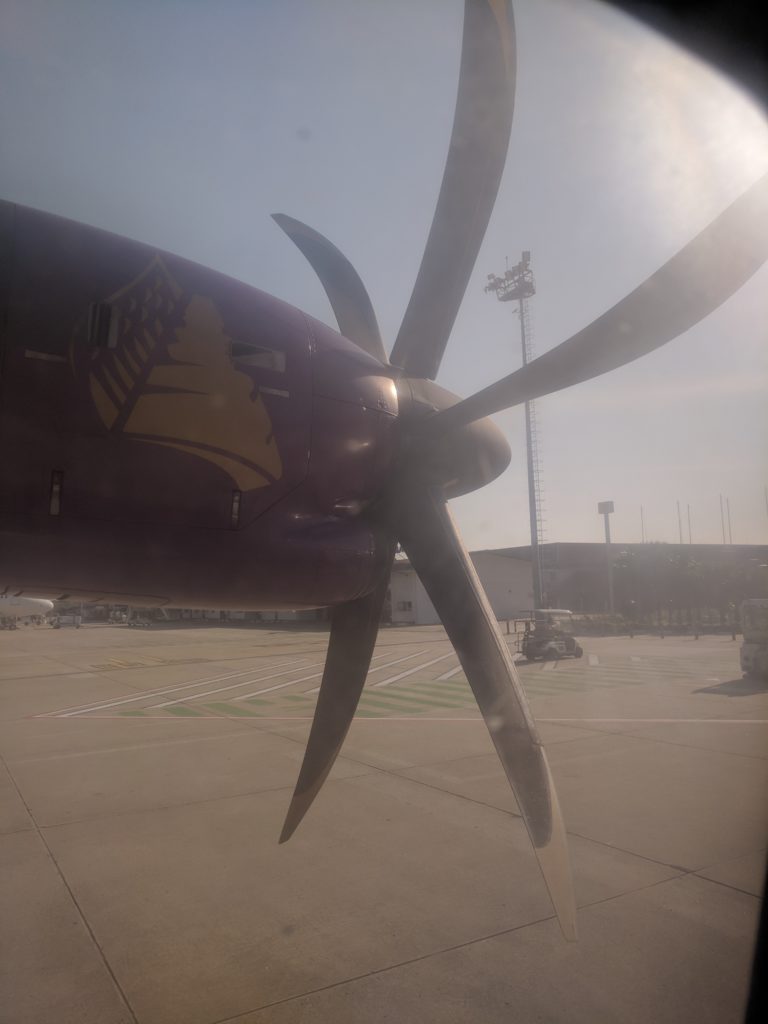
Our aircraft had propellers, which was a first for me. I’ve always been excited about airplanes, space ships, and the idea of flying. The act of it —much like rollercoaster rides, or being in a car whose owner wants to show you how fast it goes— has always made me nervous. This was mildly exacerbated by me considering the propellers as a sign of dereliction. The flight went without a hitch. It was basically empty, maybe twenty people on a vehicle that could easily hold one hundred.

2018-01-14 08.50.13On arrival in Da Nang, we got our final visa for the trip, again without issue. We waited maybe fifteen minutes to get our visa, and another hour to make it through the “Foreigners” line. From airport, we withdrew bus money, and hopped a bus to a stop in  Hoi An, where we both hopped on a xe om (a taxi service— essentially, the back of somebody’s motorcycle) to take us to our hotel.
Once we were all settled in, we wandered the streets of Hoi An. Hoi An is a UNESCO World Heritage site; a main trading port during the 16th and 17th centuries that has been well preserved. It has clear influences from China, Japan, and France. More recently, trade was routed to nearby Da Nang, which is less a tourist city, and more of an international hub.

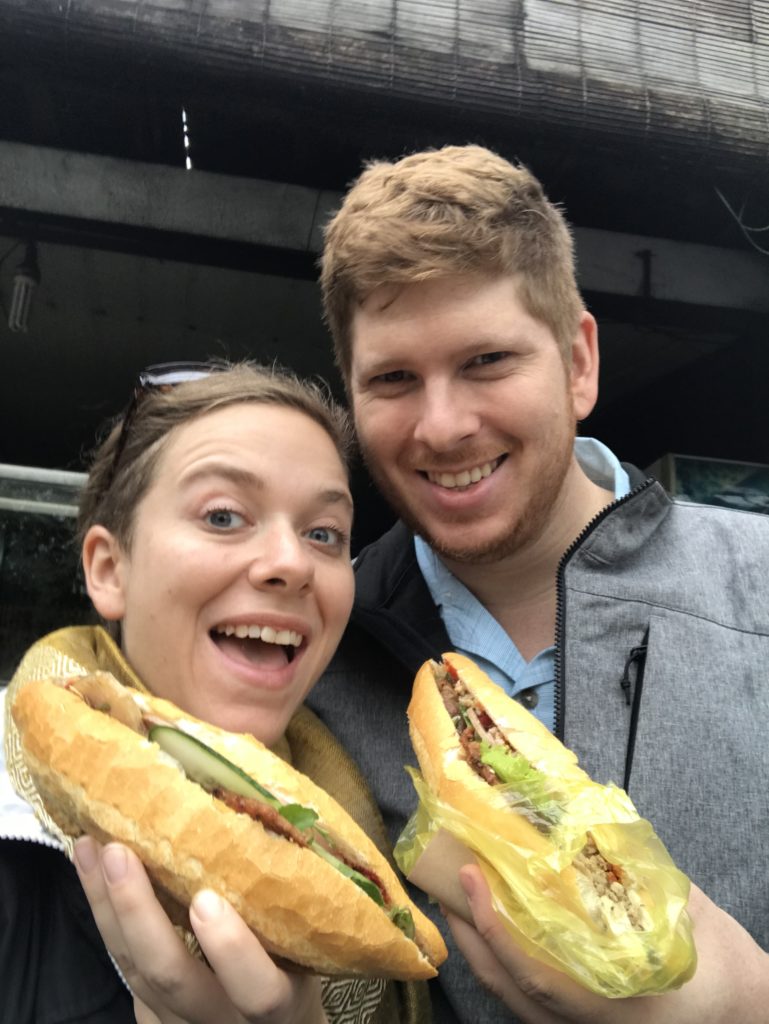
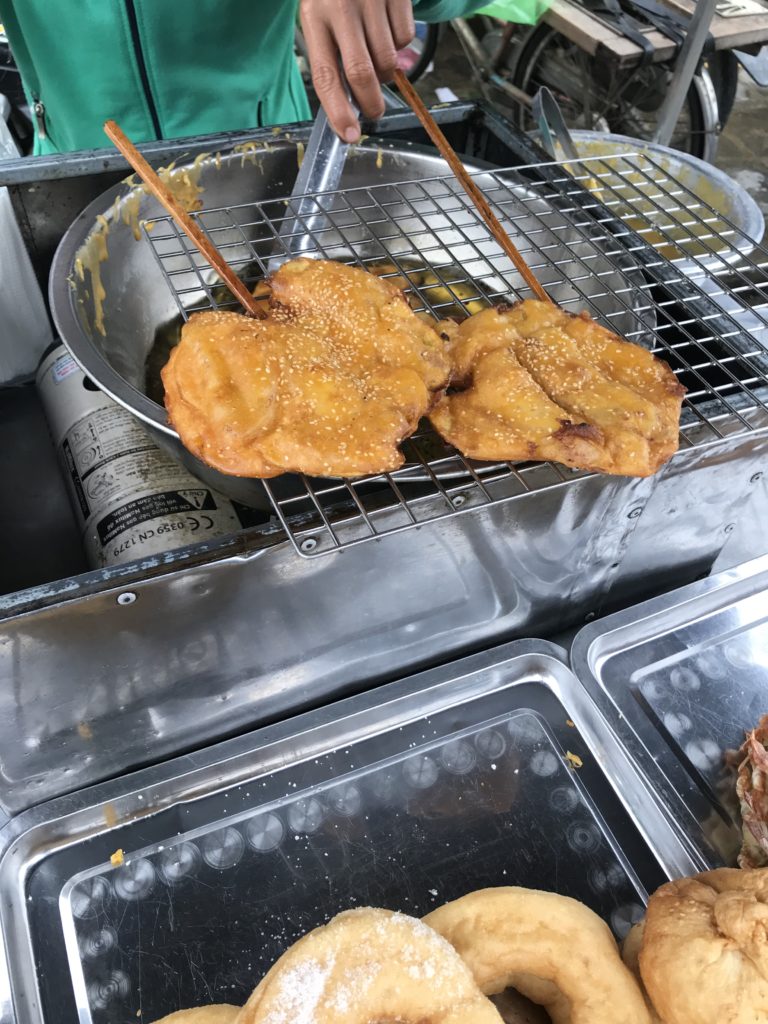
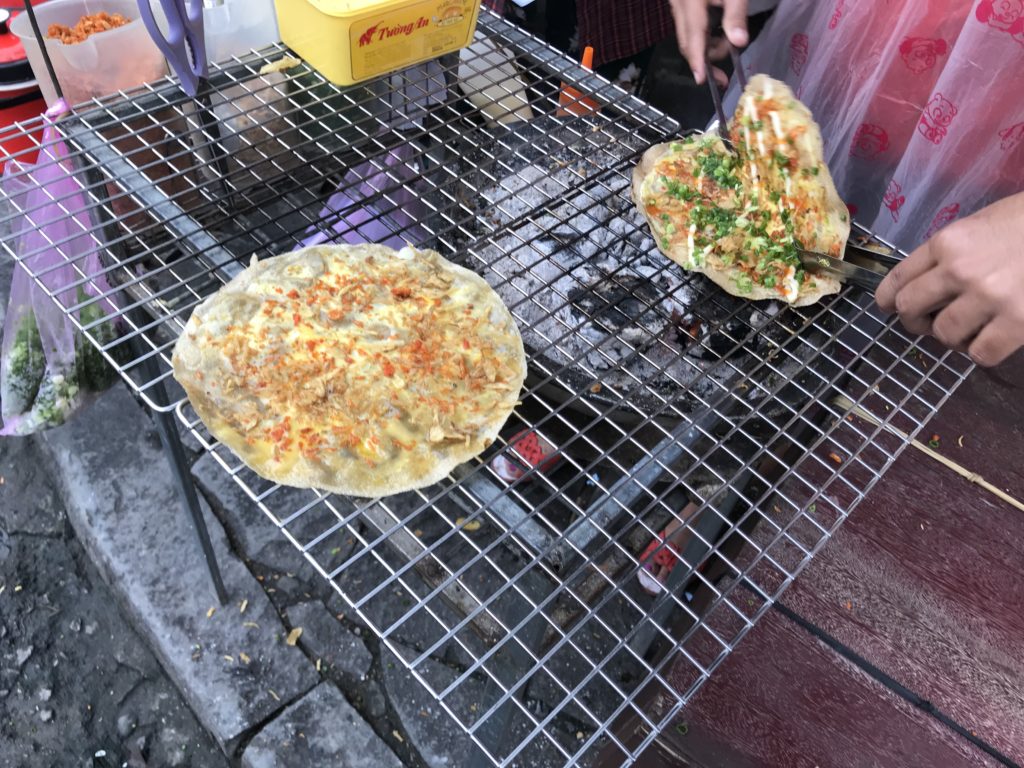
I was most excited, obviously, about the street food. The most well known may be banh mi, which is essentially a sandwich served on a baguette, usually with some kind of meat, peppers, vegetables, and cilantro. We walked to Phuong Banh Mi to get what is considered the “Best banh mi in Vietnam”. It was good, but underwhelming. We also indulged on banh trang nuong, somewhere between pizza and a taco on grilled rice paper. We rounded the evening out with a banana pancake and a fried spring roll, before settling in for the night.

74EB210C-20C8-420B-A692-314750BD0947

64FD0C38-A3E4-4F1C-BCCD-704FA92C7B6C

2354A419-C4F8-4CEF-8C16-4D3CC8A25AA4

Once again we crashed pretty hard, fairly early. Tomorrow we would dig in a bit deeper.

Cambodia | Day 4 – Monks & Monkeys

2018 Southeast Asia

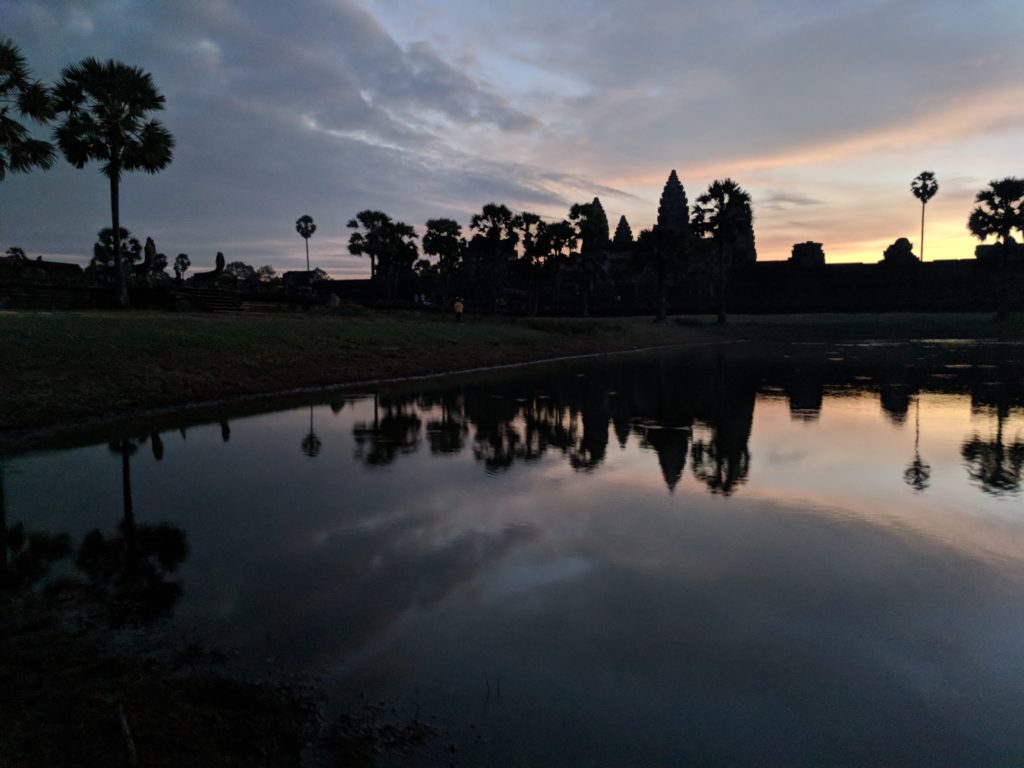
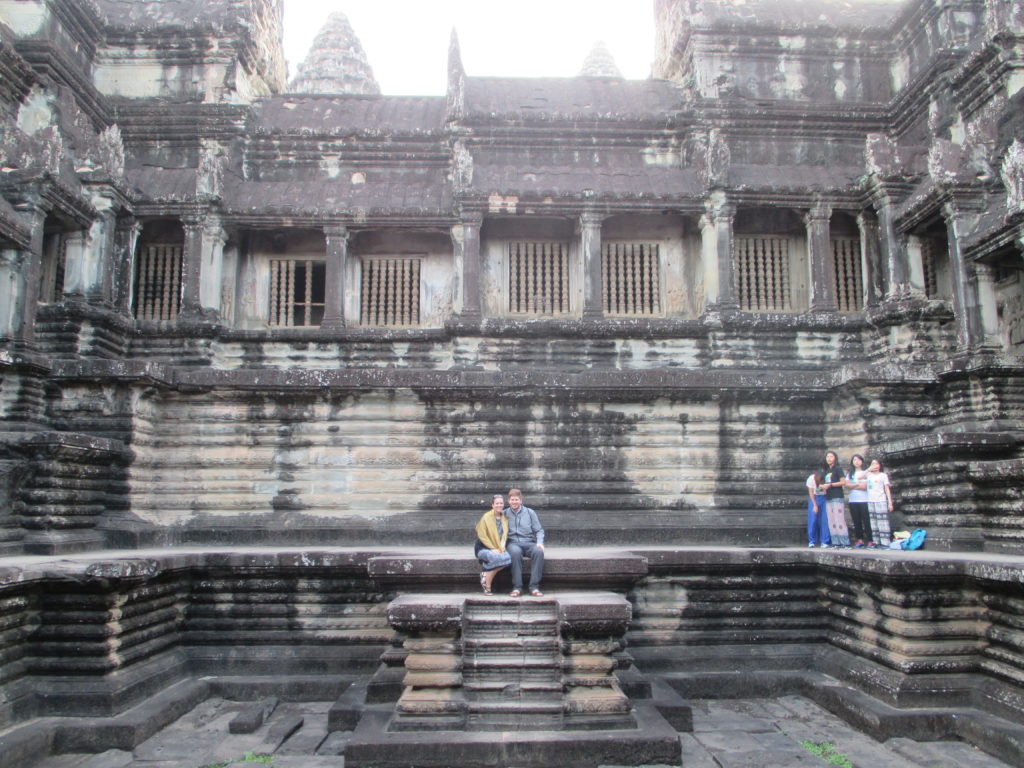
Woke this morning while it was still dark to catch the sunrise at Angkor Wat. Wrapped in my lovely new silk scarf to ward off the chilly morning air, we met our Tuk Tuk driver Blake and were whisked off under the cloak of darkness to the ticket station on the outskirts of this UNESCO world heritage site. After waiting in a relatively short line and grabbing some coffee and rolls (running into one of our fellow boat passengers from yesterday), we again blindly were driven to a dark parking lot. Blake instructed us where to go and where we could meet him when we were done. We followed a sea of bouncing flashlights over a dirt path, along a bouncy buoyant bridge, through an ancient archway housing a giant Vishnu cloaked in gold, and onto a dark pathway. Ray led us to the right. We stopped just short of some water and sat down, waiting for the sun to rise.

IMG-3595


As the sky became brighter it was as if the world became clearer, crisper. As if the sun were coloring in each object one by one. It was really beautiful to feel the collective anticipation of the people around us as the horizon buzzed orange and pink.

2018-01-13 06.08.47

Once the sky was bright enough, we headed into Angkor Wat, hiring a local guide to give us some insights on what we were looking at. Much of what was explained reflected what we’d learned at the National Museum in Phnom Penh: the country was Hindu until one of the kings converted to Buddhism, then the country became Buddhist and all of the Hindu statues in the temples were replaced with Buddhas – though Hinduism was still tolerated and accepted, so the Hindu gods were just placed outside of the main temple (hence the Vishnu we saw on the way in wearing traditional Buddhist robes/colors) and some of the intricate carvings were painted red. One of my favorite mash-ups are the many many statues of Buddha sitting on the 8-headed snake Naga from Hindu mythology.

IMG_0545

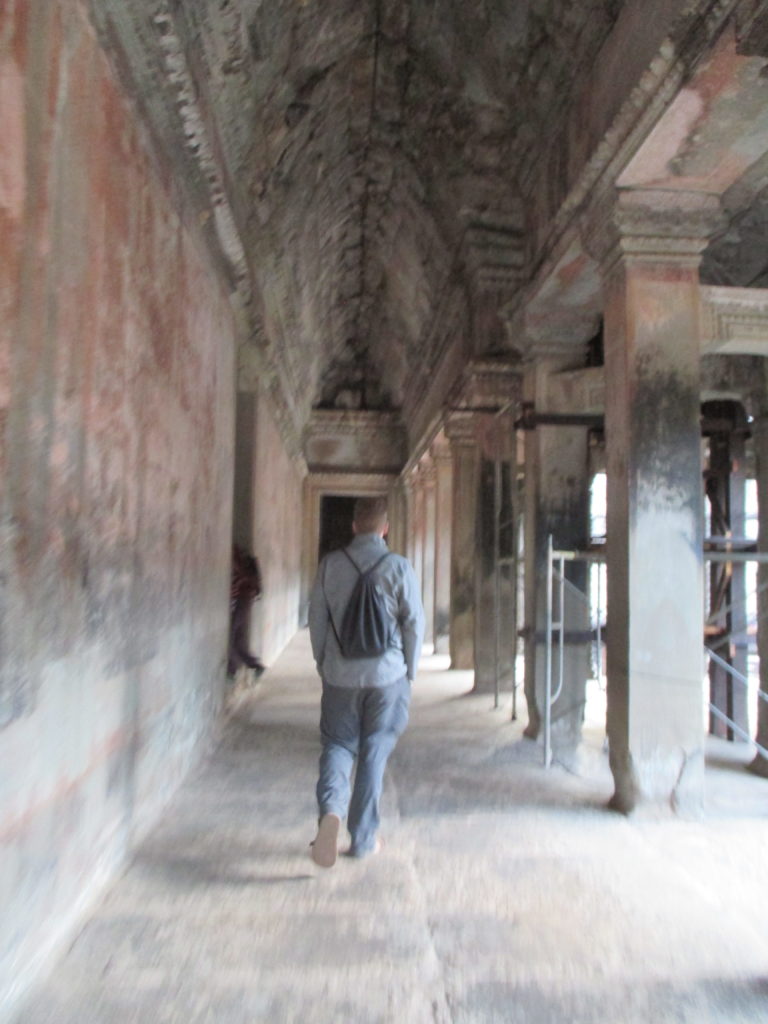
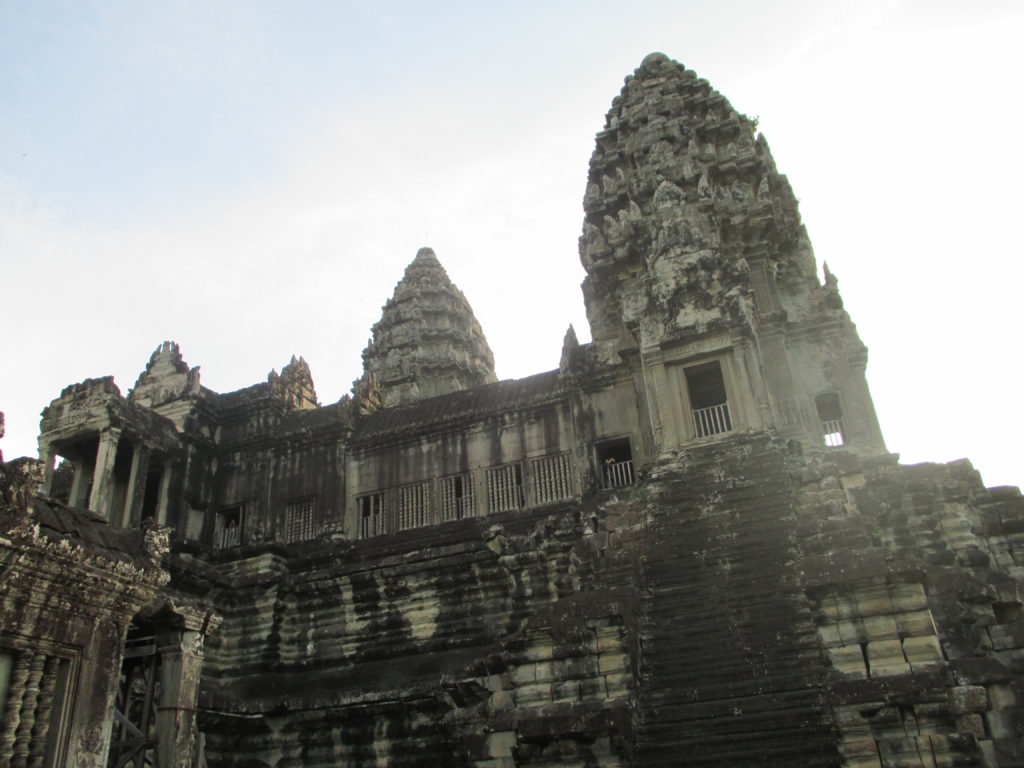
This temple was built in three layers – the first section is about history and contains visual accounts of historic and/or mythic events. This section is also available to the “common people.” The second story is dedicated to meditation, with it’s long hallways and echo chambers wherein you can hear a thump on your chest echo back. This section was reserved for the kings’ inner circles. The third story, reserved for only the king, was dedicated to prayer.

IMG_0553

Looking up at the third story of Angkor Wat

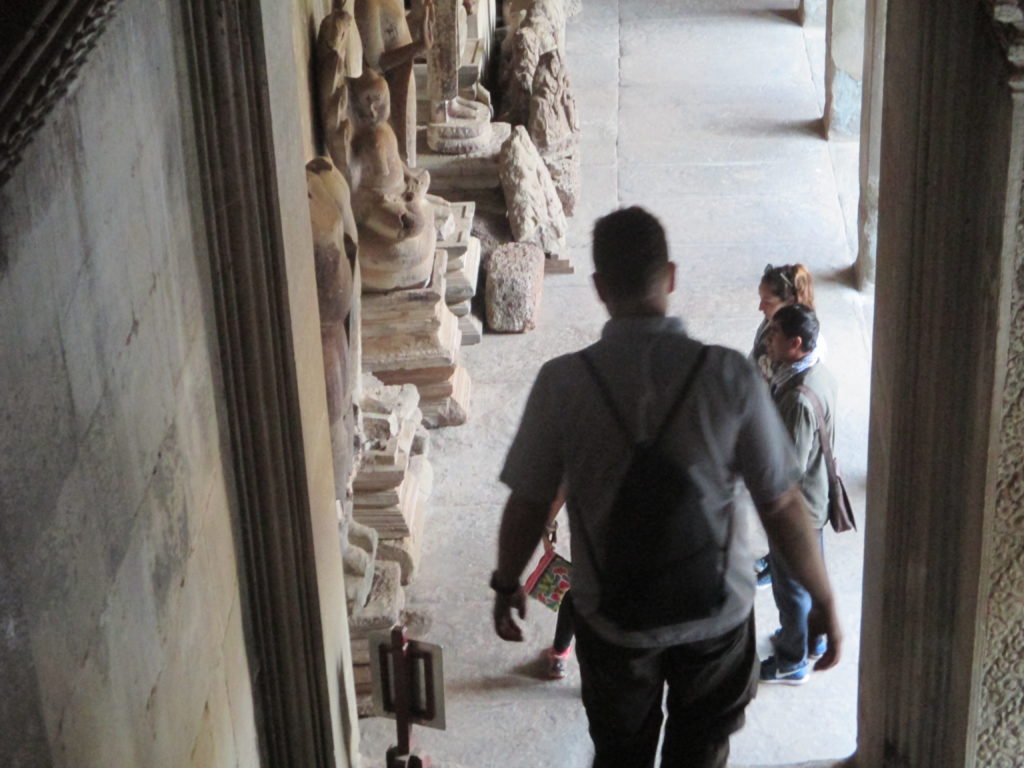
Following many years of peace, the country erupted into a civil war once religions changed hands one-too-many times. Following this civil war was the invasion of the 57 Cambodian provinces by their neighbors Vietnam and Thailand, reducing the provinces in number to 24. At this point the king moved the capitol from here at Angkor Wat (it should be noted, this temple is just that – a temple. The king’s palace was about 2KM away) to Phnom Penh which was more accessible to the water and other resources. The temple of Angkor Wat and its surrounding temples were forgotten and lost to time for over 100 years. While Cambodia was under French rule, a Frenchman rediscovered this crumbling area. During the reign of the Khmer Rouge, many of the statues of Buddha and the Hindu gods were destroyed as they didn’t want people worshiping. Markings of this could be seen in not only the fragmented stone statues, but also in blue paint slathered here and there around the temple. Angkor Wat was designated a UNESCO world heritage site 25 years ago and is now seeing restoration work sponsored by governments around the world.

Ray entering the "1000 Buddha Gallery" where they placed all of the recovered statues after the Khmer Rouge destroyed them

Ray entering the “1000 Buddha Gallery” where they placed all of the recovered statues after the Khmer Rouge destroyed them

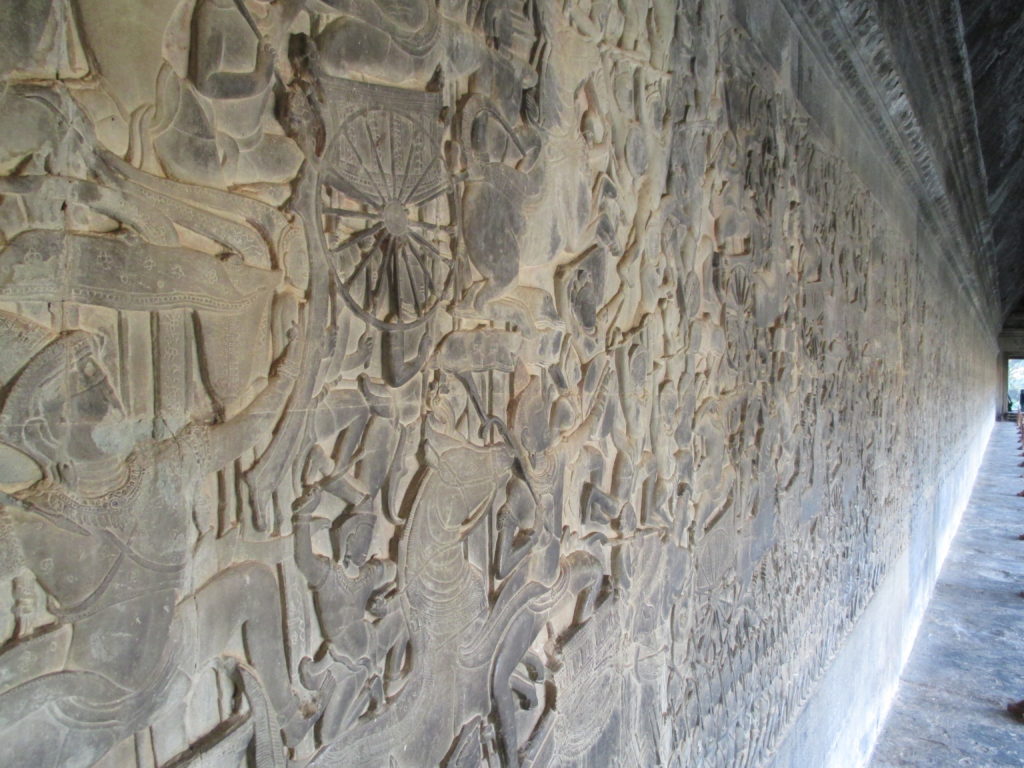
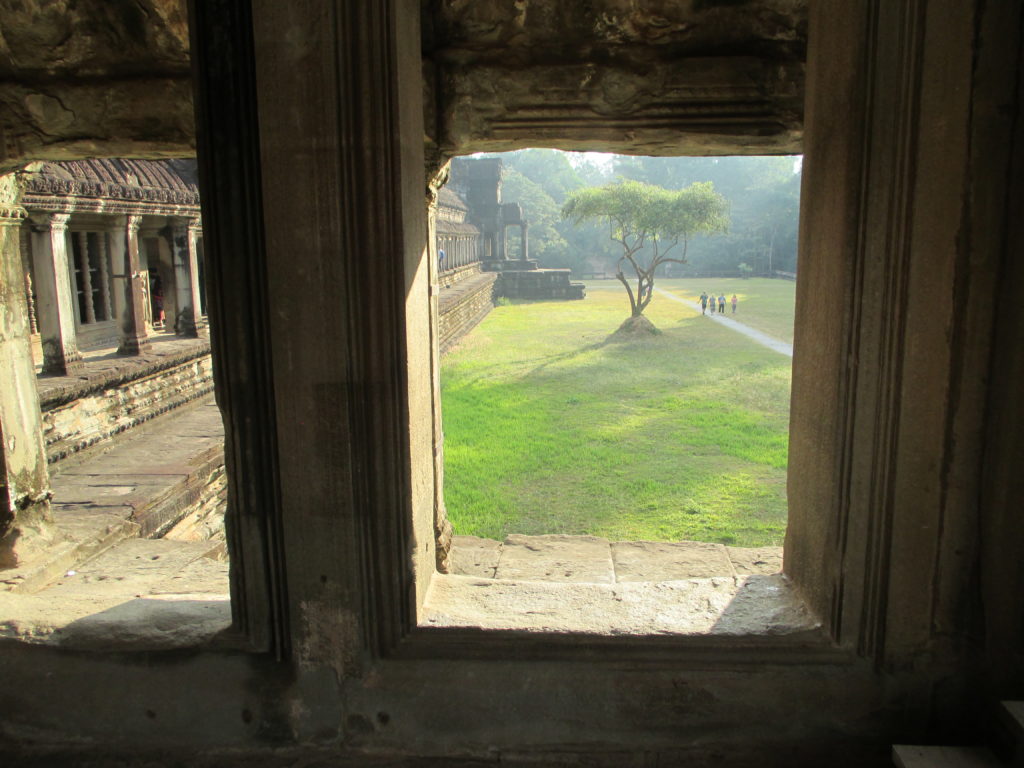
The single-most impressive element of Angkor Wat, for me, was the mind-boggling amount of intricate carvings. Carvings on every window spindle, walls upon walls of carved stories, carvings on the stairs, carvings on the roof – much of the ceiling has suffered weather damage over the years, but I imagine there were carvings there, too. Angkor Wat was built of lava stone topped with the more carve-able sandstone – both of which were either floated down the river by raft or pulled by elephants.

IMG_0548


The entire wall is carved with stories from history.

The entire wall is carved with stories from history.

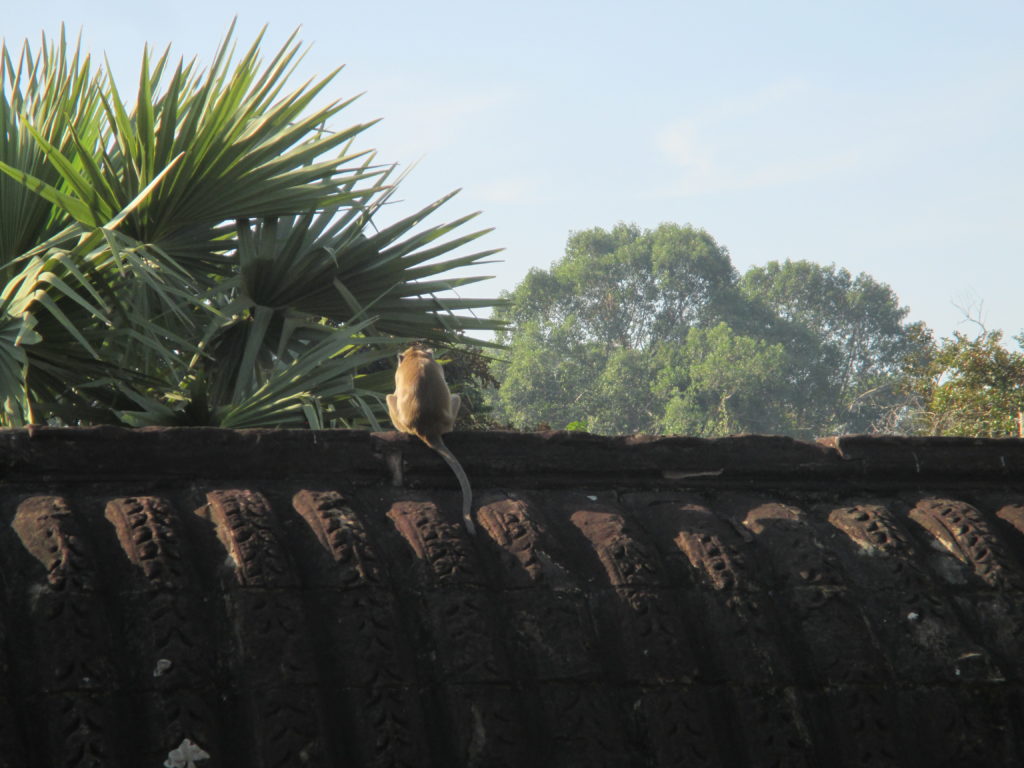
A monkey just hanging out on top of one of the rooves

A monkey just hanging out on top of one of the rooves

IMG_0572 IMG_0580

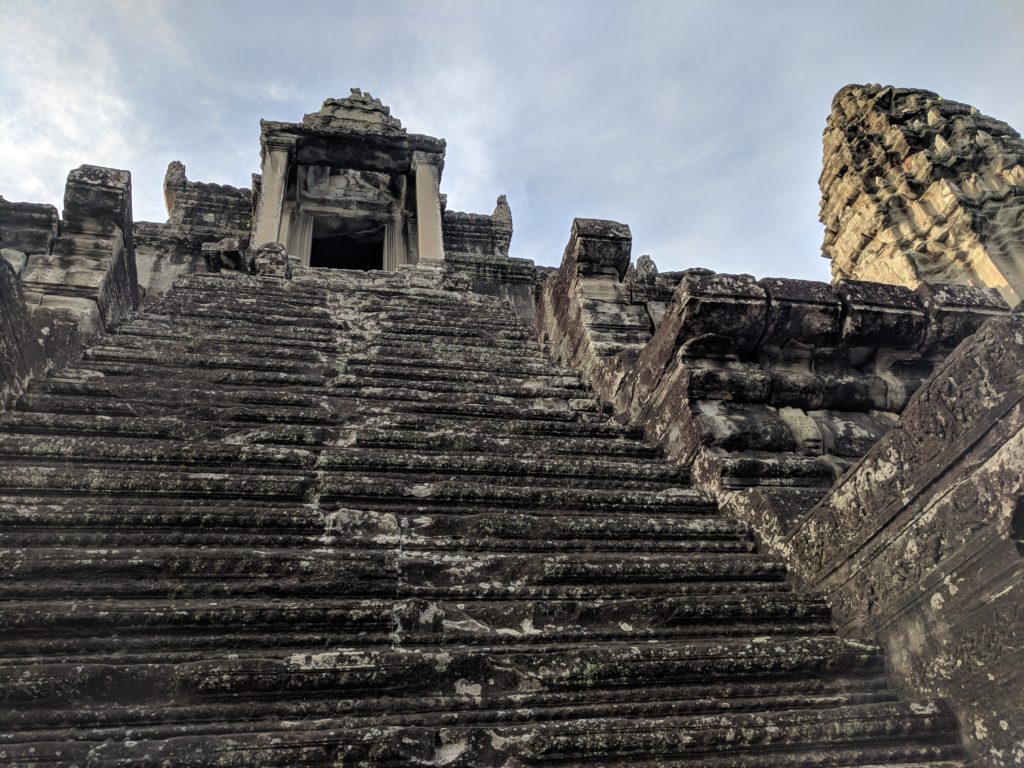
Steeeeep steps to the top

Steeeeep steps to the top

2018-01-13 08.01.15

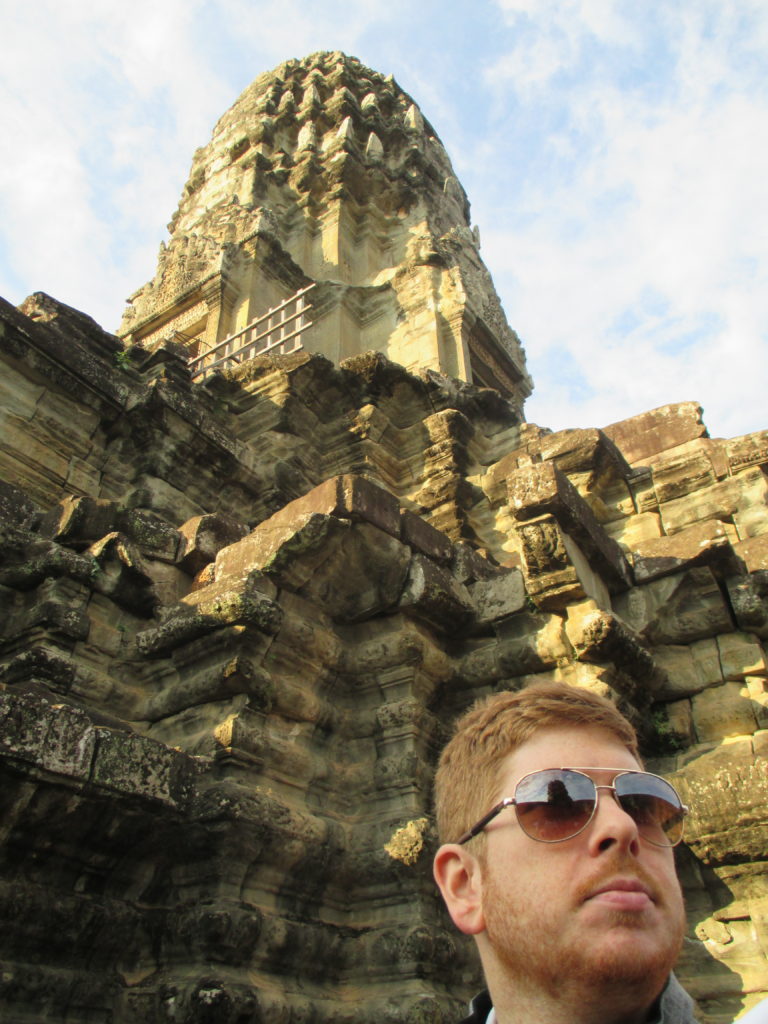
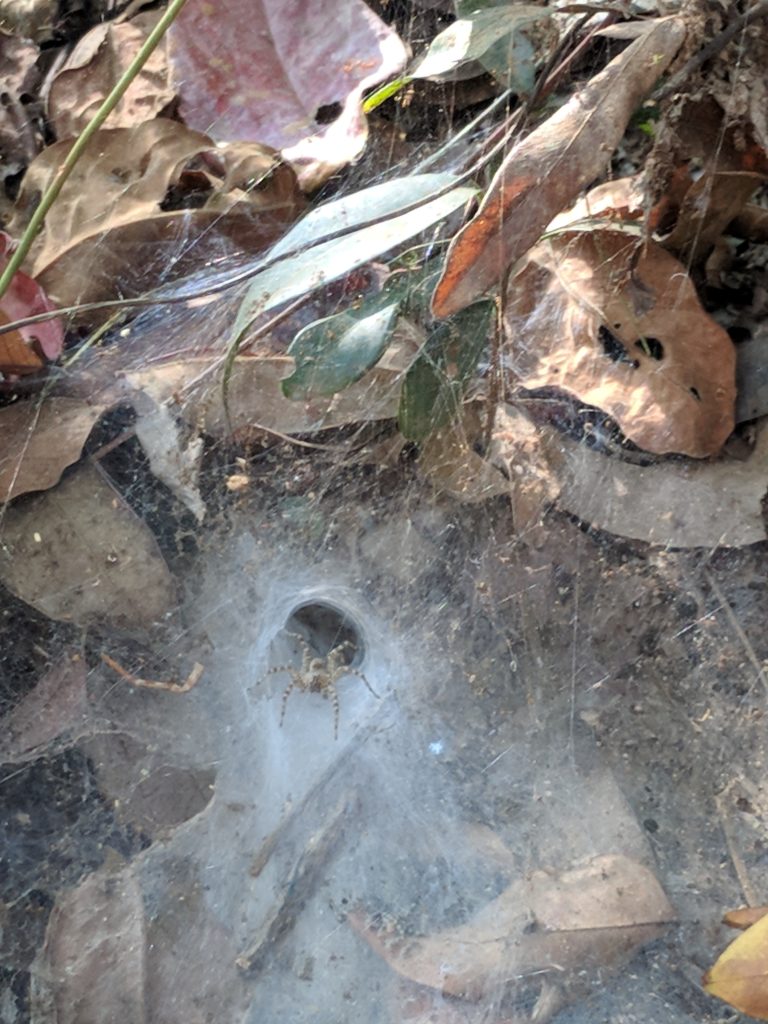
Following our visit to Angkor Wat, we headed back to our Tuk Tuk, noticing in the light all of the elements we missed in the dark. Blake drove us to Phnom Bakheng, a temple dedicated to Shiva at the top of a really lovely hike featuring unique-web-building spiders and garden lizards.

2018-01-13 09.27.39 IMG_06062018-01-13 09.36.00

Blake asked if we’d like to get some food before our next stop and we agreed. He drove us to a nearby place and we ordered some food and fruit shakes and asked him to join us which he did. We made small talk, he asked where we were going after this – Vietnam – and he told us he grew up in a rural area on the border of Vietnam. We asked if he’d ever been there and he informed us that no, in Cambodia people have to work. Just work, so they can support their families. We asked about his siblings – he has four and lives with one in Siem Reap. We asked how he learned English and he told us they teach it in school, and that his boys are also learning English – and Korean as an elective – in school. How old are your boys? 9 and 5. What do they want to be when they grow up? The older one wants to be an architect. The younger one a teacher. Have you ever brought the architect here, to Angkor Wat? No, they live at home with their mother. 400 kilometers away.

It was clear that we were from starkly different worlds. That the amount we spent on our plane ticket to our next destination alone was equivalent what he would make in a week – on a good week. That our vacation, comparatively, was sickeningly extravagant. The privilege with which we have been blindly walking, simply because of where we happened to be born was obvious.

We asked how it worked when we paid the company in Phnom Penh to secure him as our driver – how did he get paid? I don’t get paid for that trip, he said. It is a way to get in front of tourists – to get them to hire me for the day while they’re at Angkor Wat.

Do you get sick of tourists?

Yes.

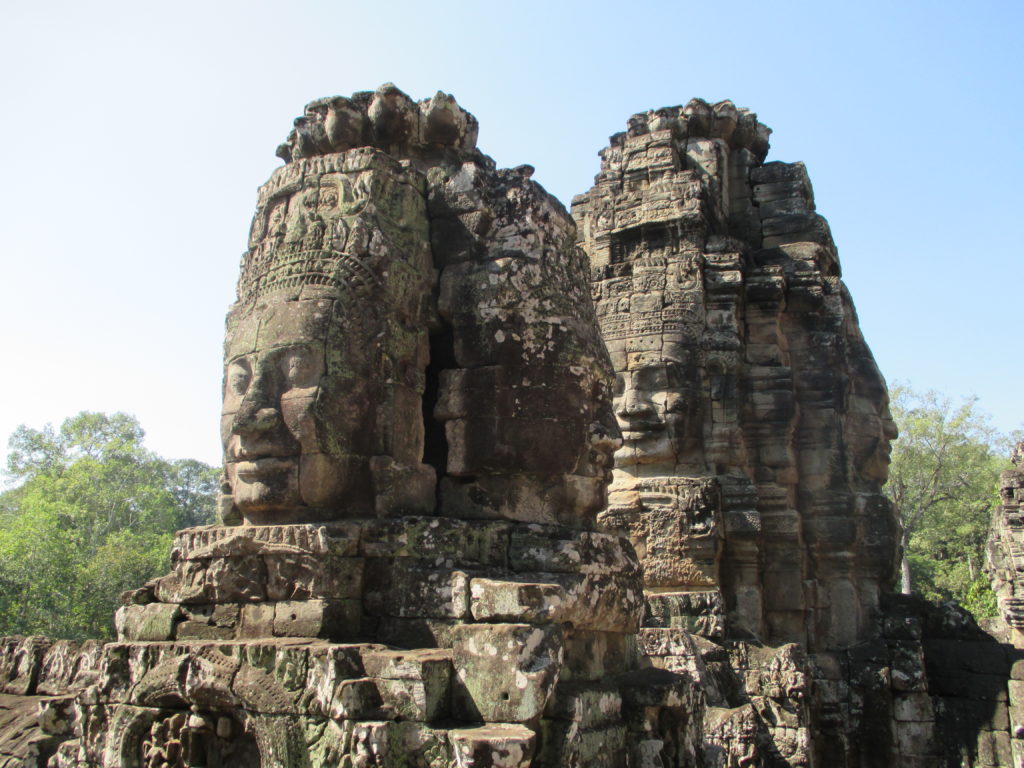
We finished our lunch and Blake brought us to Bayon, a temple within the “city” of Angkor Thom. Surrounded by beautiful, giant Khmer faces, the faces of Cambodian gods – faces that looked very much like Blake’s – I couldn’t help but think of the irony. People from all over the world come to this spot to revere the genius, ingenuity and scale of the ancient Khmer, while being carted around, waited on, and served by the modern Cambodian people in exchange for pocket change.

IMG_0622

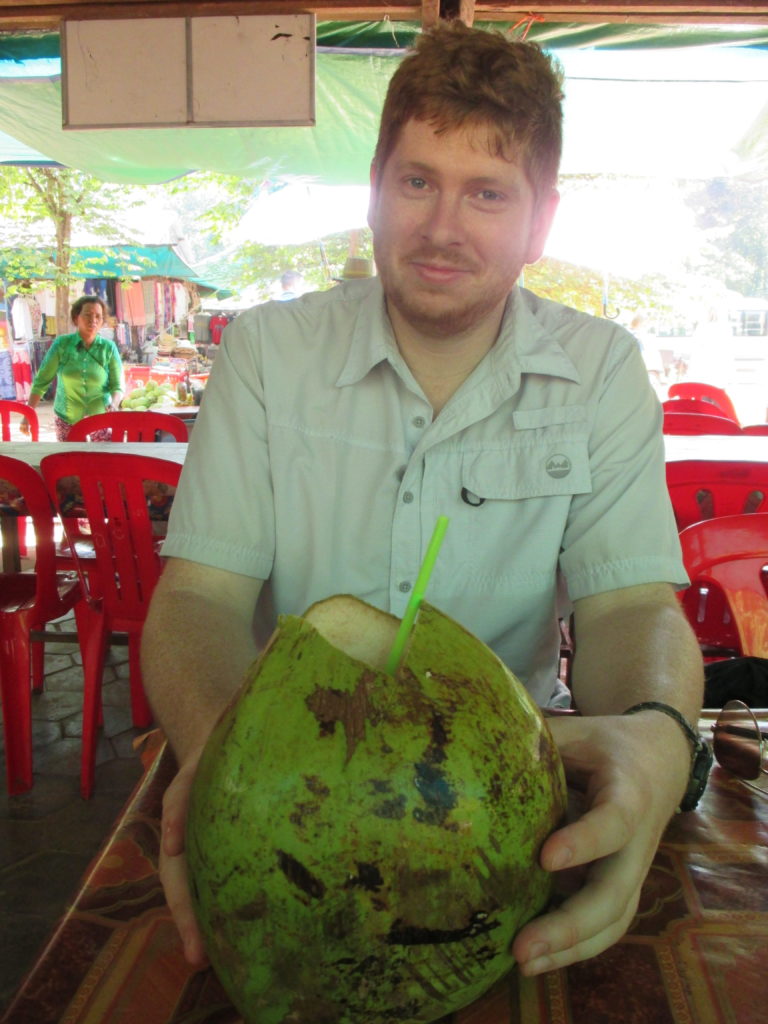
Following Blake’s instruction, we made our way to the former royal palace ruins, and other sites around Angkor Thom. He then took us to our last stop of the day, Ta Prohm. After grabbing drink from a fresh coconut, we made our way in.

IMG_0638

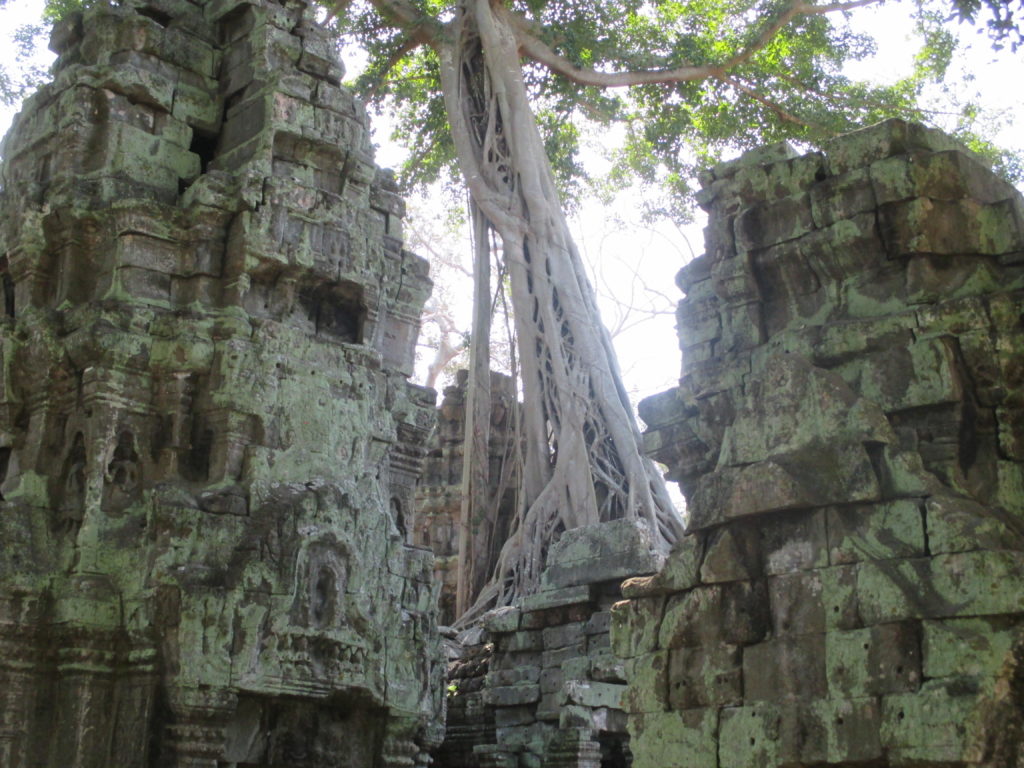
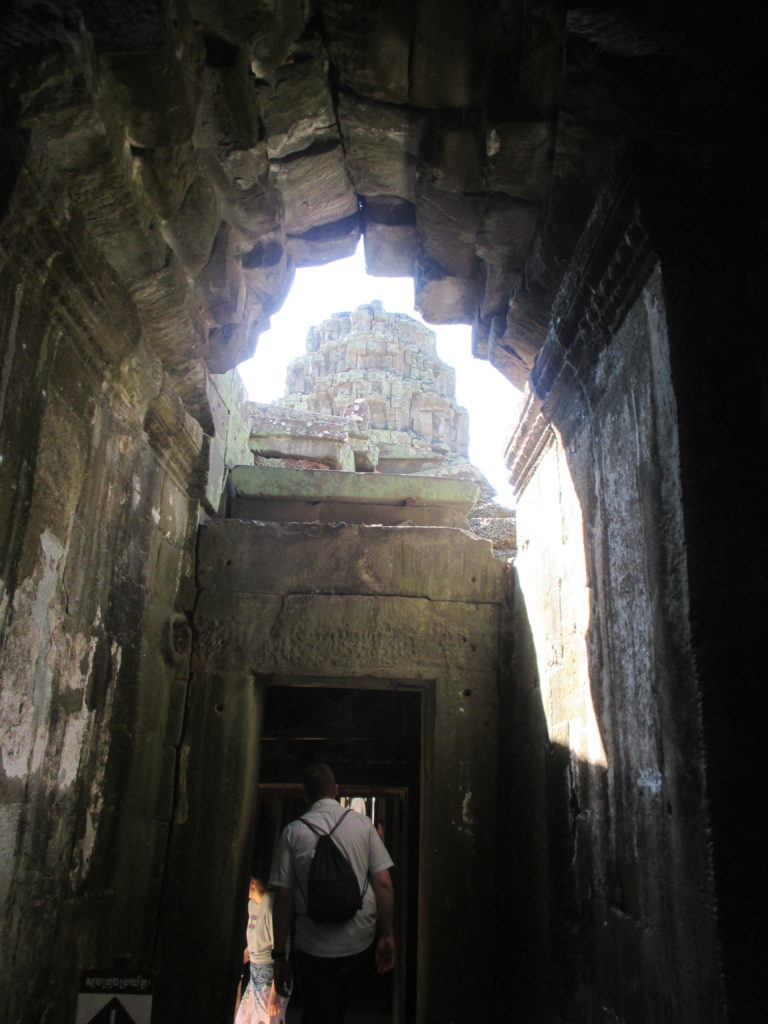
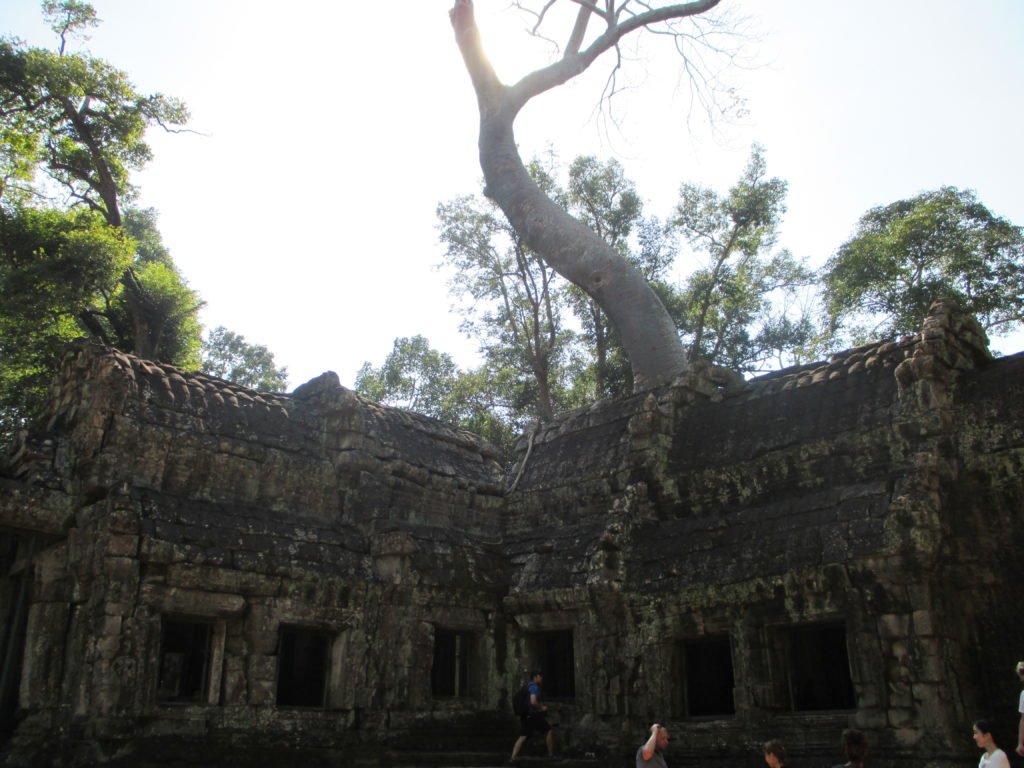
Ta Prohm was the temple I was most excited to see. Unlike the others, Ta Prohm was left as it was found by the French in the 16th century. Overgrown by giant trees, crumbling, this temple – despite the hoards of tourists – felt magical.

IMG_0653 IMG_0656 IMG_0659

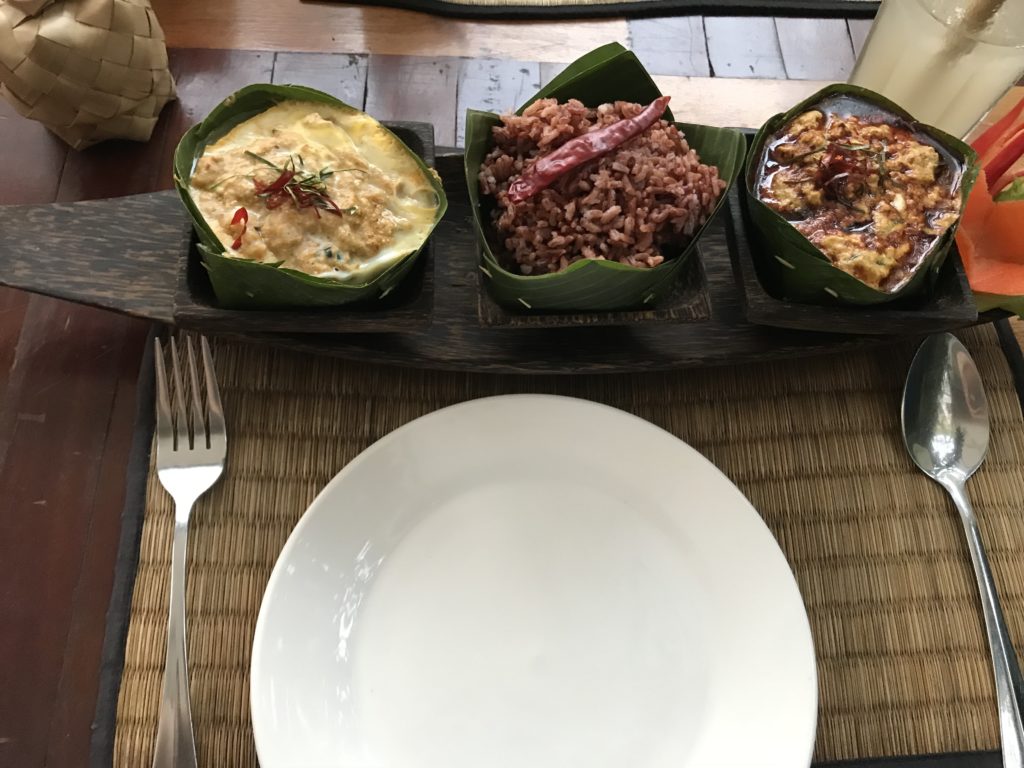
Blake took us back to our hostel where we rested and finalized our plans for tomorrow. We then took a very pleasant walk to New Leaf Cafe and ate a scrumptious dinner of Lok Lak Beef and Amok (I had to get some more before we left!) with Khmer-style iced coffee and Lemongrass iced tea. New Leaf supports local youth organizations with 30% of their profits, with 20% going to their Cambodian staff. Unfortunately, we overheard that they were closing soon, but were happy to see that, despite this, they were very busy while we were there.

1BE89EB3-9258-424A-BE8C-0C0D9BF93ECE

On our walk home we both reflected on how in love with this place we are. The people we have met in Cambodia have been some of the kindest, funniest, most welcoming and down-to-earth people we have ever met. They have been through an absurd amount of suffering at the hands of those in power (including the tourism industry). I hope, moving forward, to find ways that I can help address some of the persistent root causes of the ongoing poverty and exploitation that continues to hurt the citizens of this beautiful place.

We love you, Cambodia!

Cambodia | Day 3 – Mekong Express

2018 Southeast Asia

Yesterday was a relaxing day, starting out with travel from Phnom Penh to Siem Reap. We met at the dock at 7am, where we checked in, and scheduled a $6 tuk-tuk ride from the terminal dock to our hostel in Siem Reap. 2018-01-12 07.21.43

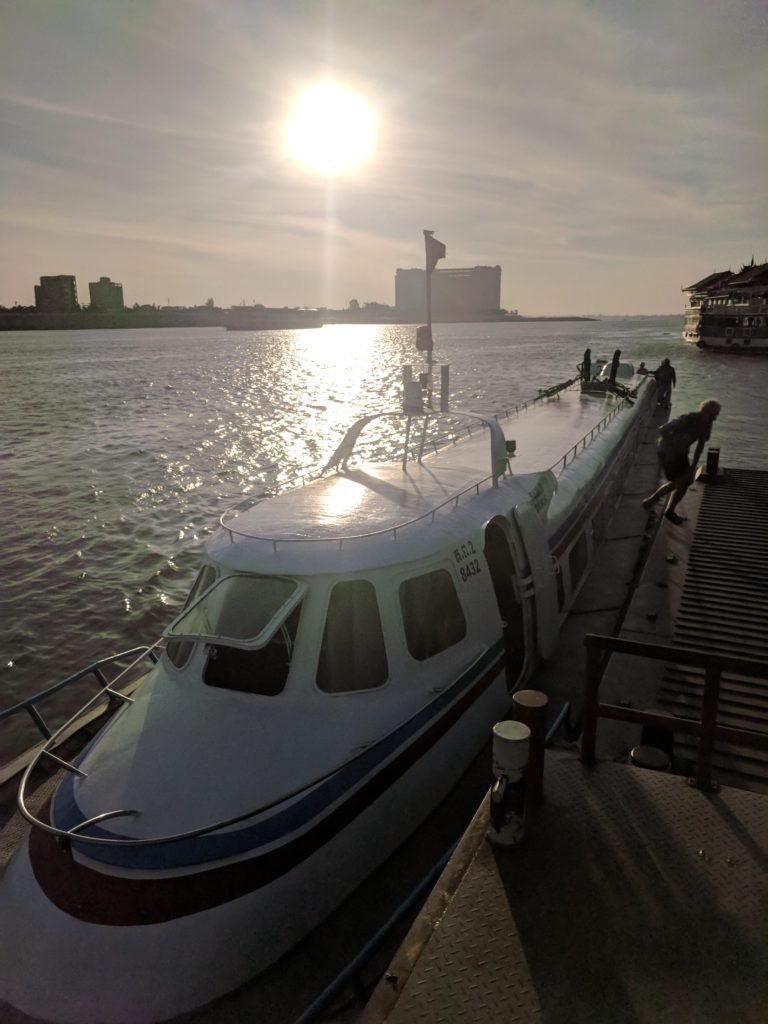
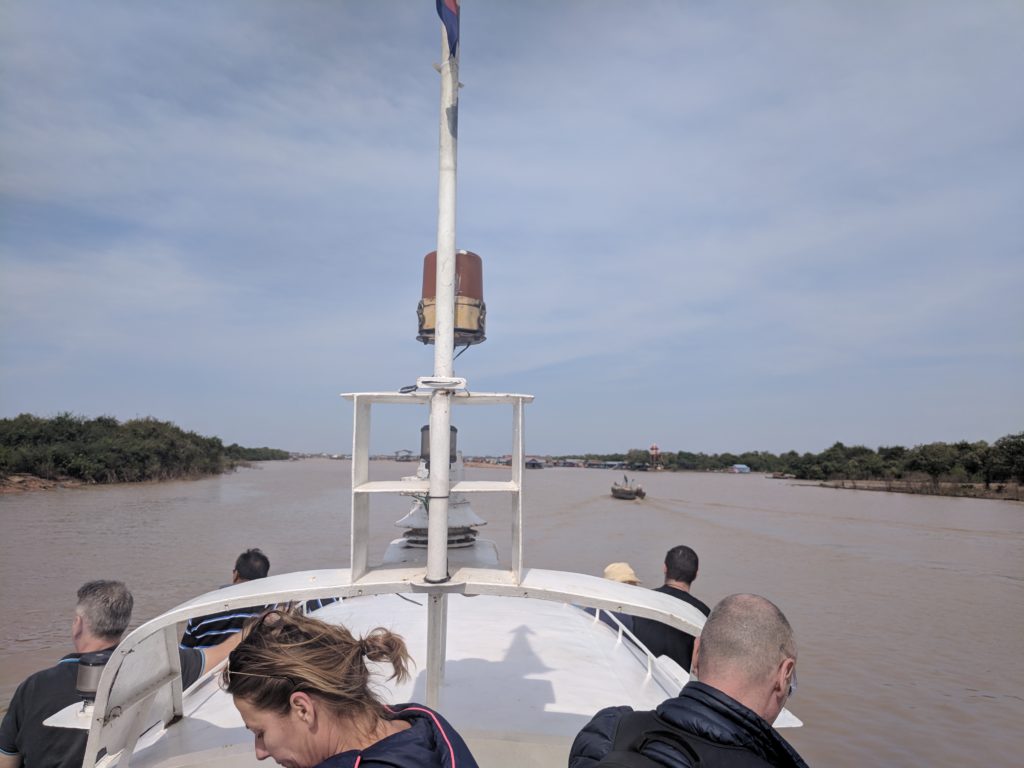
Our vessel was a long and skinny passenger boat, resembling an aircraft. Putting most of our belongings in our seat inside the boat, we hopped on top for a better view, prepared for our six hour journey up the Mekong river ending in the Tonlé Sap lake.

2018-01-12 13.20.24


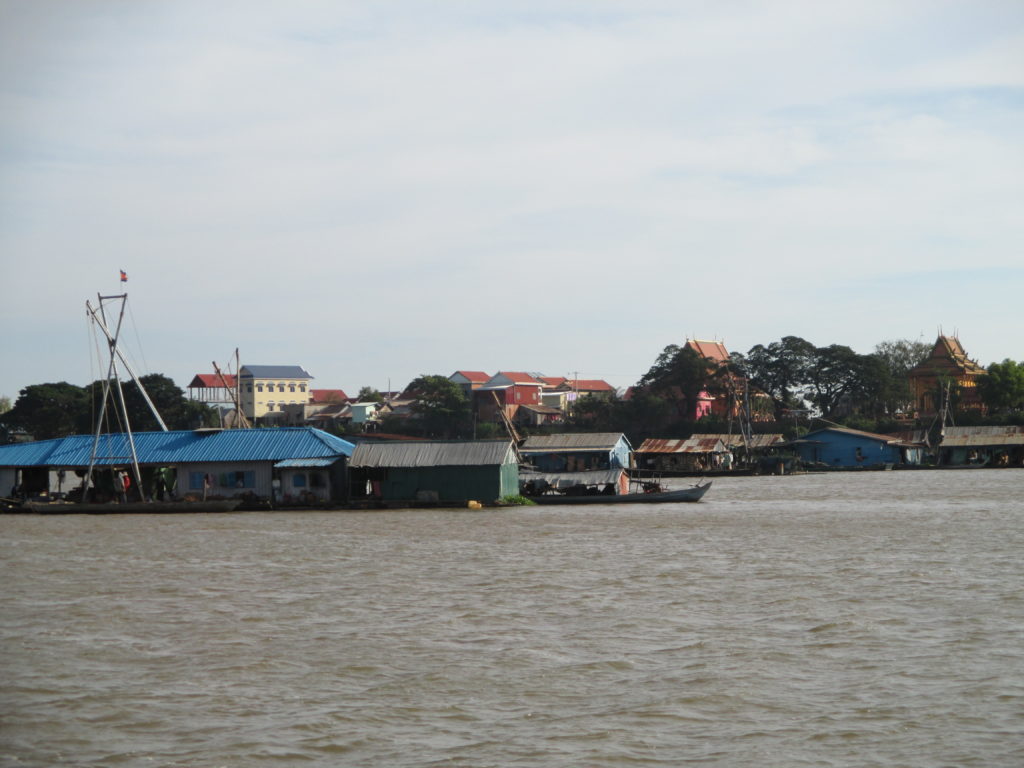
Along the way, there were homes built on the side the river, with people farming, cattle grazing, and kids playing. More buildings still were built on the river itself—clearly the belonging to fishing villages and secured in place by some means I don’t fully understand.

IMG_0517

There was no question that the Khmer people were hard working and industrious, always at some project or another. It’s historically been a thriving nation, but with such recent atrocities, it’s still getting back on its feet.

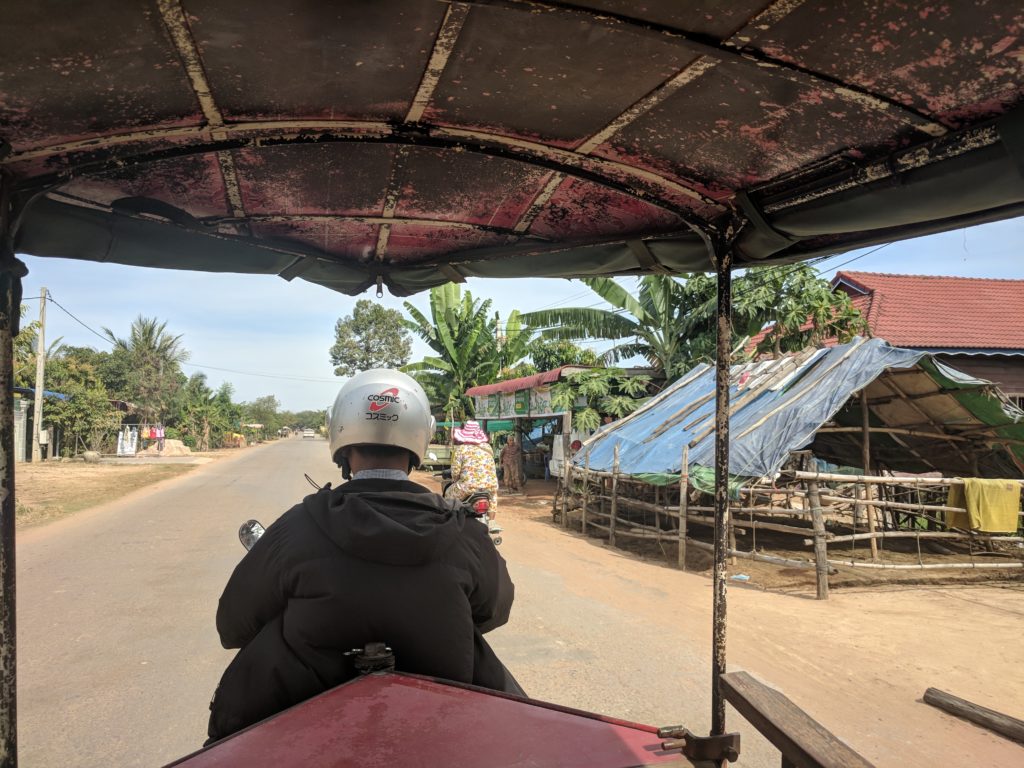
Upon arrival, we disembarked the boat, and found our driver, Blake. Travel in the wild west of Cambodian traffic laws still takes a bit of getting used to, but as in Phnom Penh, our driver was an expert at knowing his vehicle’s corners. We reached our hotel, and reserved Blake for our trip around the Angkor Wat complex tomorrow.

2018-01-12 13.48.00

Our evening saw us getting food at Genevieve’s Restaurant, where we had more delicious food and drinks. We then proceeded to wander around shopping districts, where found a scarf and dress for Jessie to wear to the Angkor Wat complex, which has modesty rules.

2018-01-12 16.24.14

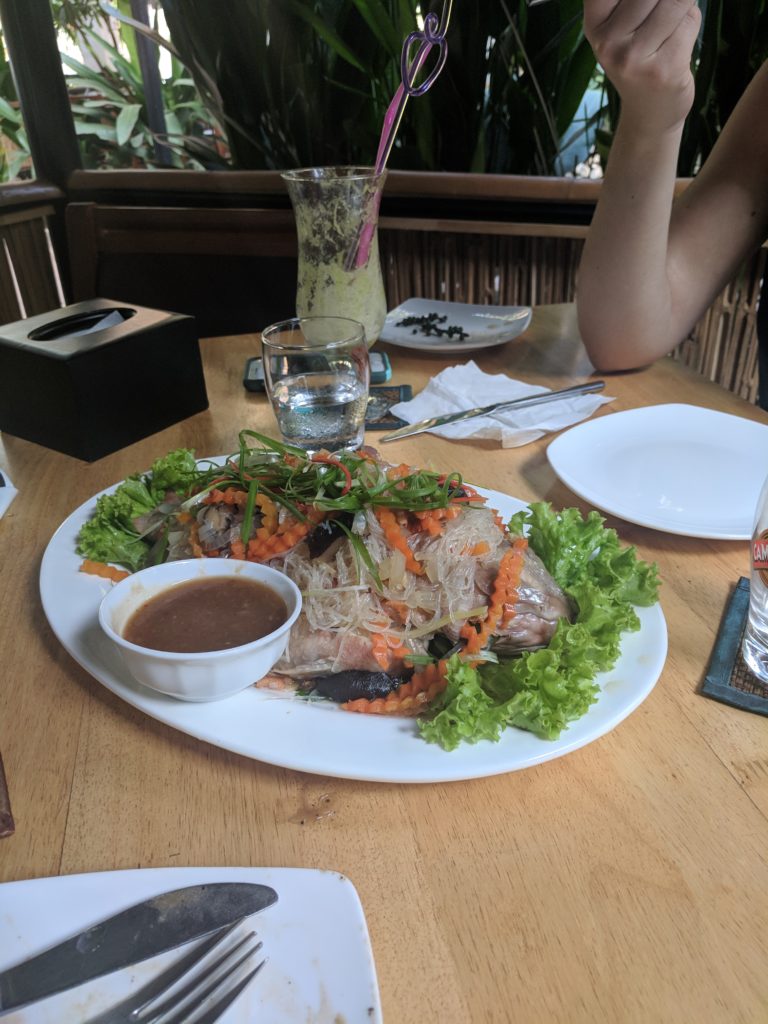
There’s a fish in here, I promise.

We ended up back at our hotel at 6pm, with the idea that we needed to spend time figuring out the second leg of our trip. Since we bought a ticket to Da Nang already, we know our next destination. The problem is that we now need to know how we’re leaving Vietnam in order to get our visa, which also means that some things we already had planned, may need to get moved around.

2018-01-12 17.22.56But instead of doing all of that, we fell asleep.
Cambodia | Day 2 – Nuggets of History

2018 Southeast Asia

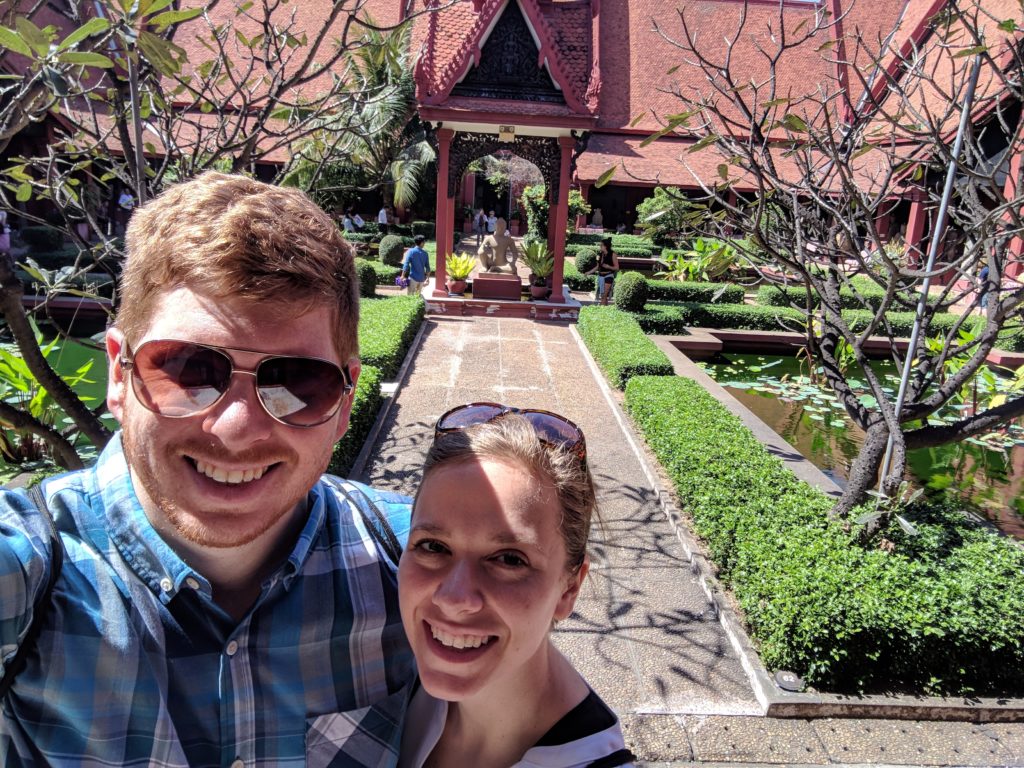
After a very restful night’s sleep, we ate a small breakfast at our hostel before taking off on foot to the National History Museum. Throughout the rather last-minute planning of this trip, I’d not gotten a chance to really dig in yet to the history of all of these places which is so important to understanding where they are at present.

2018-01-11 12.37.21

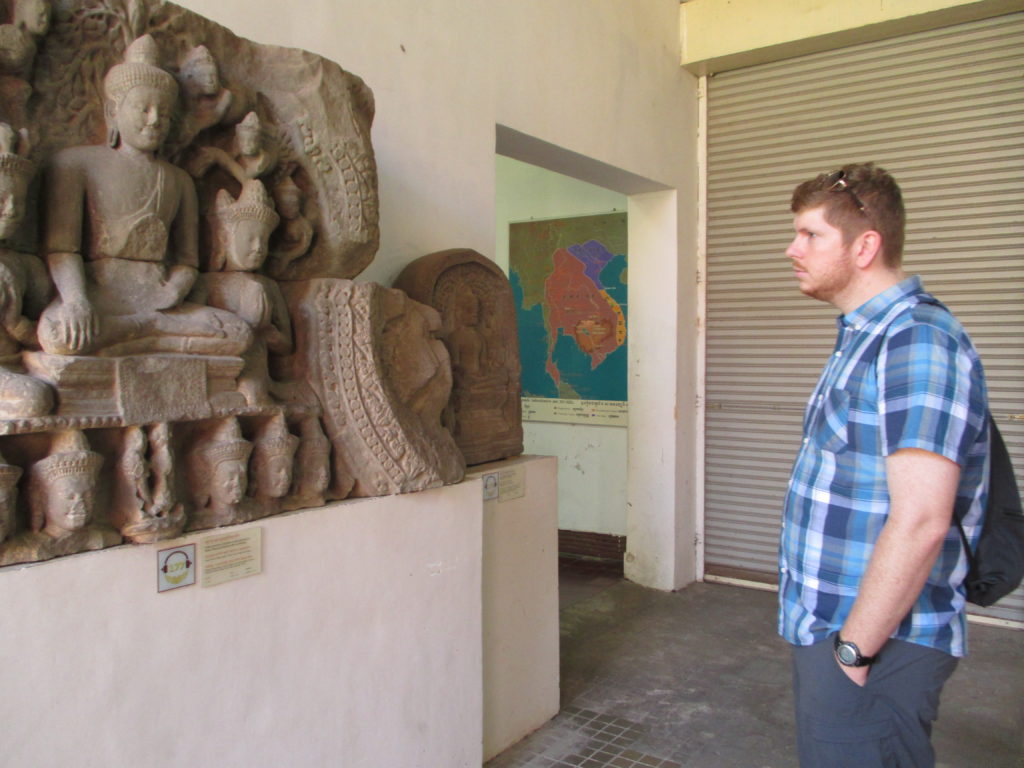
We had a very funny and sweet older woman show us around the very beautiful facility of the National History Museum. Built in 1917 and opened as a history museum in 1920 (the same year our house was built <insert head exploding emoji>), much of its contents were destroyed during the Khmer Rouge wherein anything surrounding religion was destroyed. Many items that were otherwise dislocated are just now being returned, including a set of gold jewelry which had been in a collection in the UK and was just returned in 2016.

IMG_0495

Our guide helped us better understand the history of the area, including the ebb and flow of other countries taking over in the early periods, and the importance of religion throughout the ages. While showing us a statue of Vishnu with his hand-sized wife on his arm, Ray asked “Why is she so small?” Our guide replied by just giving us a look as if to say “Well, it works for you two, doesn’t it?” She was great.

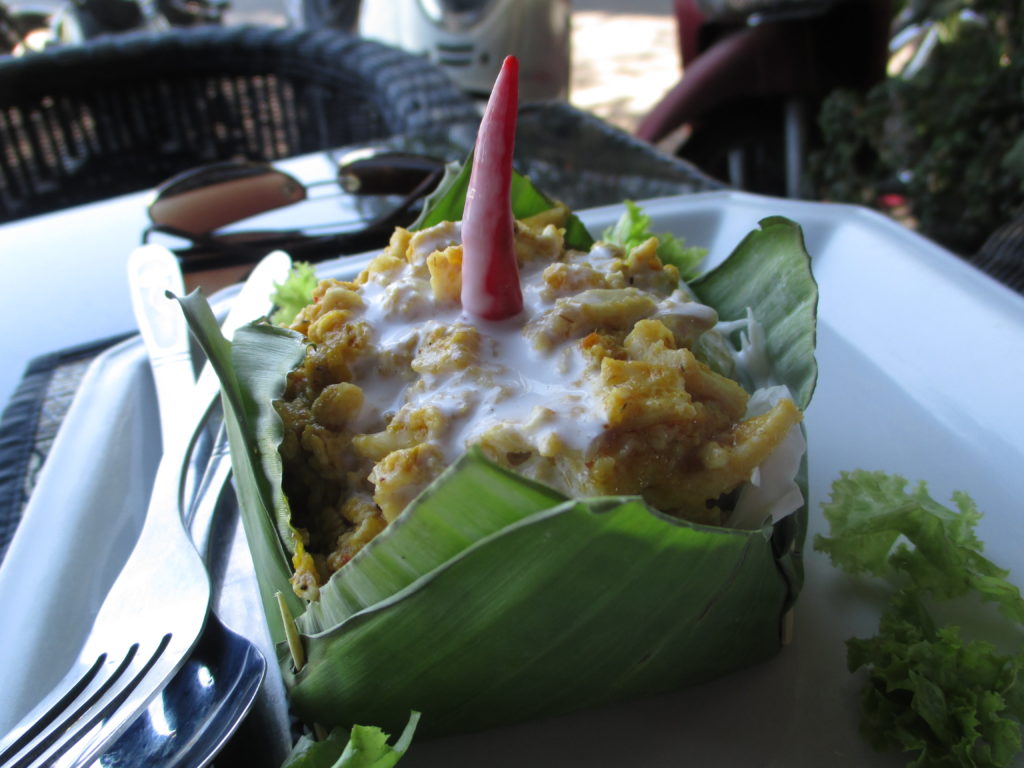
We walked back to our hostel along the broad walking lane by the river, and then stopped at a restaurant along the way that was boasting $.75 beers. How could we refuse?! 3 beers and a yummy fish amok later, we continued on our way in the hot sun.

IMG_0498 IMG_0499

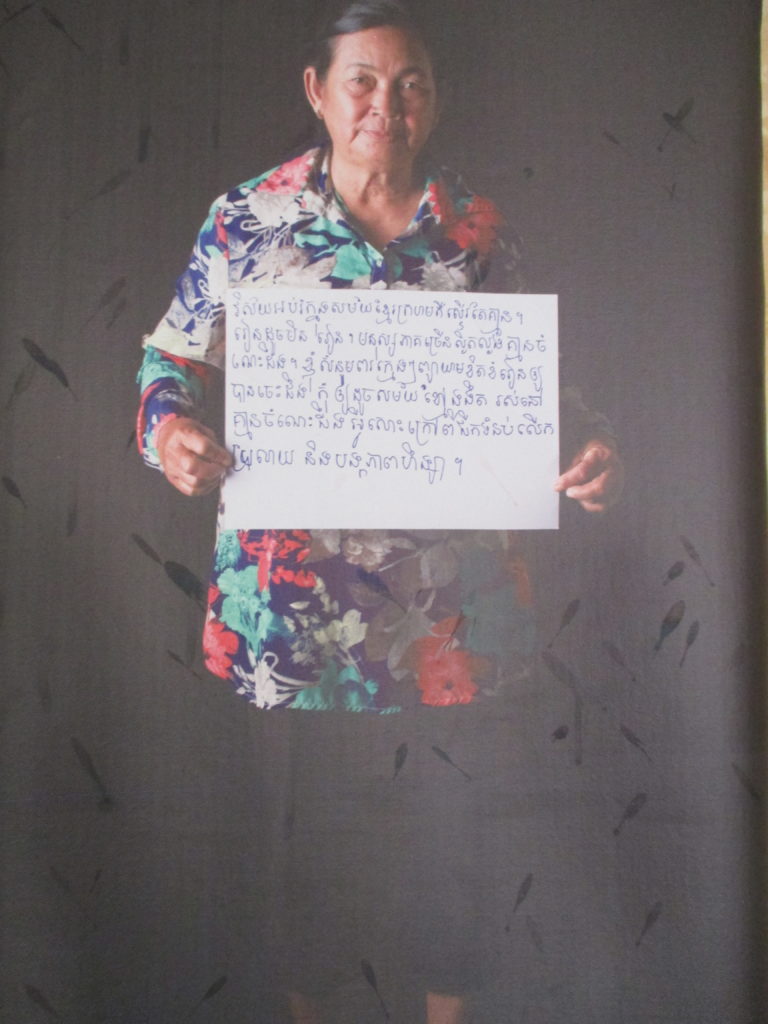
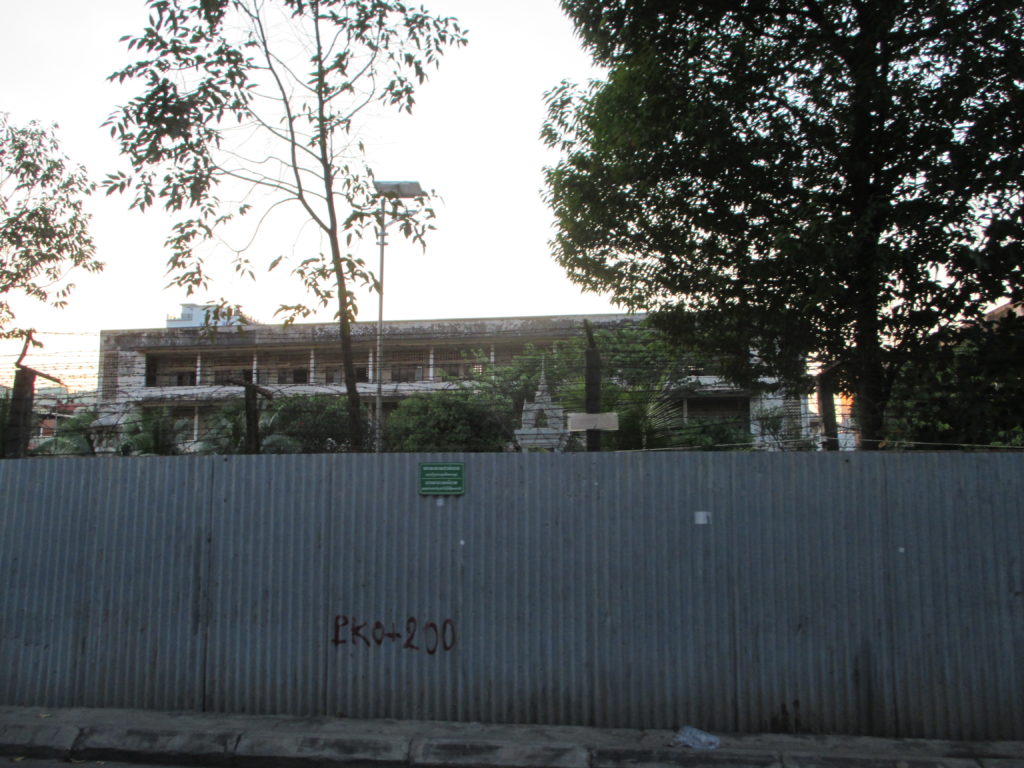
Next, we caught a tuk tuk to Tuol Sleng. This is a museum set in an old high school which was turned into a prison and place of torture during the Khmer Rouge / Pol Pot regime. This is only one of 150 or more execution centers set up in the country during this time. Again, we had a guide who took us through the harrowing museum. She told us not only of the atrocities that occurred during the 4 years the Khmer Rouge was in power (including torturing and killing members of their own party in the final days), but also of her personal story.

Portrait at the Museum: "Education during the Khmer Rouge period was almost none. That was the lesson, they could not educate you to learn anything. Almost everyone could not read. I suggest to the next Cambodian generations: please put more passion into learning and away from any actions that could create the dark era like that regime did when people were blinded by anger, and knew nothing besides digging canals and committing violence."

Portrait at the Museum: “Education during the Khmer Rouge period was almost none. That was the lesson, they could not educate you to learn anything. Almost everyone could not read. I suggest to the next Cambodian generations: please put more passion into learning and away from any actions that could create the dark era like that regime did when people were blinded by anger, and knew nothing besides digging canals and committing violence.”

I am currently reading First They Killed My Father, a book by Luong Ung who was 5 years old when city-dwellers were forced to leave their homes. Our guide was 9. The author of the book states at the very beginning that her story is every Cambodian’s story, and although I mentally understood what that meant, it wasn’t until I heard our guide’s startlingly similar account that I truly understood. She and her family were driven out of their home in Phnom Penh and relocated to a village in the southeastern part of Cambodia. Her father, who had been a soldier in the previous regime was killed, then her brother and sister either starved or were worked to death in a camp. Fortunately our guide and her mother were able to escape over the border into Vietnam where they lived in a refugee camp before returning to Cambodia after the fall of the Khmer Rouge in 1979.

I had expected Tuol Sleng to be really gruesome and heart-wrenching. And though it was those things, it was also very simple and matter of fact: here’s what happened. I was struck by so many things during our visit: the portraits of the impossibly young Khmer Rouge soldiers who had been “recruited” (forced to serve) from rural areas; the fact that some of the people who had governed during this period still hold positions of power today; the fact that Pol Pot was never captured or punished; that many of the higher-ups are still waiting to be put on trial. But one of the things that really struck me was that a group of maoists from Sweden, after hearing reports of the atrocities from refugees, were allowed to come in during the height of the regime (Pol Pot, despite his insistence that influence from other countries was dangerous, still needed money from outside sources). Pol Pot wined and dined them, brought them to pre-determined locations, and sent them on their way. The Swedes – this group in particular being sympathetic to the communist agenda – reported that everything was just fine! Everyone we saw was smiling! I only saw maybe four guns the whole time. This report stifled any help for the people of Cambodia from the outside world. Thankfully, the Vietnamese believed the refugees and worked to stop the regime by April 1979.

Quote from one of the exhibitions: "When the Pol Pot regime was driven from power by Vietnam in 1979, evidence of murder and execution began to be revealed to the world. Despite this, the world doubted the evidence for a considerable period of time. The perpetrators were even allowed to represent their country in the UN twelve years after the first mass graves were opened. The world has turned its eyes away a number of times during some of the 20th century's worst catastrophes: Armenia, the Nazis genocide, Rwanda, Darfur - the list goes on. Is it possible for us to learn to see sooner the next time a catastrophe is occurring?"

Quote from one of the exhibitions: “When the Pol Pot regime was driven from power by Vietnam in 1979, evidence of murder and execution began to be revealed to the world. Despite this, the world doubted the evidence for a considerable period of time. The perpetrators were even allowed to represent their country in the UN twelve years after the first mass graves were opened. The world has turned its eyes away a number of times during some of the 20th century’s worst catastrophes: Armenia, the Nazis genocide, Rwanda, Darfur – the list goes on. Is it possible for us to learn to see sooner the next time a catastrophe is occurring?”

Only seven people were found alive at Tuol Sleng when the Vietnamese arrived. One of them was an artist who, in the years following his release, took it upon himself to paint what had happened in Tuol Sleng. I was so shocked to hear that many people – many Americans – do not know (or worse yet, do not believe) what happened during this time. Knowing that, as we took our tuk tuk home, nearly everyone we passed had lost someone during that time – a quarter of the population decimated – gave me a renewed admiration and respect for the resilient Cambodian people.

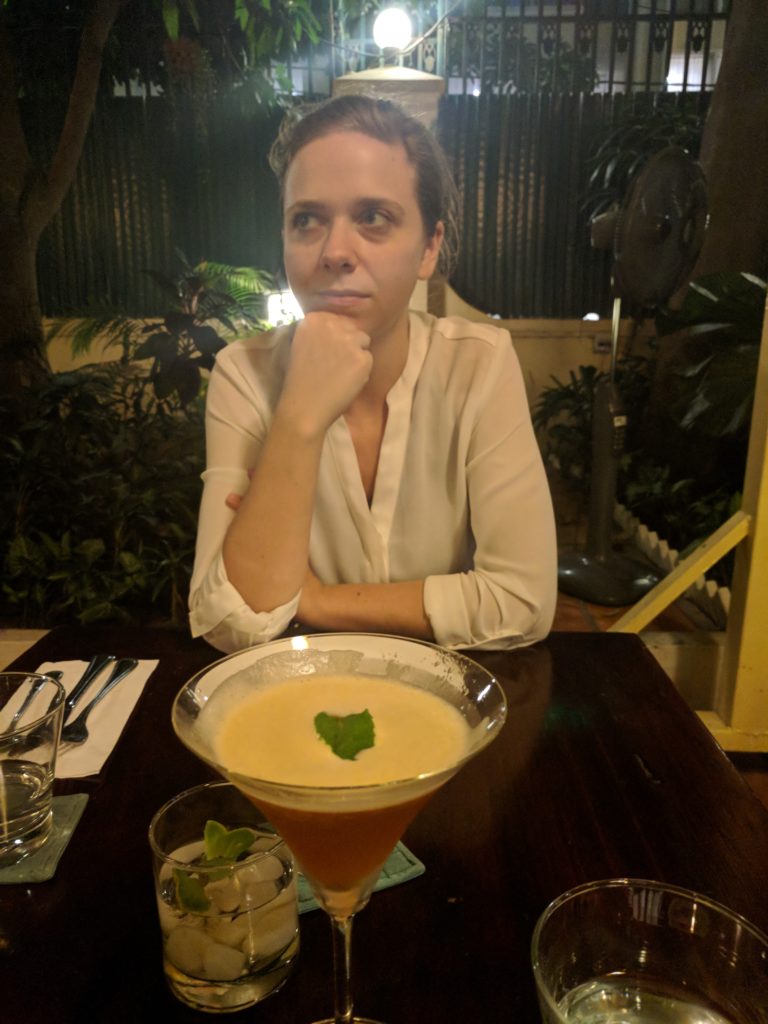
This evening we ate a most delicious dinner at Romdeng, a restaurant that trains former street children and marginalized youth to work in the hospitality industry. For drinks we had Red Tea Bourbon with Kaffir Lime (Ray) and Honey Rice Liquor with Lime, Pineapple, and Orange Juice (me). For food, we had Smoked Duck Breast Lapp with Pumpkin, Orange, Chili, and Toasted Rice (Ray) and Rice Noodle Salad with Lotus Seeds and Mushroom Coriander Spring Rolls (me) with a baguette with Lime Coriander Butter to share. It was simply wonderful.

2018-01-11 20.37.07

Now we are in our comfy dorm getting everything packed for our early-morning boat ride to Siem Reap!

Cambodia | Day 1 – Lost in time and space

2018 Southeast Asia

Hello from the other side of the world!

I think we last posted on Sunday evening. It’s Wednesday evening as I post this, but only Wednesday morning in Minnesota. This is our first venture across the international date line, so it’s a bit confusing trying to keep a mental timeline. I’m going to try anyways!

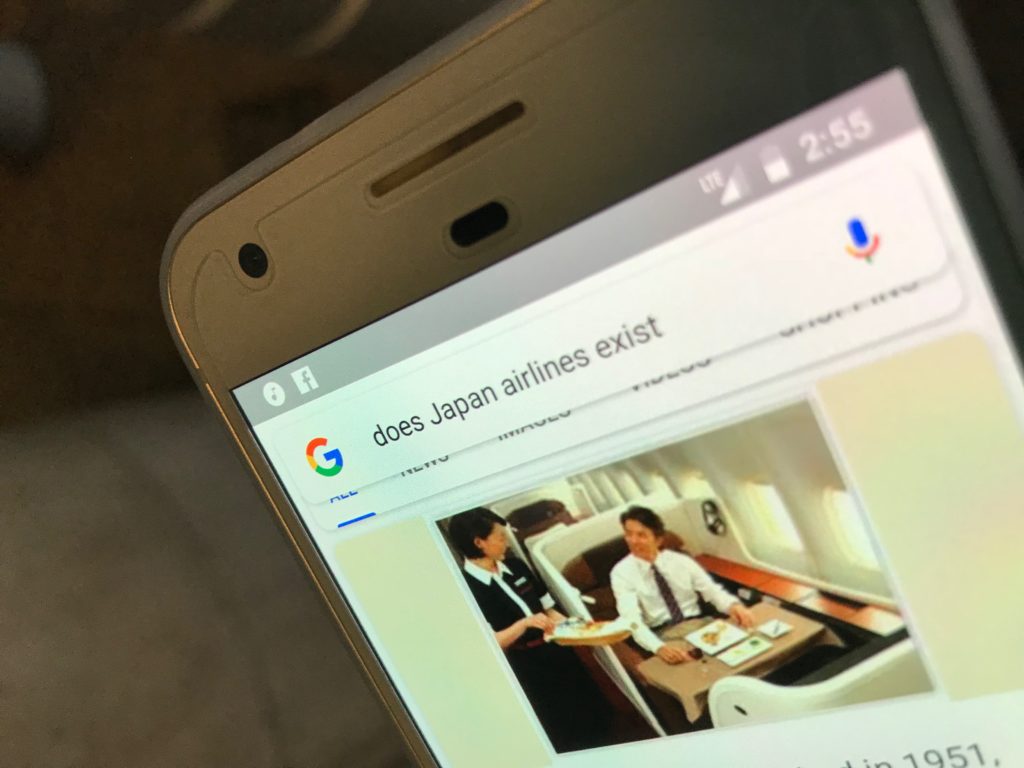
Monday morning, we got to the airport around 7:15 in an attempt to check-in, and hopefully resolve the confusion over the boarding passes. We were not allowed to check-in online, and were not entirely sure that anybody would even be at the Japan Airlines counter. In some rare stroke of luck, Japan Airlines turns out to exist, and only an hour later, we were able to check in and print our boarding passes to Singapore.AF4C5E41-69D6-448D-9C36-9FC1DF8E0BAA

Because we checked in four hours before our flight, we then kept ourselves busy at the airport, while I nursed my upset stomach, self inflicted from the previous night’s deceptively spicy foods.

The tickets that we initially bought were found at a steep discount, but were not the most direct or shortest route. Chicago, Dallas / Fort Wirth, Tokyo Narita, and Singapore Changi. With getting from Minneapolis to Chicago being tacked on to the front, that made it a four flight trip.

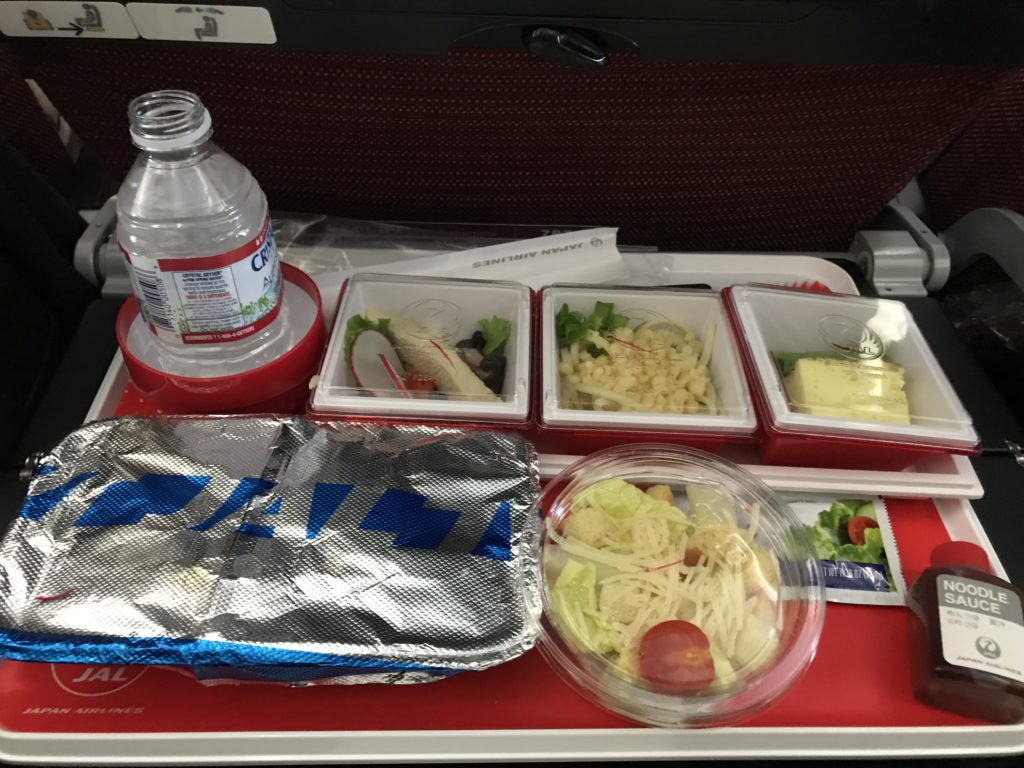
The first leg of the rest of our trip would be our longest; Dallas to Tokyo was a thirteen hour flight that progressed at a snails pace. There was plenty of in-flight entertainment, and interesting meals served bento style. Our plane was a Boeing 787, which is a newer model known to be a more luxurious and fuel efficient jet, with progressive colored window tints instead of drawn plastic shades, and lighting designed to coax people to sleep.

C49DA3EB-7886-4E24-97E4-1B0AE044A47F

We arrived at Tokyo Narita just long enough to get to our gate, but no time for much else. Our flight to Singapore was also long (another 7 hours), and got us there without any problems. Since that was the last leg of our original flight, there was a question of what happens next.

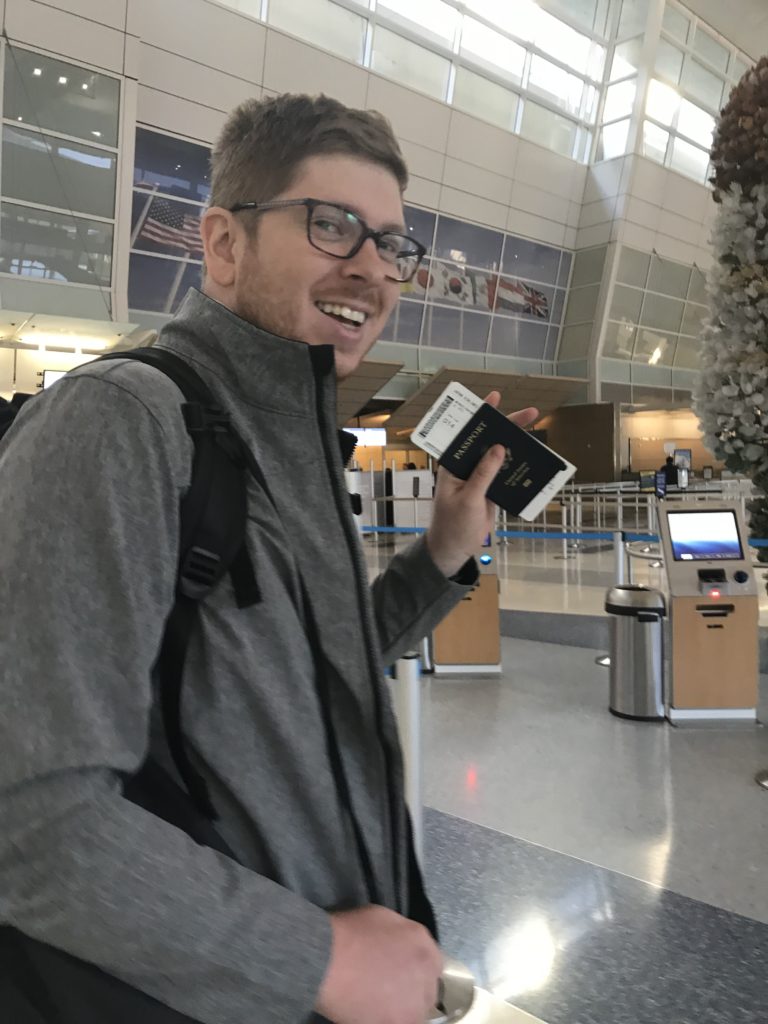
We had decided to go straight to Phnom Penh (5 flights, if you’re keeping track), but didn’t have our boarding passes printed. Luckily for us, we were able to find a transfer desk that would check us in, on the condition that we were able to show her an exit ticket from Cambodia, so we hastily decided that Vietnam was our next stop, and bought another ticket.

It’s a good thing we did, too. A roaming band of armed airport police were checking passports and boarding passes where we were trying to get some sleep. I’m not entirely certain what would’ve happened if we were unable to print our boarding pass, but my guess would be that we would’ve been kicked out of the airport or detained.

Our flight to Phnom Penh was a much smaller plane, with much less leg-room. We made good time, but were told we couldn’t land for another forty minutes, because of a VIP landing at the airport. So we just flew around in circles until we could land.2018-01-10 18.13.41

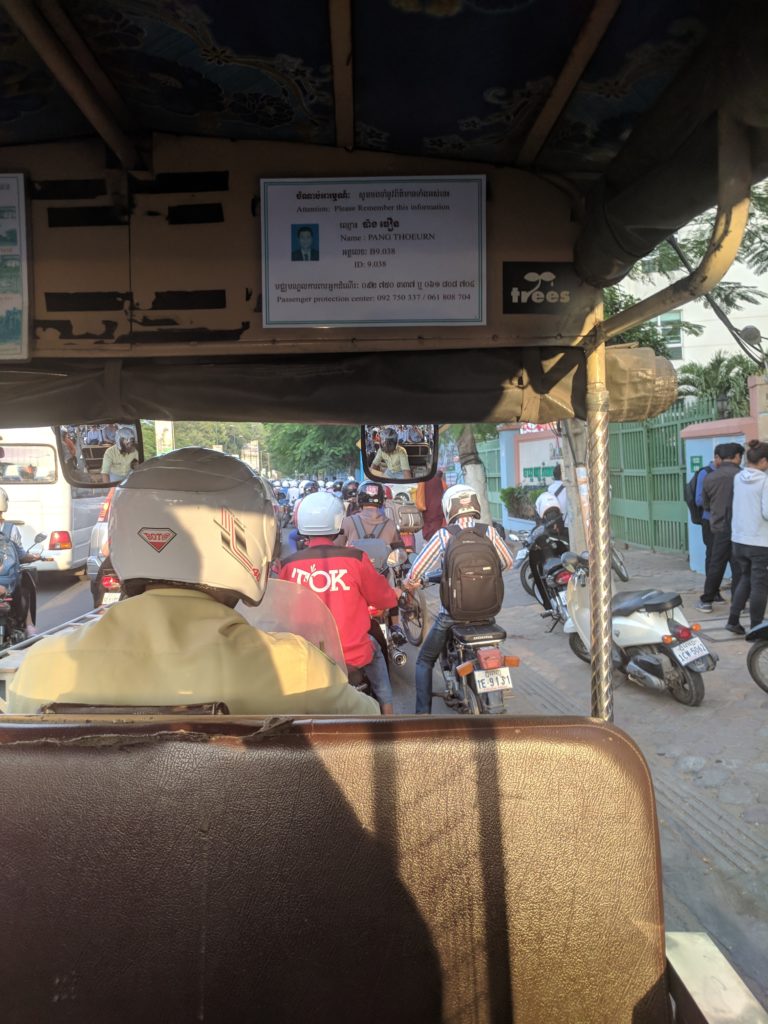
After quickly getting our Visa, going through immigration, then customs, and getting a quick coffee to break some bills, we were quickly en route to our hostel. We took a tuk tuk, which is essentially a motorcycle drawn carriage, driven by a maniac. Seemingly everybody on the road has some kind of death wish, as scooter after scooter split lanes, drive up the curb, or change lanes without any stop signs or any concept of right of way.

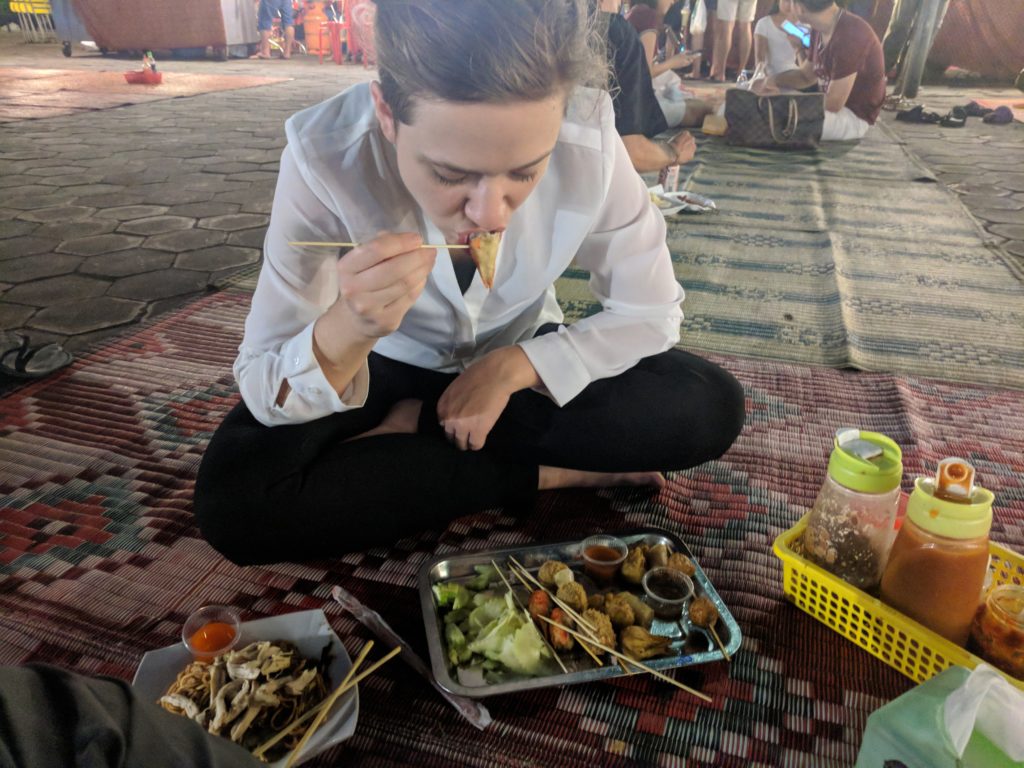
2018-01-10 19.44.09Which brings us to tonight, where we finally have a bed to fall asleep in. We spent an hour or so at the nearby night market, browsing goods and eating tasty food stuffs. After dinner, we wandered home, showered, and are about to get a full night sleep in preparation for tomorrow.


Big Trip 2018 | Layover Land

2018 Southeast Asia

And we’re off! … slowly.

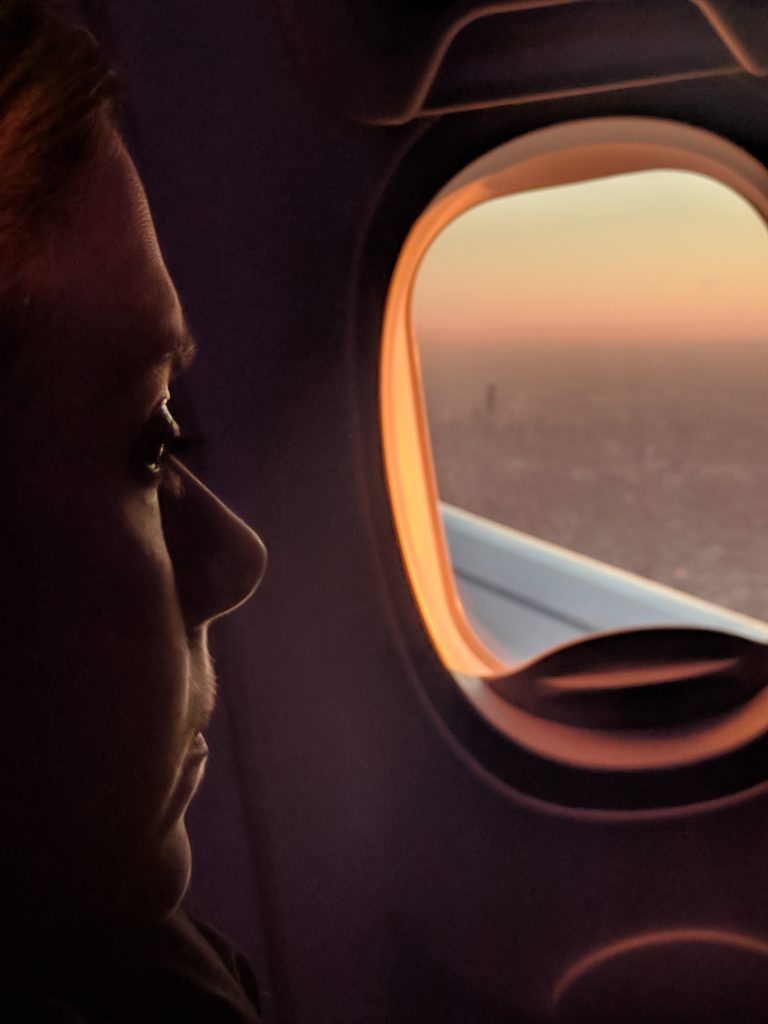
Landing in Chicago at sunset

Landing in Chicago at sunset

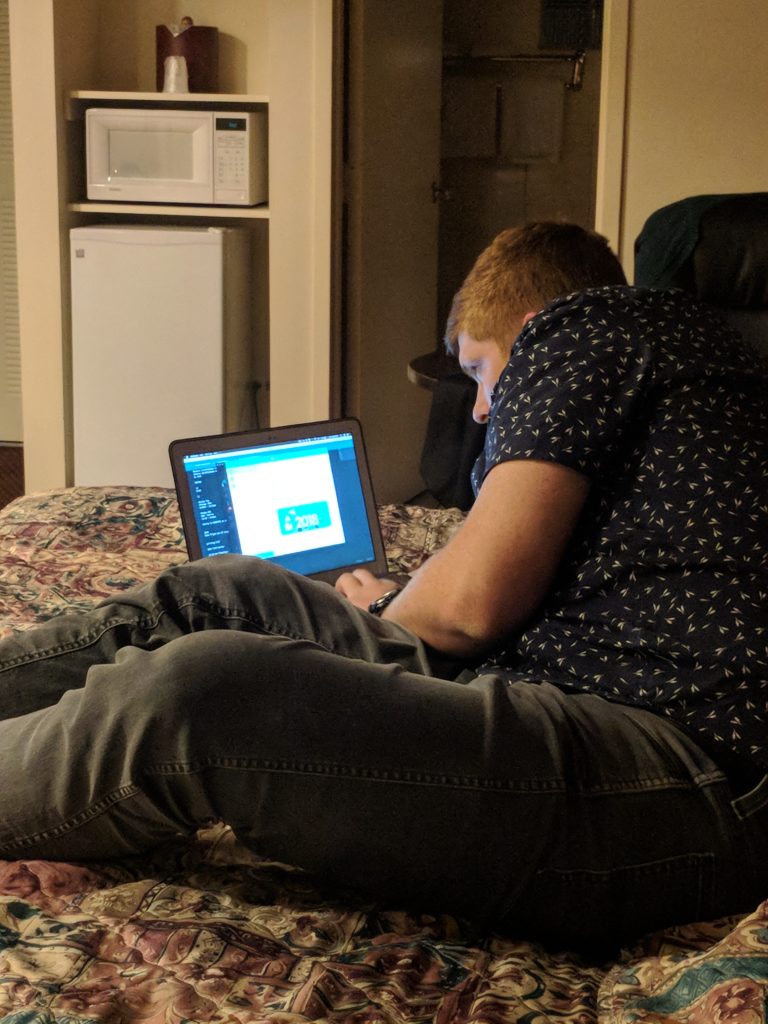
Yesterday we flew from Minneapolis to Chicago and stayed the night in a motel run by a super sweet family. I think the hotel could best be summed up by Ray’s reflection: “Some hotels use the phone number as the internet password. The Regal Inn, however, uses the fax number.” A little outdated, but quaint.

We spent the evening trying to figure out our flights for the next day as Japan Airlines had sent an email asking us to confirm a change over the phone but never. picked. up. Ray finally called the credit card company we’d used to book the flight and they were (thank goodness) able to get us the info we needed for this first leg to Dallas. Slightly exhausted from an anxious hour of wondering if we were somehow accidentally dropped from the flight (spoiler: we weren’t), we nixed our initial plan to venture into the city (which was quite far away anyway) and ordered pizza delivery. The remainder of the evening was spent eating deep dish, watching The Great British Bake Off, and trying to divine the weather in our different destinations to decide where to go first.

Drumroll … Phnom Penh, Cambodia will be our first stop! Well, our fourth stop after layovers in Dallas, Japan, and Singapore …

2018-01-06 18.43.06

Ray working airline-related miracles

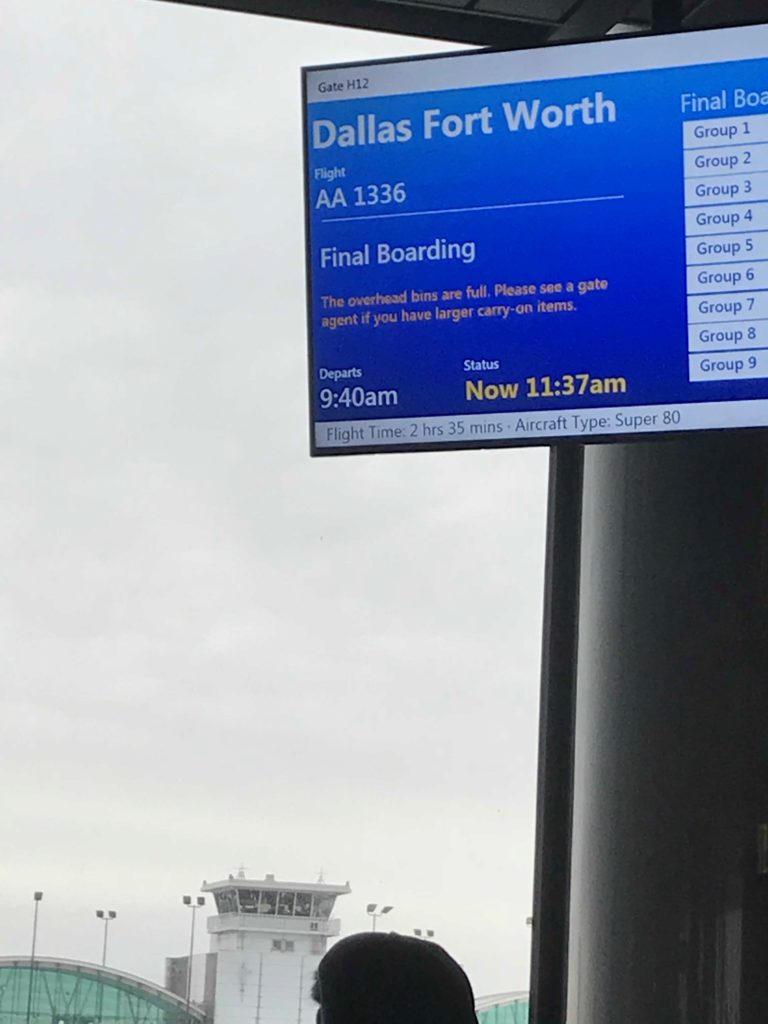
We woke up this morning (was it really this morning?! Time has lost all meaning) super early to ensure we had plenty of time in case there were issues with our flight. Thankfully there were not and we spent a boring number of hours before boarding. After sitting on the plane for nearly an hour, we were deplaned because of a malfunction of the water system. Another long wait and our scheduled 9:40AM flight finally boarded at 11:40.

IMG-3550

Landing in Dallas, we attempted to find Japan Airlines to talk to them in person about getting our boarding passes for tomorrow finalized. Fortunately, we found the Japan Airlines desk! Unfortunately, there was no one staffing it. Fortunately, we found an “all airlines” boarding pass kiosk! Unfortunately, JAL was the only one not listed. Fortunately, we found a very helpful American Airlines staff member! Unfortunately, they were unable to determine any more than we were and could also not get a hold of JAL. She was very helpful and assured us there would be a JAL staff member present tomorrow before our flight and helped us to connect with our hotel’s airline shuttle.

IMG-3553

It does beg the question …

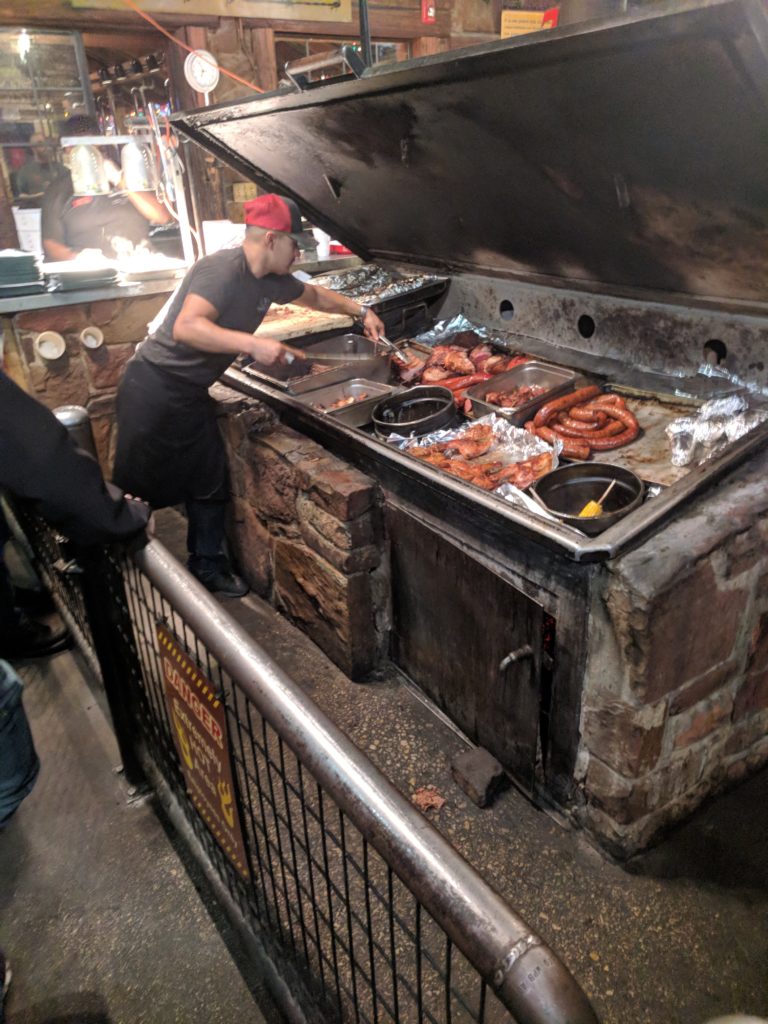
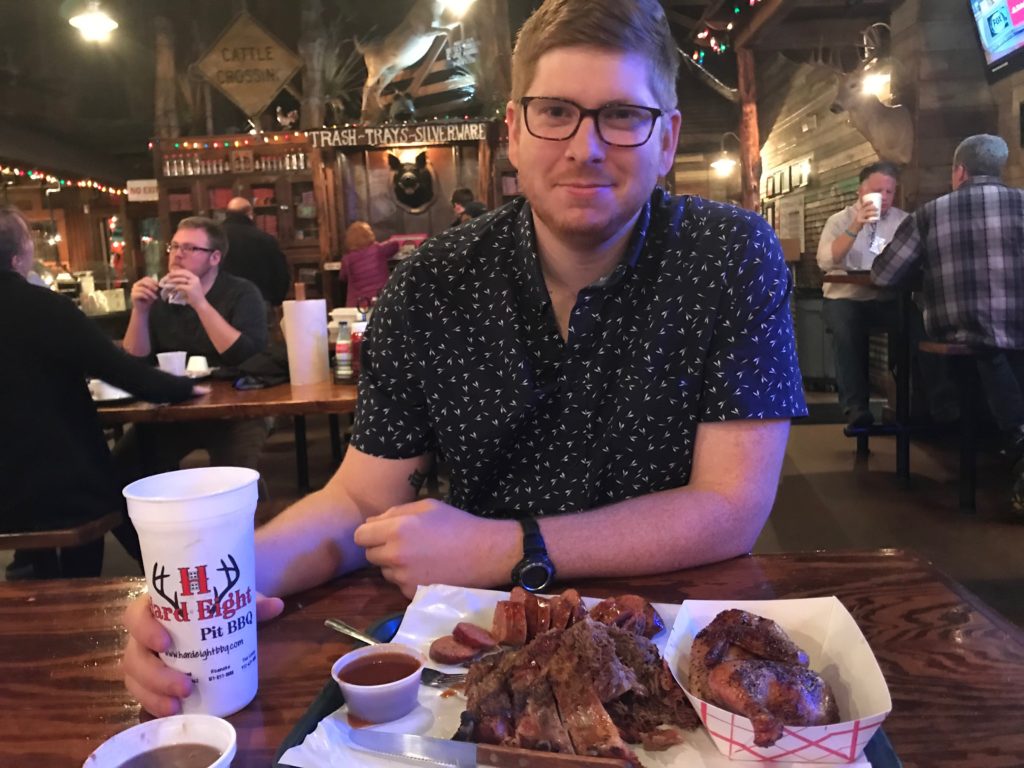
Our hotel is pleasant and I took the opportunity to immediately shower off the day’s re-circulated air and cramped people-ness, then we headed to Hard Eight BBQ for a dinner of … meat. Texas-style smoked ribs, brisket, chicken, and spicy sausage with sweet tea. It looked like a lot of food, but Ray pointed out that we hadn’t eaten in 12 hours, so … yeah, we ate it all.

2018-01-07 18.56.26

That smoke though ...

That smoke though …

Now we are headed to bed early-ish in anticipation of a loooong travel day tomorrow. Wish us luck and we’ll see you on the other side of the world!

Stockholm | Day 2

2016 Euro-trip

Today was our last day. It’s a little hard to believe that we’ve been out of town for four weeks. We’ve been to so many places and seen so many things, but it’s time to come home.

Since we’ve started, we’ve only really been out in relatively remote nature once, back in Glasgow. Like Glasgow, Stockholm is not really built for tourists. There is a wealth of history, and some beautiful free museums, but there’s only so many museums and walking tours one can do in a city. So we decided to take a day trip out to the archipelago.

There are many boats to and from Stockholm that service various islands all the way out to Finland. We hopped aboard a boat heading for Grinda, a small island that’s remote enough to enjoy some quiet walks and maybe some beach time.

The boat ride took about two hours from the city center. Our boat was a relatively small steamboat with low ceilings and lower hanging lights that I would occasionally bump my head on. We situated ourselves so that we could look out at the passing boats, seabirds, and house speckled islands.

Upon arrival, we walked up the main path towards the few buildings on the island: a cafe, a restaurant, a farm, and a hostel. The family in front of us had two young boys that were excited at nearly everything they found in the ditch adjacent to the walking path. They first found some blueberries, and excitedly showed them to us. They then found some small wild strawberries and showed those to us (“it’s heaven”), making sure that we know not to eat the other small red berries after they saw us foraging on our own (“don’t eat those”). We then repaid the favor by finding a snake (“they bite, but they don’t hurt”).

The gray skies did not end up clearing up as the forecast predicted, but we didn’t let that stop us. We spent much of the day wandering around small unmarked trails eating a few handfuls of the blueberries that crowded the island. It’s as if the entire island is a blueberry farm that got overrun by trees.

Returning to the main area, we decided to grab lunch at the restaurant. Looking at the prices of the restaurant, we decided to grab lunch at the café. We shared two sandwiches, a bag of cheez doodles, and a contraband bottle of wine.

The rest of the day resulted us climbing to the very top of the island, a whopping 30 meters above sea level. We missed our boat back, so we waited for the next one an hour and fifteen minutes later.

The boat trip back was on a modern boat, that had more low hanging overhead shelves that I hit my head on.

We closed the evening out by getting a kebab at a place recommended by our Australian tour guide yesterday, then by getting ice cream and waffles recommended by our Arkansan tour guide yesterday.

We are now at home, diligently catching up with the blog before we start our trek home tomorrow. I’m going to cut this short because I’m going to wake up in three hours! If we don’t write any more, thanks for reading! Photos will be added when we have time, so check back!