The downside of staying in the middle of everything is that noise is a given. We were woken up early to the sound of hammering – metal on metal. Neither of us were sure we could get back to sleep, but alas, all of a sudden I woke up to realize the Gaudi tour we’d booked the previous day was starting in 20 minutes!
We rushed to get ready and speed-walked to our meeting spot. The upside of staying in the middle of everything is you can get to pretty much any tour meeting spot in 10 minutes or less.
This tour brought us to five main works of the architect Gaudi, whose elaborate, garish style is now a trademark of Barcelona. Stops included a lamp post (his first and only commission from the city itself – he was not the easiest person to work with), a home he built for his patron that included elaborate ironwork (soldiers used it as a barracks during the civil war – what a sight that would have been!), two homes, and the Sagrada Familia.
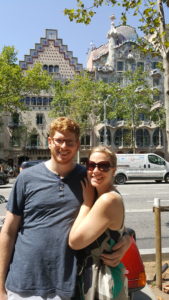
The Casa Batlló is on the right. The one on the left was created for a chocolatier (kind of looks like a gingerbread house!)
Up until the early 19th century, Spain refused to let the City of Barcelona extend beyond the city walls, causing terrible living conditions as everyone was so squashed together. When they finally were able to expand, wealthy people built lavish homes, including the Casa Batilló. Gaudi did not leave any records of the inspiration or “meaning” behind his work, however the story our guide gave that I thought fit best was that this home was inspired by the story of St. George and the Dragon, the patron saint of Catalonia. The roof looks very much like a dragon’s back, the balconies could very well represent the skulls of those the dragon killed, and the chimney looks very much like a lance skewering the scaled roof. It even has a flower of some kind on the point of the lance. The story says that the blood spilled from the dragon soaked into the ground and roses sprung from the carnage. Our guide showed us photos of the inside as well that corroborate this interpretation – fireplaces that resemble bellies, staircases that look like vertebrae. Very cool.
Or, it could be an homage to carnivál. No one knows.
The second home we saw, popularly known as La Pedrera (the Quarry), was commissioned after the homeowner saw the George and the Dragon home being built and the acclaim it won. The final product, however, was not well liked by the public nor the homeowner’s wife. She even plastered over the marvelously intricate ceilings he created. Time, however, smiled more fondly upon Gaudi and his work, as it is now a much loved piece of the city and designated a UNESCO World Heritage Site in 1984. (Also, apparently there are a couple families living in 1950s rent-controlled apartments within this home paying €500 a month for 4300 square feet!)
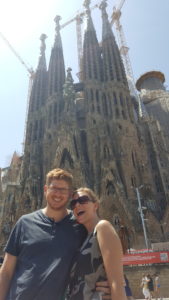 Finally, we arrived at the Sagrada Familia – the most recognizable facade in the city, even though it is under construction – and has been for over 100 years. The church is an imposing figure (I think I actually gasped upon exiting the metro station!). The eight visible spires (of which there will be 12 upon completion – on for each apostle) are massive, and it is impressive to think that the remaining pillars (representing Jesus and Mary) will reach even higher, stopping just one meter below the height of Montjuïc (which, we learned, is the highest point in the city).
The Sagrada Familia has three facades. The most complete one was completed by Gaudi himself and represents the Nativity story. Being a perfectionist, Gaudi actually used human models as moulds for his figures, including miscarried fetuses as the models for the babies. I didn’t get a close look, but apparently the donkey Mary is riding on is rather droopy eyed and ear’d because the animal modeling for it was chloroformed (Gaudi loved animals and refused to kill an animal to use as a model).
During the Civil War, the rebels/anarchists were on a mission to burn and destroy everything related to religion, as the church had sided with the Fascists in Spain. The Sagrada Familia was spared, however, due to a bridge behind the Nativity scene, which they realized would make a good spot for scouting and shooting.
The second side has been done primarily by a modernist artist, whose figures are much more geometric and abstract. This artist, purposely chosen to reflect the passage of time from Gaudi to the present, included two homages to Gaudi including a “portrait” within the facade and a number of the Roman guards look an awfully lot like the chimneys on the La Pedrera.
Gaudi passed away after being struck by a tram. The driver and many passers by thought he was a homeless man as, being as eccentric and obsessed with his work as he was, he was terribly thin and rarely changed his disheveled clothes. The full Sagrada Familia is set to be completed in 2026, the 100th anniversary of his passing. This all reinforced, for me, that architects are perhaps as close as humans can come to immorality.
After all that, we took a moment to cool off with a drink, reapply sunscreen, and plan the rest of our day. Being a Monday, many museums were closed, so we headed for the one that was open. The CosmoCaixa was a science museum in an area of the city we’d only seen from the top of Montjuïc. At the very top of this hill (mountain?) is Tribidabo, a retro amusement park which we didn’t enter, but the ferris wheel and main building sure made an interesting site against the bright sky!
Entering the CosmoCaixa, we had no idea what we were in for (I’d made a note from some book saying it was a Amazonian Zoo …). It was very quiet in the building and we trepidatiously made our way five stories down a spiral ramp. Strung alongside the ramp was a winding, flexible tube with dates noted on it. I didn’t realize what these were until Ray pointed out that it was a timeline starting when the earth was formed. About halfway down the ramp, the timeline noted when the first single cell organisms were formed (sans nucleus and mitochondria), and at the bottom of the ramp, five floors down, was when those cells developed more complexity, paving the way for life as we know it. At the end of our time at CosmoCaixa, we stepped into a room, no larger than our living room, that mimicked the same space-as-representation-of-time concept – this tiny space encompassed everything from the age of the Egyptian pharaohs to modern times. Kind of puts things in perspective.
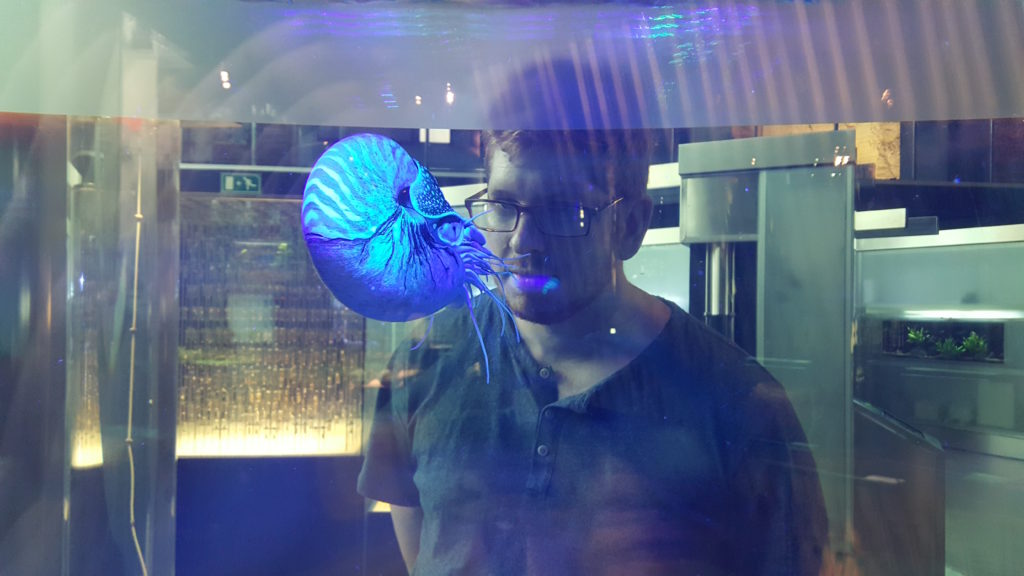
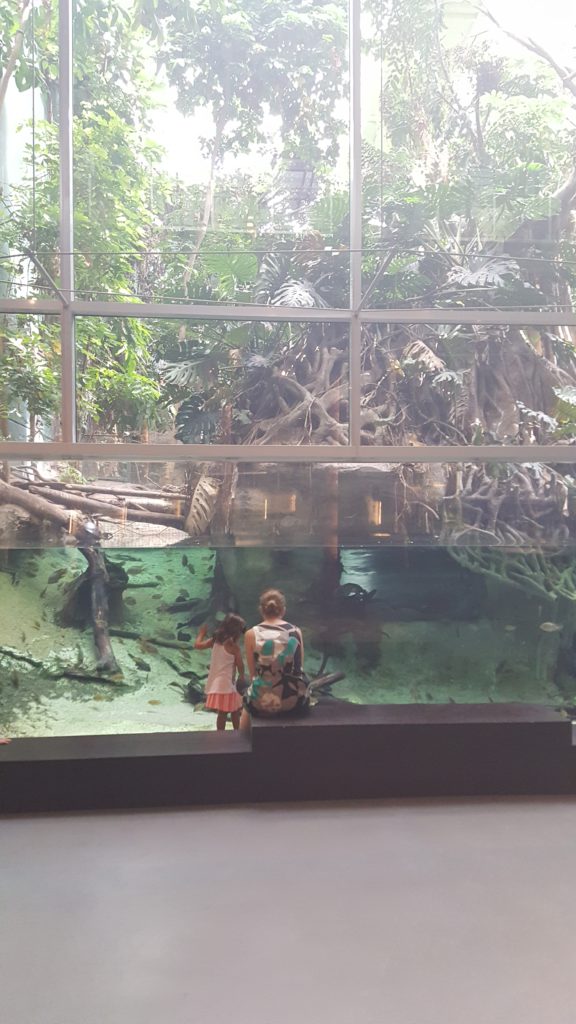
This little girl saw a stingray and kept asking what it was. Her brother replied matter of factly “It’s a pancake!”
We spent hours and hours at the museum, looking at fossils, playing with physics experiments and optical illusions, reading about the development of languages, peering through magnifying glasses at bugs encased in amber, and more. But by far our favorite part was the “Flooded Forest” – a giant window spanning the full five floors housed alligators, capybara, exotic birds, giant fish, stingrays, snakes, and, of course, a duck. You could even go in and see them up close.
All of a sudden, the sun was lower in the sky that we’d anticipated. We hurried back to our place to pack for the beach, but realized we had some more pressing matters we needed to attend to. For Ray, it was checking in for our flight tomorrow – and realizing we needed to find a way to print our boarding passes. For me, it was finding churros. The urgency of my need prevailed and we rushed out of the apartment, only to realize I didn’t know where the churros place I’d found was – and that we’d forgotten Ray’s phone, making finding churros AND printing boarding passes a significant challenge. I gave up on churros as my sense of direction in Barcelona’s windy streets was limited, so we attempted to find a place to print. Our Airbnb host told us to look for a locutorio (internet cafe), but we couldn’t find one. Knowing how helpful hostel staff are, we ducked into one to see if they’d help us print. The staff person agreed, but their internet wasn’t working, so we were off to find another solution. After looking around, asking at a hotel, and a little complaining (who, me?), we finally found one, printed our passes, and all was well with the world again.
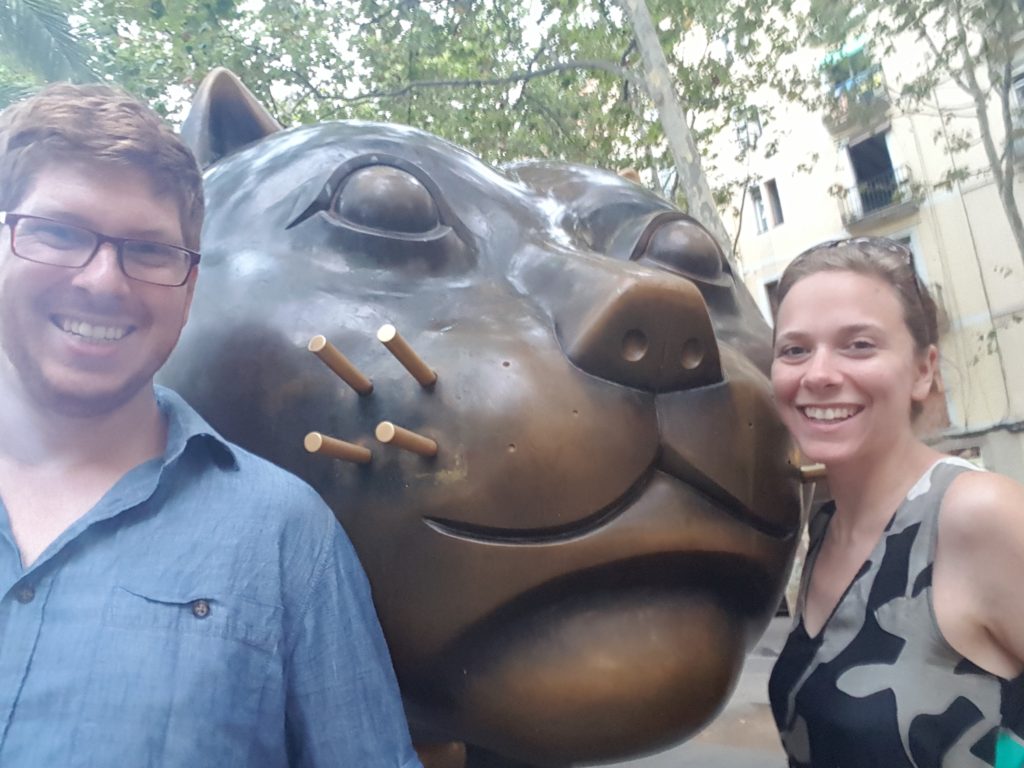 Relieved, but with blistered toes and the sun setting, we opted for dinner at a nearby place instead of heading to the beach for the last chilly rays of the day. There was a wait, so we meandered about the area, took a photo with Fernando Botero’s famous
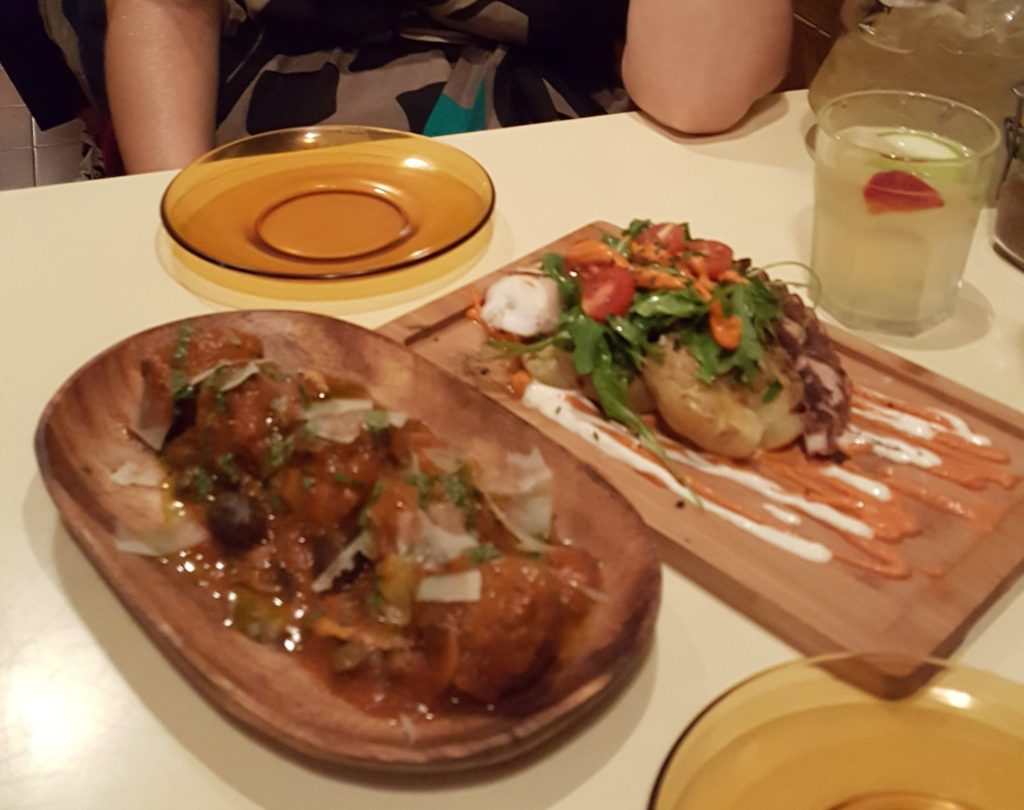 chunky cat statue, and watched dogs and people for a while before sitting down to cava sangria, octopus, meatballs, and iberian ham. Tummies full, we headed home for our last night sleeping with wide open doors.
I never did get my churros … guess I’ll have to make a Costco run when I get home.
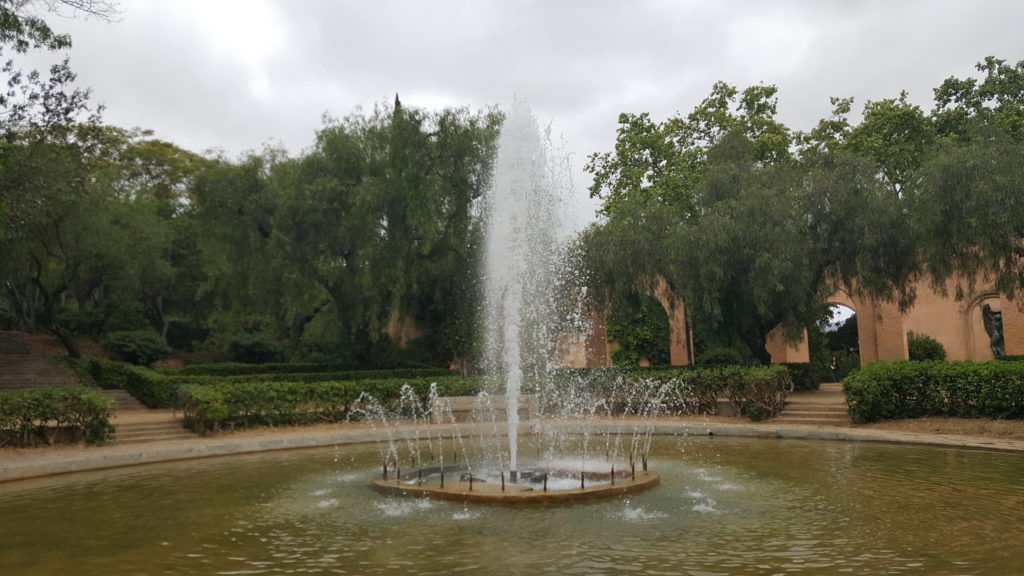
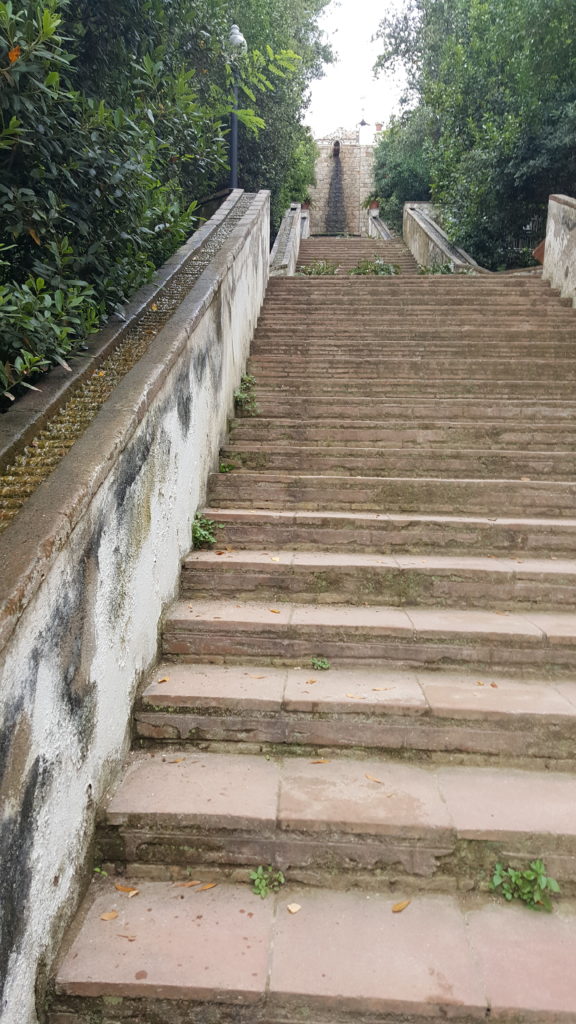 We meandered through several different parks, with even more elaborate fountains, up to Castle Montjuïc. We didn’t end up seeing the inside of the castle, but the walk around the castle was pretty interesting in its own right. Apparently they have various programs in the moat. Most notably, they have an archery range, and an outdoor movie that you can pay to attend.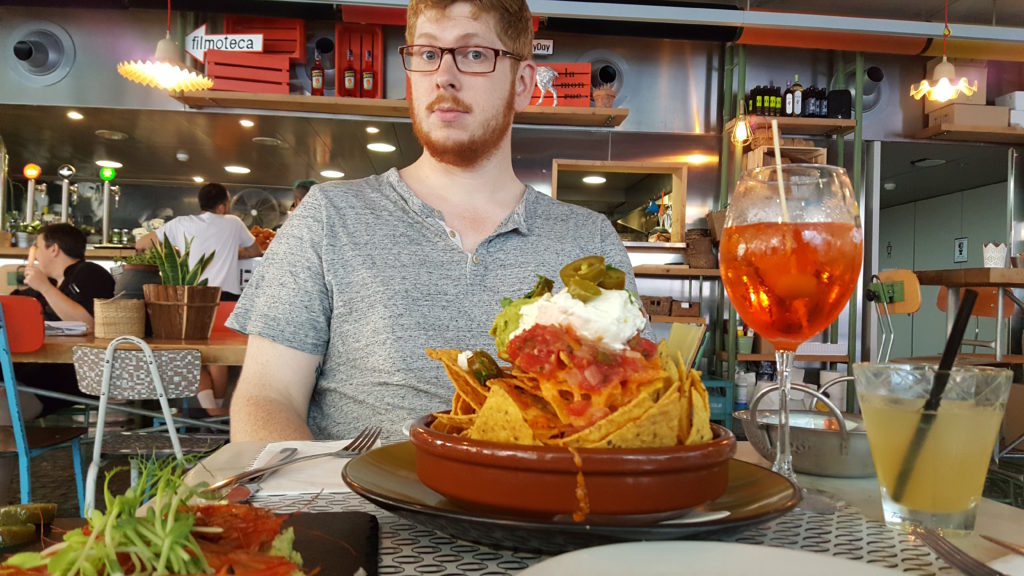
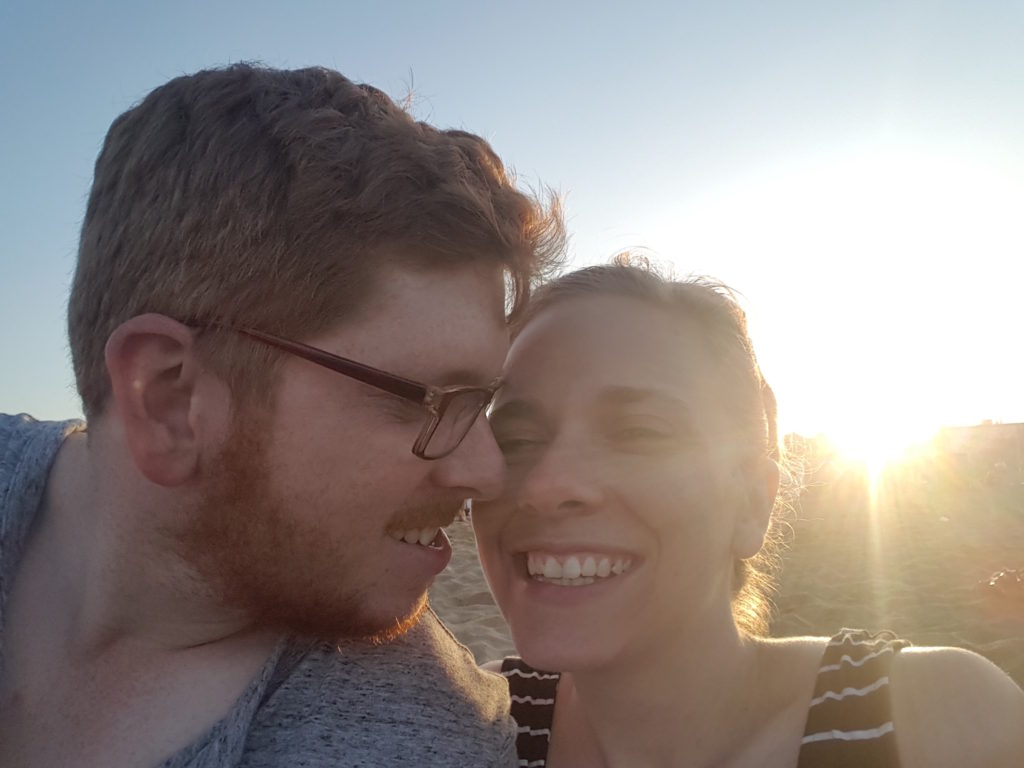
 It began getting chilly so we headed back. I had to resist the urge to drink every cold, sweet thing they were selling on the side of the street, knowing that what I really needed was water. We stopped in at a little market to grab some water for our stay and a couple beers to enjoy on our terrace while we updated you all on what’s going on.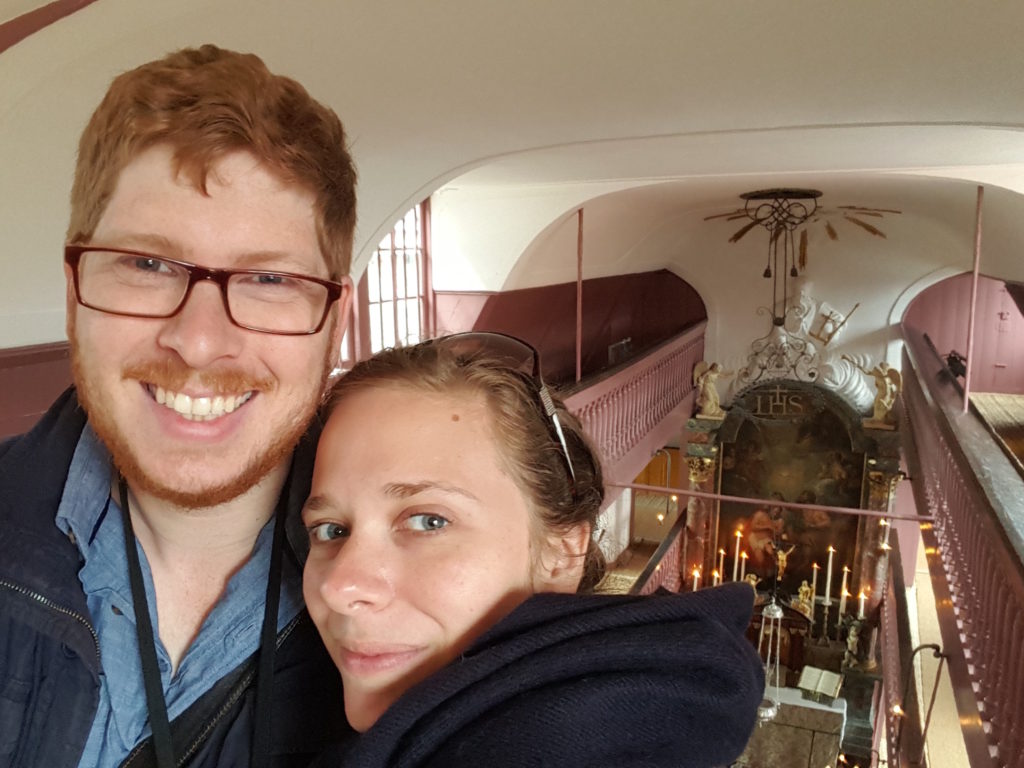
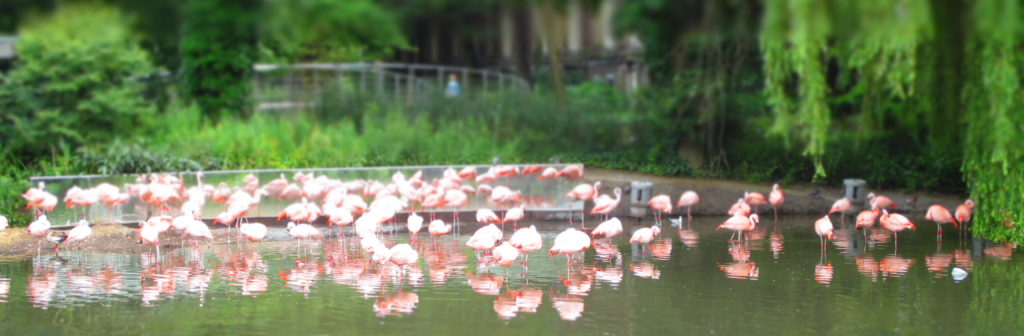
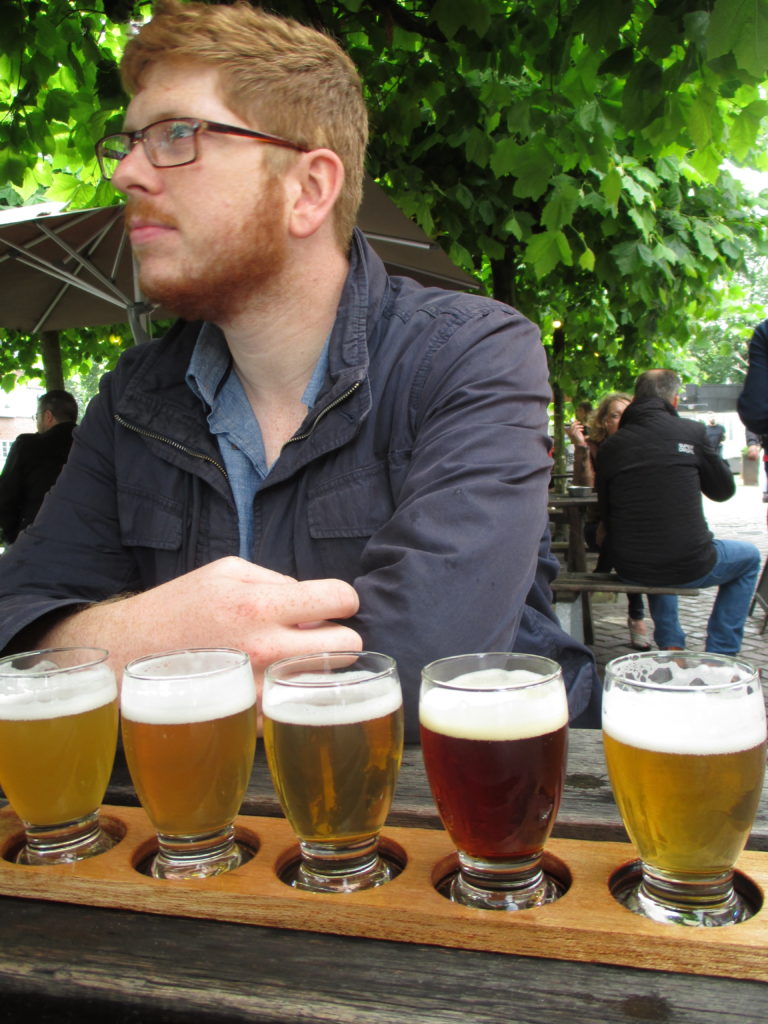
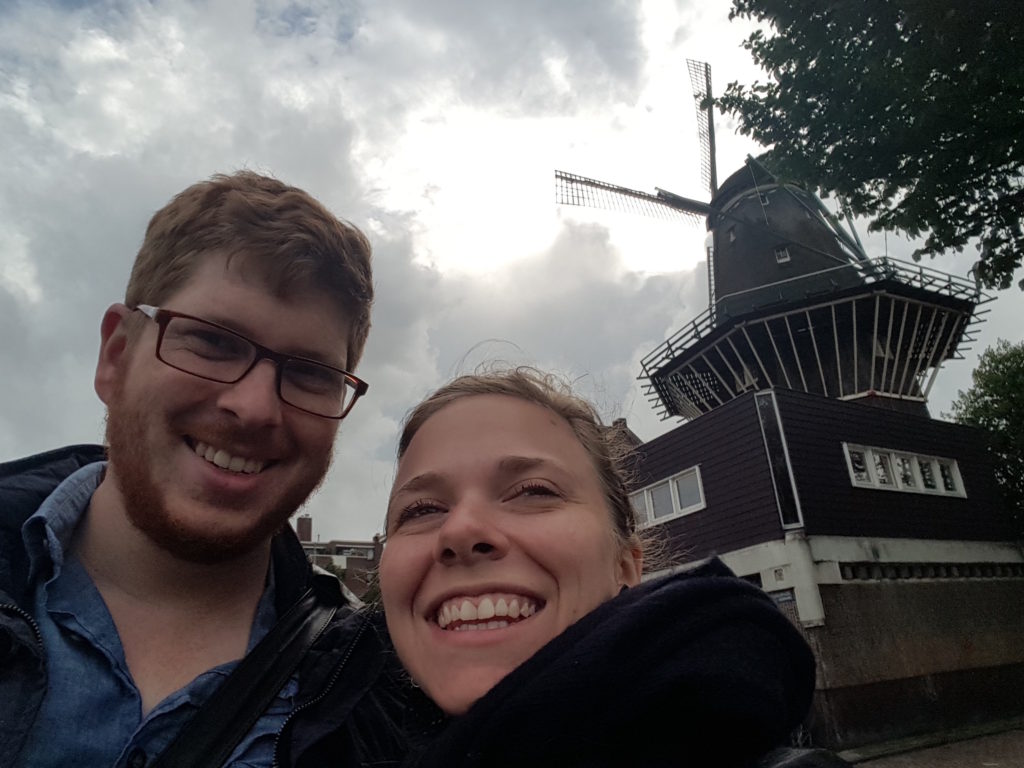
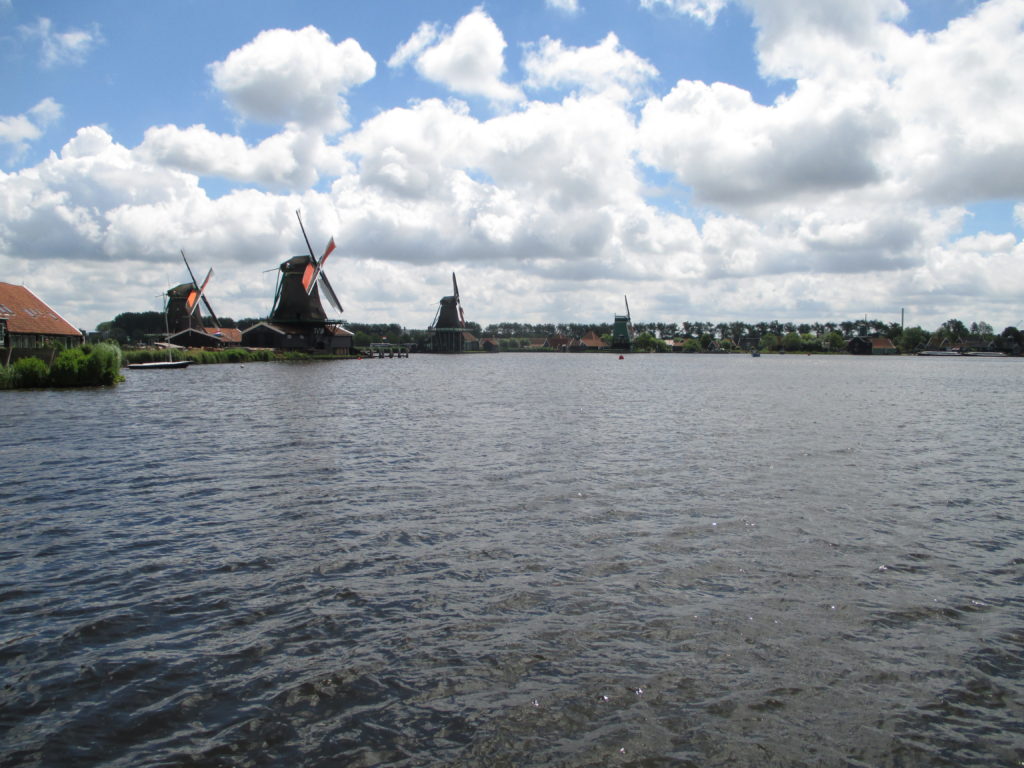
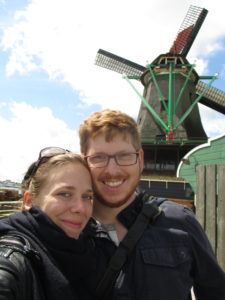 This is where they brought most of the country’s remaining windmills in the 1970’s. It was rather stunning: seven working windmills creating oil and paint, sawing wood, and more. The *sound* of the wind in the fabric of the sails was something I will never forget.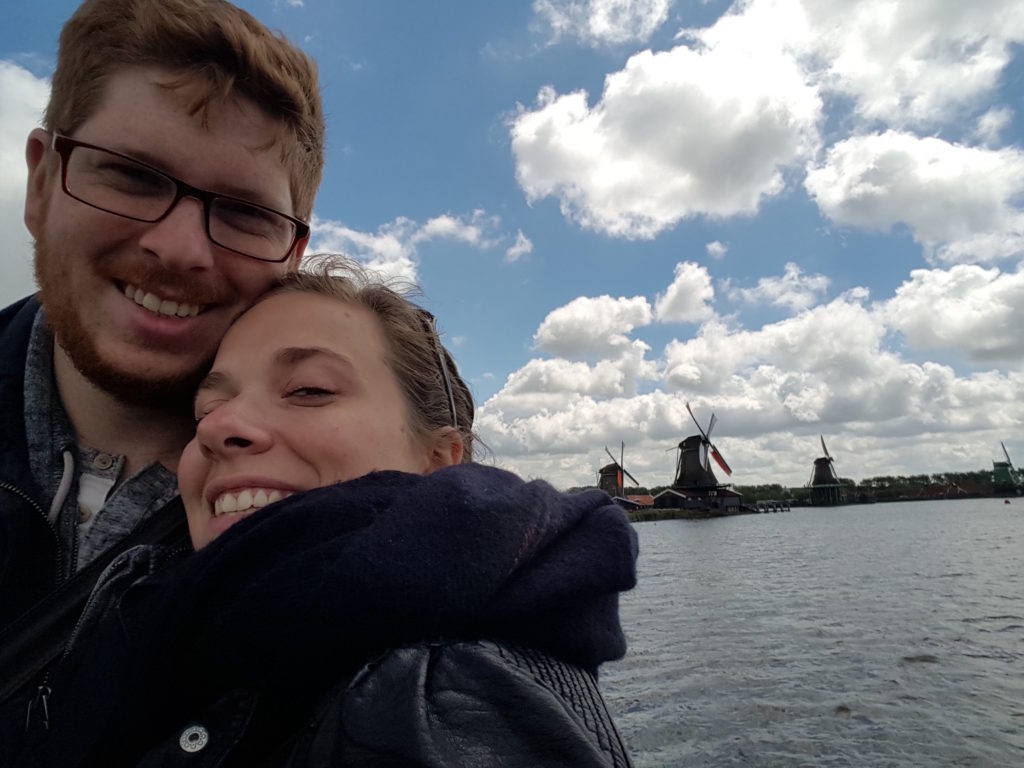
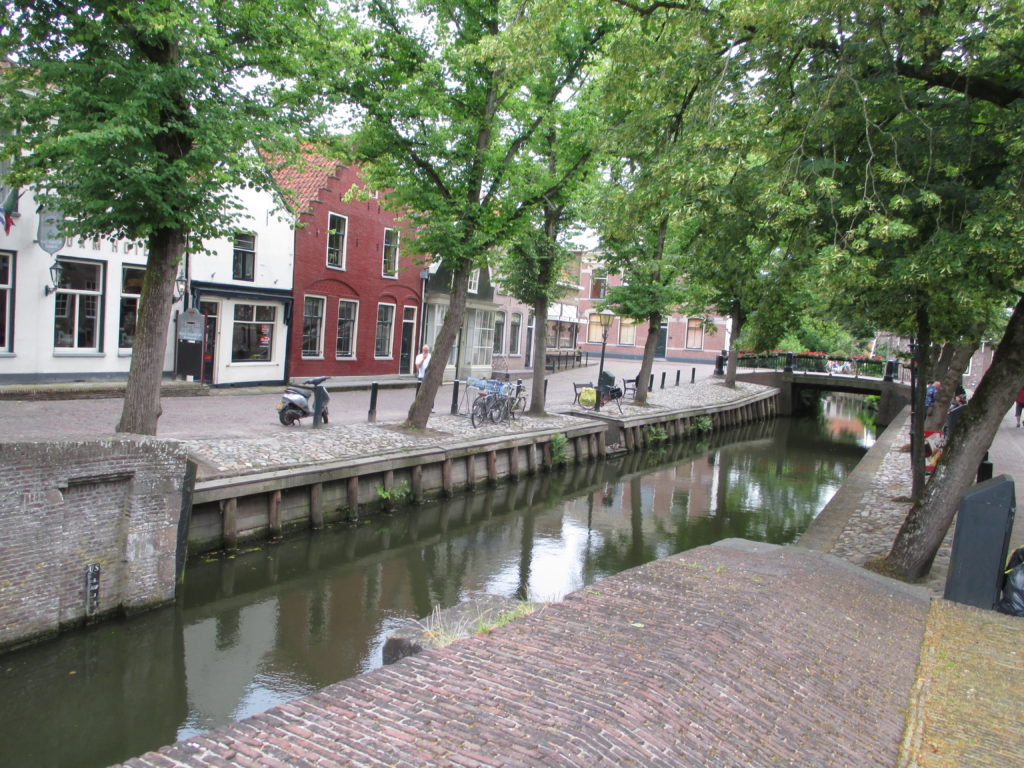
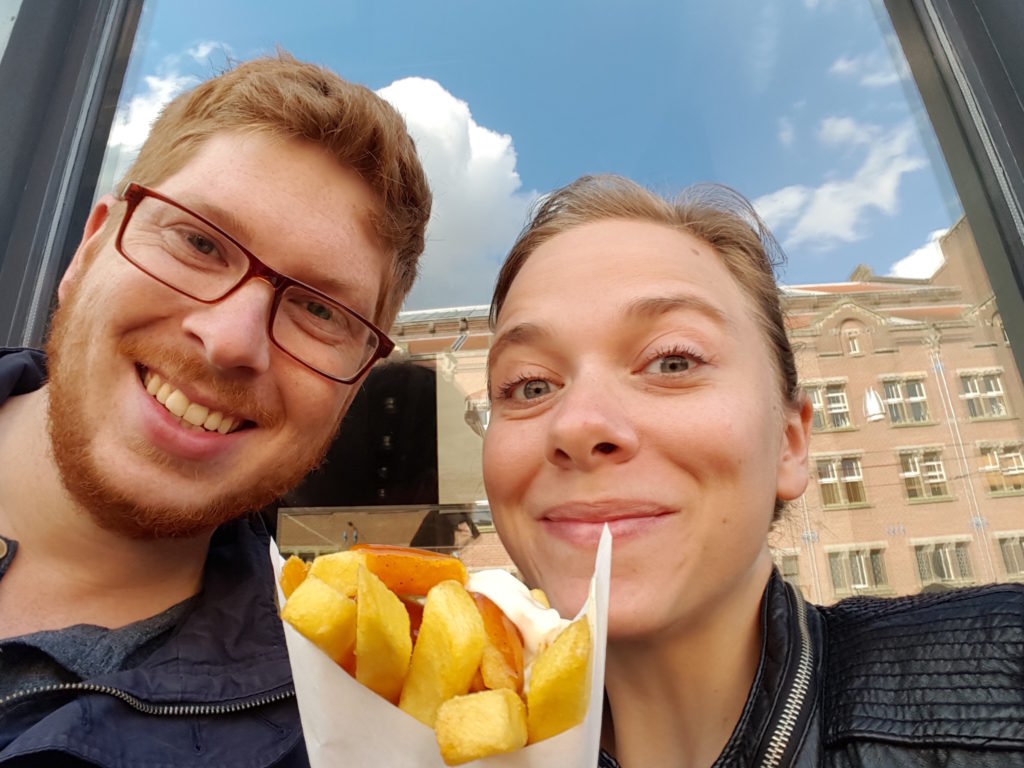
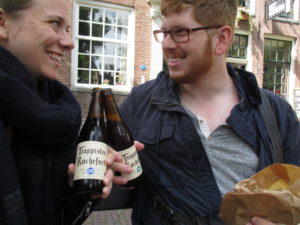 Amsterdam Bar in St Paul). The shop was essentially a deli. Ray asked about broodje and the woman behind the counter (true to the way in which our tour guide yesterday described “authentic” shop keepers / wait staff would act) seemed annoyed and pointed out that she only had a few pieces of bread left. We loaded them up with salami and cheese and grabbed two Trappist beers (made by monks) and headed out to eat our lunch on a bench next to a canal. It was so quiet and peaceful and no one spoke English. This was everything I’d been wanting from a trip to the Netherlands.
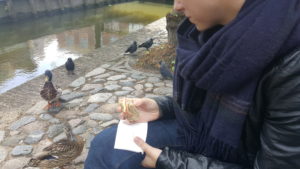 After mingling with the ducks and birds for a while (or, more accurately, after they got wise to the fact that our sandwiches were gone), we strolled through the streets and over canals, peeking into the windows of these traditional looking homes. Large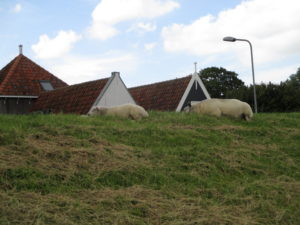
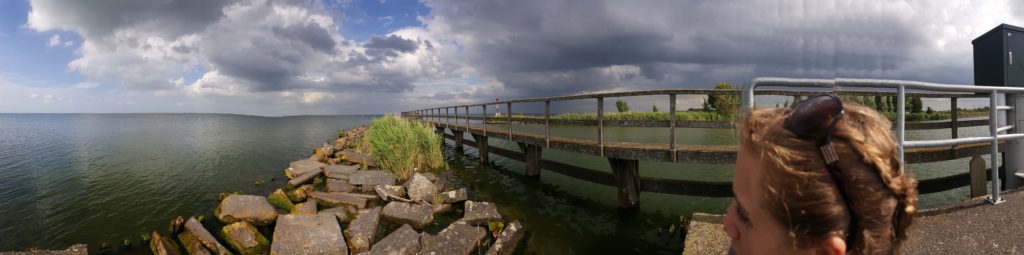
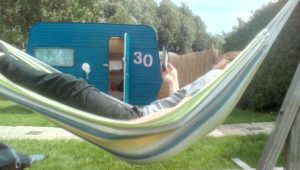 We were scheduled for the 12:30 shuttle to the train station, so between breakfast and the train ride, we had a few hours to relax at the nearby hammocks and read, taking in the beautiful blue skies that were soon to give way to rain clouds.
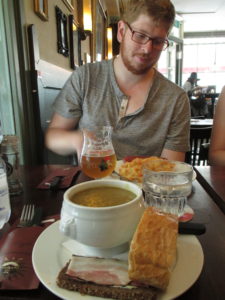 We found food at the end of the tour at a little diner. I had a

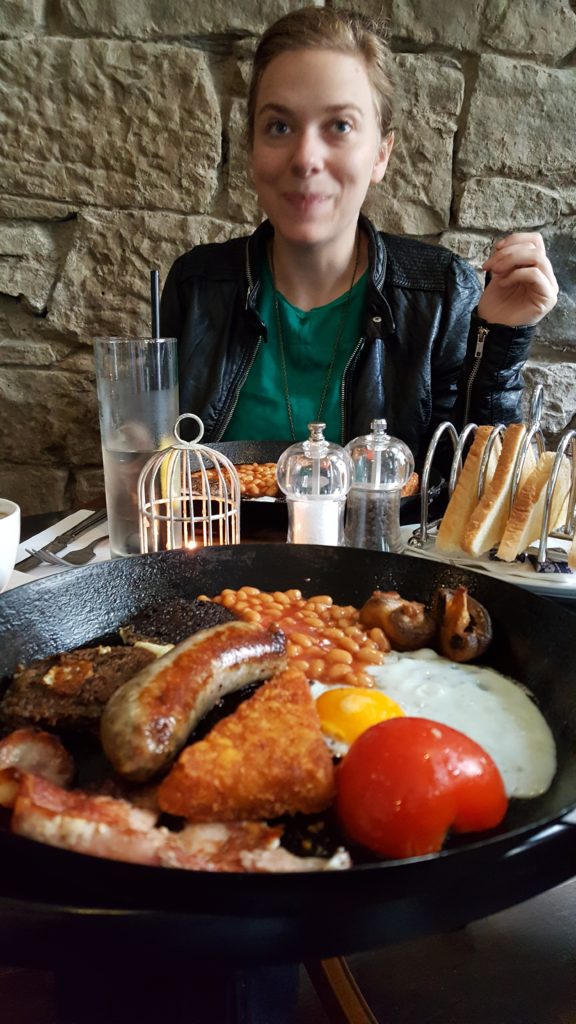 Today started out, as any good day should, with a large breakfast. We ventured forth to the
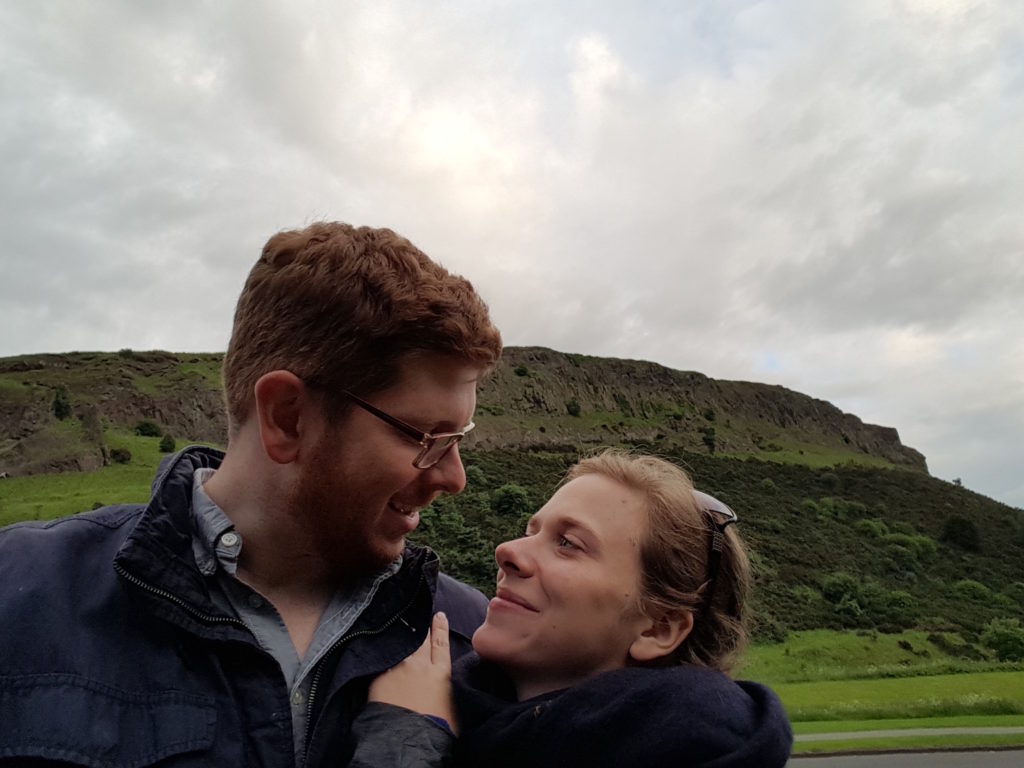
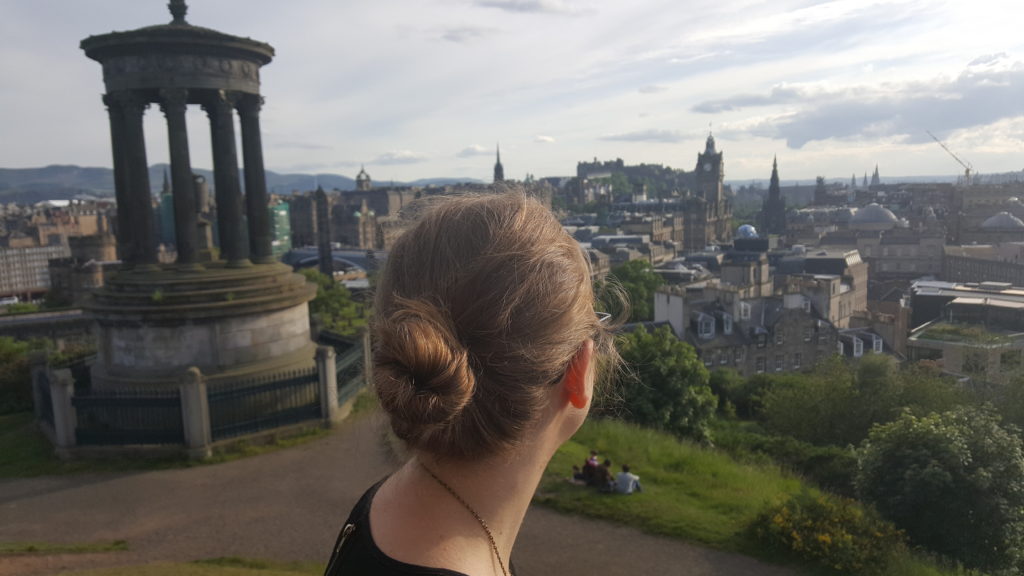
 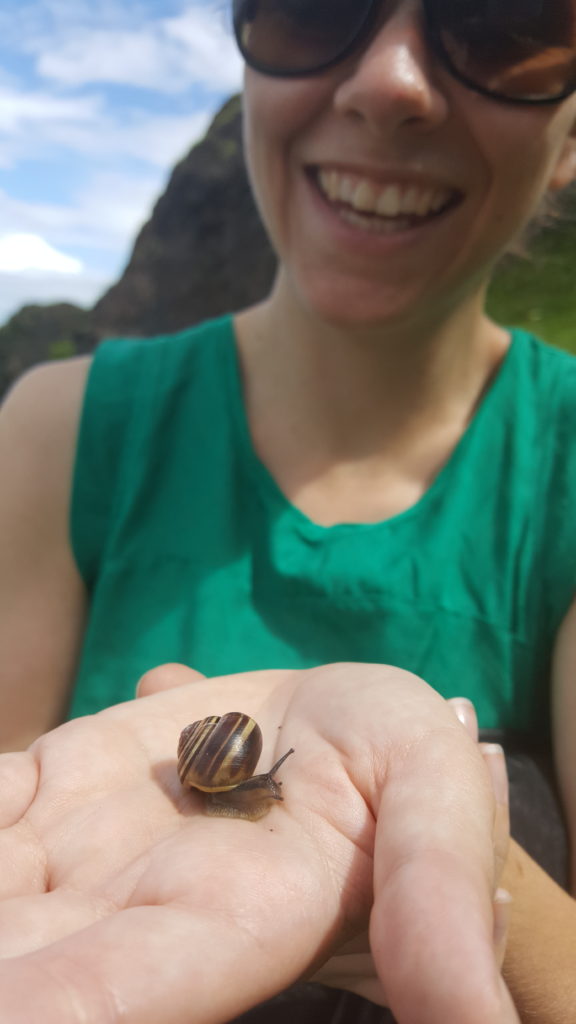 One last major site to see was Arthur’s Seat, which is an extinct volcano at the east end of Edinburgh’s Royal mile. Instead of the hike to the tallest peak (the real Arthur’s Seat), we ventured to the peak nearest the city, and more off the beaten path. Along the way, we kept encountering snails by the side of the path. At the top, we were afforded an incredible view of the city, but only had to share it with a few other people, rather than the horde of hikers that crowded the main peak.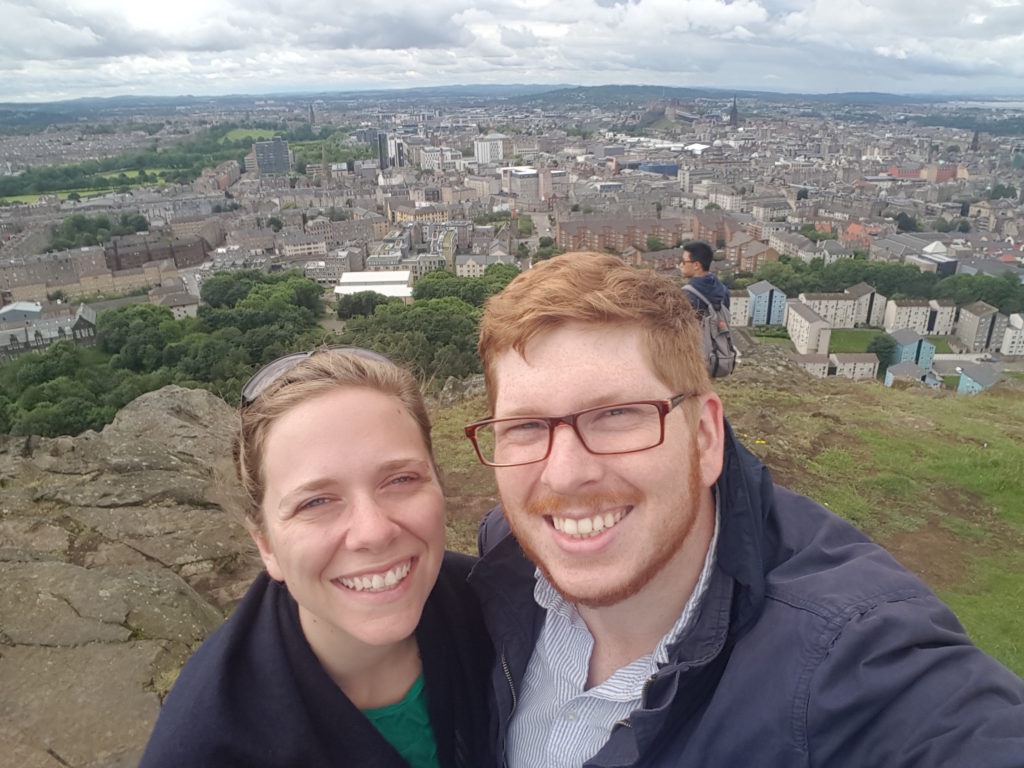
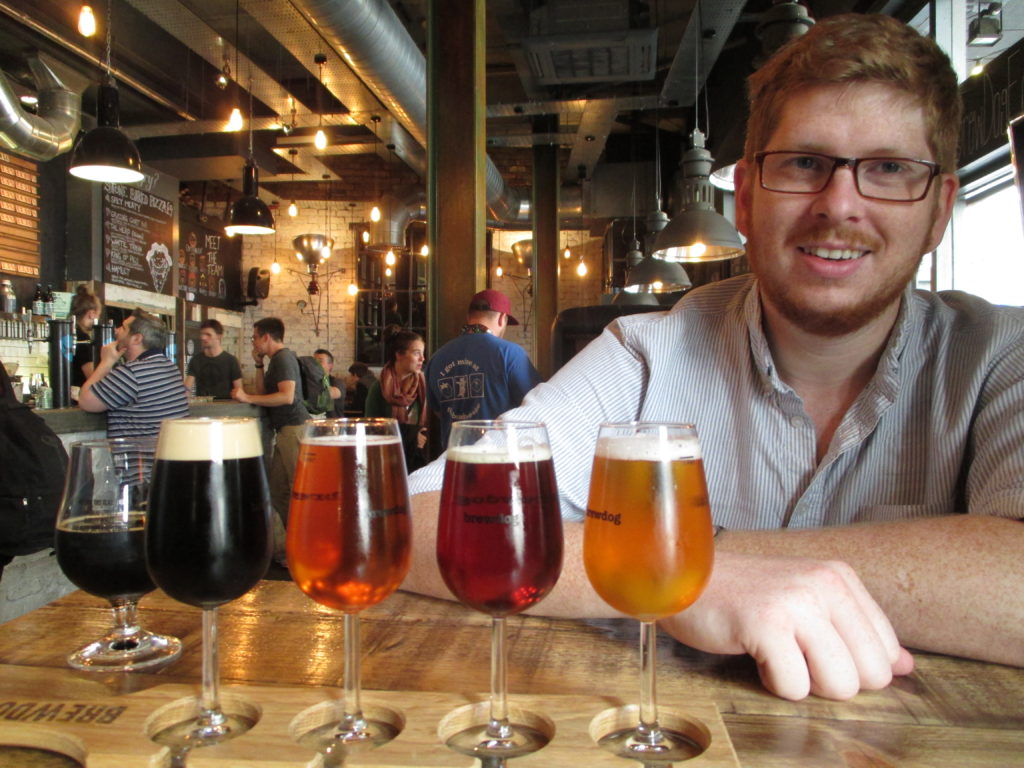 We returned to the hostel to pick up our luggage, walked to the train station, and got on the next train to Glasgow. Where Edinburgh has an old, weathered, and magical feeling to it, Glasgow is the bustling, youthful, and creative city. Many of my favorite musical groups came out of Glasgow, including Belle and Sebastian, and Franz Ferdinand.


_-_2.jpg)

